

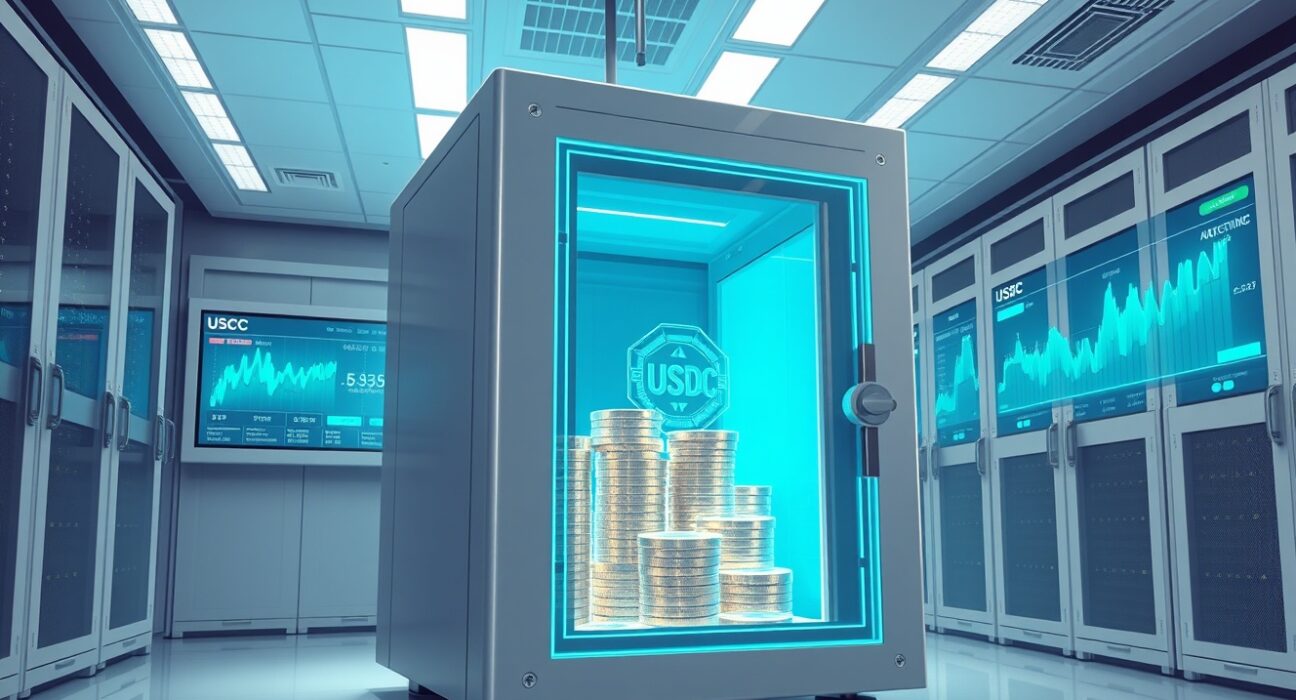
In a significant move within the digital asset space, blockchain tracking service Whale Alert reported the creation of 250 million USDC at the USDC Treasury on April 2, 2025. This substantial minting event immediately captured the attention of market analysts and institutional investors worldwide. Consequently, the transaction highlights ongoing activity in the stablecoin sector, which serves as a critical bridge between traditional finance and decentralized ecosystems. Furthermore, such large-scale minting often precedes notable market movements or fulfills specific institutional demand.
USDC Minted: Analyzing the 250 Million Transaction
The blockchain data shows a single transaction originating from the authorized USDC Treasury address. Whale Alert, a trusted on-chain analytics provider, broadcast the alert across social media platforms. The minting process for USD Coin involves Circle, the primary issuer, creating new tokens against an equivalent reserve of U.S. dollars held in regulated financial institutions. Therefore, this event represents a direct conversion of $250,000,000 in fiat currency into its digital, blockchain-native counterpart. Market observers quickly noted the timing and scale, comparing it to historical minting patterns.
Historically, large USDC minting events correlate with increased trading volume or preparations for major capital deployments. For instance, similar events have preceded large over-the-counter (OTC) trades or provided liquidity for decentralized finance (DeFi) protocols. The transparency of the blockchain allows for real-time verification of these actions, unlike traditional financial systems. This mint brings the total circulating supply of USDC well into the tens of billions, reinforcing its position as a leading fiat-backed stablecoin.
The Role of Stablecoins in Modern Finance
Stablecoins like USDC have evolved far beyond simple trading pairs on cryptocurrency exchanges. Today, they form the backbone of the digital economy, enabling:
- Cross-border settlements with near-instant finality and reduced costs.
- DeFi lending and borrowing protocols that require stable assets as collateral.
- Institutional treasury management for corporations holding digital assets.
- Payment rails for merchants and service providers globally.
The minting of new tokens directly responds to demand in these areas. When institutional clients wish to convert large dollar sums into USDC, Circle coordinates with its banking partners to custody the cash and mint the equivalent tokens. This process maintains the 1:1 peg that is audited monthly by a leading accounting firm. The stability and regulatory compliance of USDC make it a preferred choice for regulated entities entering the crypto space.
Expert Analysis on Treasury Movements
Financial analysts specializing in on-chain data provide crucial context for these events. According to common analytical frameworks, a mint of this size typically indicates one of several scenarios. First, a large financial institution or corporation may be onboarding capital to participate in blockchain-based markets. Second, a trading desk could be preparing liquidity for anticipated volatility or a major arbitrage opportunity. Third, it may reflect capital rotation from another stablecoin or traditional bank account into the USDC ecosystem.
Data from previous quarters shows a pattern where USDC minting increases during periods of market uncertainty, as investors seek the safety of a dollar-pegged asset without leaving the blockchain. The reserves backing USDC are held in cash and short-duration U.S. Treasuries, providing a high degree of safety and liquidity. This structure has been validated through multiple market cycles, building trust with users.
Market Impact and Historical Context
The immediate market reaction to the minting news was muted in terms of price, as USDC maintains its peg through arbitrage mechanisms. However, the underlying implications for liquidity are profound. Adding $250 million in liquid, blockchain-ready dollars increases the capital available for trading, lending, and payments across hundreds of platforms. Historically, similar injections have been followed by increased activity in decentralized exchanges and lending markets within 24-48 hours.
The following table compares recent notable USDC minting events and their subsequent market contexts:
| Date | Amount Minted | Market Context (7 Days Later) |
|---|---|---|
| Jan 15, 2025 | 150M USDC | Rise in DeFi Total Value Locked (TVL) |
| Nov 30, 2024 | 500M USDC | Major OTC trade reported by institutional firm |
| Aug 22, 2024 | 300M USDC | Preceded a period of high stablecoin lending rates |
This historical data suggests that large minting events are rarely isolated. Instead, they are strategic actions within a broader financial narrative. Analysts will now monitor on-chain flow to see if the newly minted USDC remains in the treasury address or begins moving to exchanges, DeFi protocols, or known institutional wallets. This movement will provide clearer signals of intent.
Regulatory Environment and Compliance
The operation of the USDC Treasury occurs under strict regulatory oversight. Circle, the issuer, operates as a licensed money transmitter in the United States and complies with global financial regulations, including Anti-Money Laundering (AML) and Know Your Customer (KYC) requirements. Every dollar used to mint USDC is verified and held in reserve. Consequently, a mint of this magnitude involves significant coordination with banking partners and regulators to ensure full compliance.
This regulatory clarity is a key differentiator for USDC compared to other stablecoins. It provides assurance to traditional financial institutions that the asset meets the highest standards of transparency and solvency. The monthly attestation reports, published by a top-tier accounting firm, publicly verify the reserve holdings. This framework is essential for building the long-term trust required for mass adoption of digital dollars.
Conclusion
The minting of 250 million USDC represents a substantial capital inflow into the cryptocurrency ecosystem. This event underscores the growing institutional demand for regulated, transparent digital dollar instruments. While the immediate purpose of the mint remains undisclosed, historical patterns and on-chain analytics provide strong clues about its potential market impact. Observers will closely track the movement of these new tokens, as they may signal the next significant development in digital asset adoption or decentralized finance growth. The USDC minted today reinforces the stablecoin’s critical role as infrastructure for the future of finance.
FAQs
Q1: What does it mean when USDC is “minted”?
Minting USDC refers to the creation of new tokens by the official issuer, Circle. This process occurs when U.S. dollars are deposited into Circle’s reserved accounts. For every dollar deposited, one USDC token is created and issued on the blockchain, maintaining a 1:1 peg.
Q2: Who can mint USDC?
Only Circle, through its authorized USDC Treasury smart contract, can mint new USDC tokens. This is a permissioned process requiring compliance with financial regulations. Individuals or other entities cannot mint USDC; they must acquire it through exchanges or other users.
Q3: Does minting 250 million USDC affect its price or peg?
Typically, no. The minting process is designed to be non-inflationary because each token is backed 1:1 by a dollar in reserve. The peg is maintained by arbitrage opportunities; if USDC trades below $1, traders can buy and redeem it with Circle for a profit, bringing the price back.
Q4: Where can I see the transaction for the 250 million USDC mint?
The transaction is recorded on the public blockchain (Ethereum, in this case). You can view it using a blockchain explorer like Etherscan by searching for the transaction hash or the USDC Treasury address, which is publicly known and monitored by services like Whale Alert.
Q5: What usually happens after a large USDC mint?
The newly minted USDC often moves to cryptocurrency exchanges to provide liquidity, to institutional wallets for specific investments, or into DeFi smart contracts to earn yield. Analysts watch these subsequent flows to gauge market sentiment and institutional activity.
Disclaimer: The information provided is not trading advice, Bitcoinworld.co.in holds no liability for any investments made based on the information provided on this page. We strongly recommend independent research and/or consultation with a qualified professional before making any investment decisions.
