

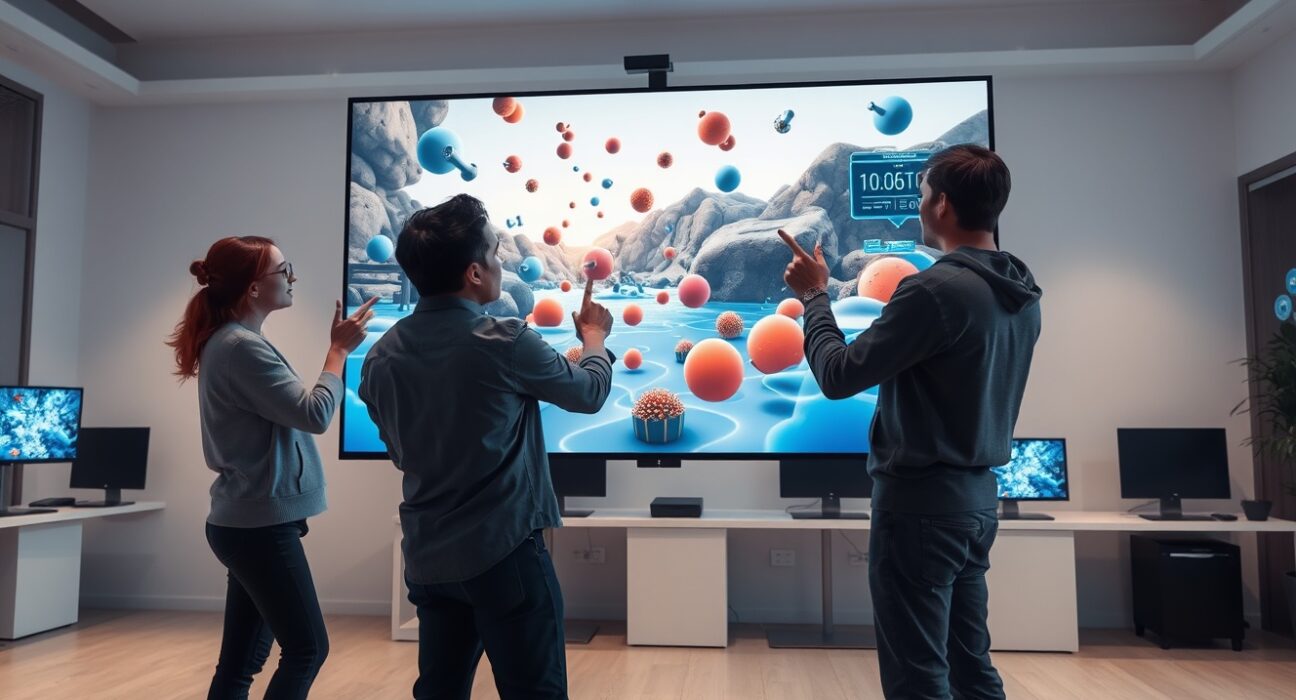
A growing number of AI researchers believe that the path to artificial general intelligence (AGI) may not be paved with internet text alone. One startup, General Intuition, is betting that the key lies in a different, more dynamic source: video game data.
The Limits of Language-Based AI
Large language models like ChatGPT and Claude have demonstrated remarkable abilities in processing and generating text. However, critics argue that these models lack a fundamental understanding of how objects move and interact in the physical world. This gap, often referred to as a lack of ’embodied’ or ‘spatial’ intelligence, is seen as a major hurdle on the road to AGI—a machine that can perform any intellectual task a human can.
Why Gaming Data Is Different
Video games offer a rich, structured, and interactive environment. Unlike static text on the internet, games provide millions of hours of data on physics, causality, and three-dimensional movement. A character jumping, a ball bouncing, or a car navigating a corner all generate data about how objects behave through space and time.
General Intuition, founded by CEO [Name], is developing AI models trained specifically on this type of gameplay data. The company’s thesis is that to build a truly general intelligence, a system must first develop an intuitive understanding of the physical world—something that language models, trained on flat text, struggle to achieve.
Building ‘Common Sense’ from Pixels
The startup’s approach focuses on training models to predict what will happen next in a game environment. This forces the AI to learn concepts like gravity, momentum, and object permanence. The CEO argues that this form of ‘intuitive physics’ is a prerequisite for common sense, which remains a significant weakness in current AI systems.
“The internet is full of descriptions of the world, but video games are full of simulations of the world,” the CEO explained in a recent interview. “To generalize, you need to understand how things work, not just how they are described.”
Implications for the AI Industry
If successful, this approach could challenge the current dominance of massive text-based datasets. It also raises questions about the future of AI training: Will the next generation of models be trained on Minecraft, Grand Theft Auto, or custom-built virtual worlds? The move towards synthetic and simulated data is already a growing trend, as companies seek to avoid the limitations and legal complexities of scraping the open internet.
While General Intuition is still in its early stages, its focus on video game data represents a distinct philosophical shift. Instead of trying to make language models ‘smarter’ with more text, the company is trying to build a new kind of foundation—one built on action, physics, and spatial reasoning.
Conclusion
The debate over how to achieve AGI is far from settled. However, the argument that video game data could provide a more robust training ground for general intelligence is gaining traction. General Intuition’s bet is that to think like a human, an AI first needs to learn how to move like one—even if that movement happens inside a digital world.
FAQs
Q1: What is the main problem with using internet text to train AGI?
Internet text lacks information about physical interaction, causality, and 3D spatial movement. Language models can describe a ball bouncing but do not intuitively understand the physics behind it.
Q2: How do video games help train AI differently?
Video games provide continuous, interactive data on how objects move and interact in a simulated 3D space, teaching the AI about gravity, momentum, and cause-and-effect in a way static text cannot.
Q3: Is General Intuition the only company using this approach?
No, but it is one of the most prominent startups explicitly focusing on video game data as the primary training source for achieving general intelligence, rather than using it as a supplementary dataset.
Disclaimer: The information provided is not trading advice, Bitcoinworld.co.in holds no liability for any investments made based on the information provided on this page. We strongly recommend independent research and/or consultation with a qualified professional before making any investment decisions.
