

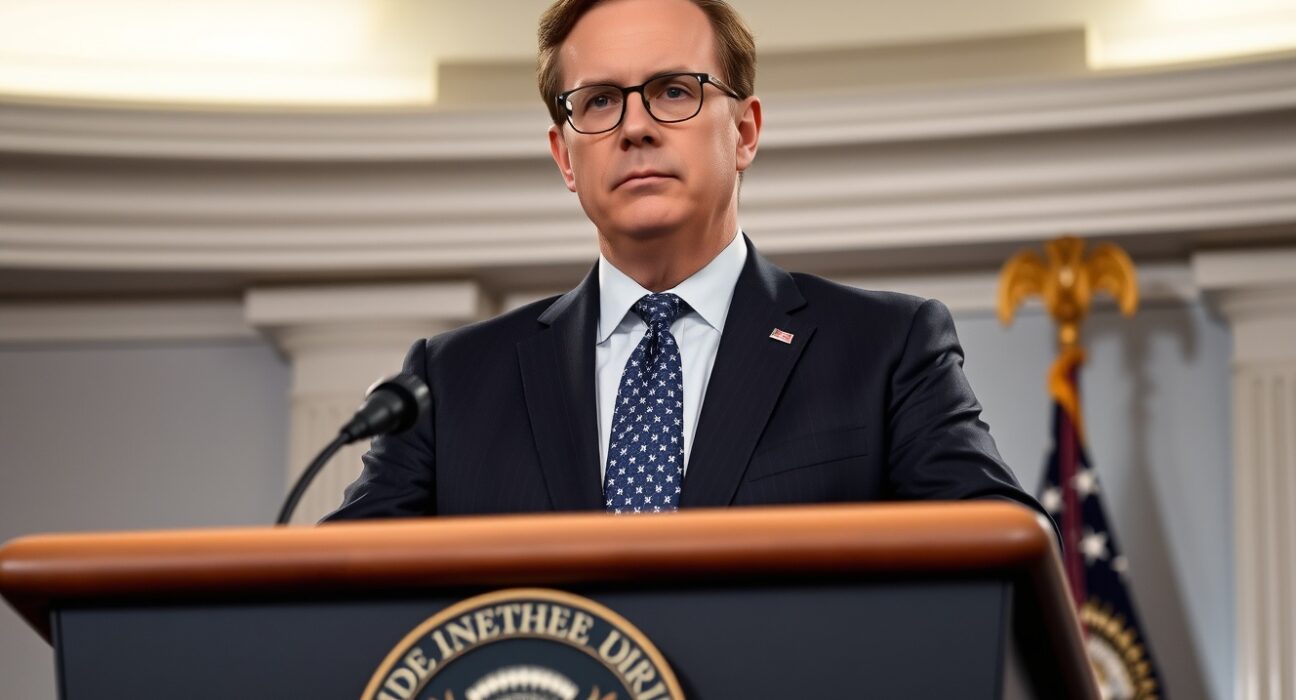
Kevin Hassett, Chairman of the White House National Economic Council (NEC), stated on Tuesday that he believes the Federal Reserve will implement a rate cut before the end of this year, citing the ongoing economic strain caused by the war. The remark, made during a press briefing, signals the administration’s growing concern over the conflict’s drag on the U.S. economy and adds a notable voice to the public debate on monetary policy.
Context of the Statement
Hassett’s comments come amid a period of elevated inflation and persistent geopolitical uncertainty. While the Federal Reserve has maintained a cautious stance, holding interest rates steady at recent meetings to combat price pressures, the NEC chair’s prediction suggests a divergence in perspective between the White House and the central bank. Hassett did not specify a precise timeline or the magnitude of the expected cut, but he emphasized that the ‘war’s economic consequences’ are a primary factor driving the forecast.
Market and Policy Implications
A rate cut would represent a significant shift in monetary policy, potentially lowering borrowing costs for businesses and consumers. However, the Fed has repeatedly signaled that it requires more evidence of inflation moving sustainably toward its 2% target before easing policy. Hassett’s statement, while not an official policy directive, carries weight as a reflection of the administration’s economic outlook. It also highlights the ongoing tension between the need to support growth and the imperative to control inflation.
What This Means for the Economy
For households and investors, a rate cut could translate into lower mortgage rates, reduced credit card interest, and a boost to stock market sentiment. Yet, if implemented prematurely, it risks reigniting inflationary pressures. The administration’s public push for lower rates may also be seen as an attempt to influence the Fed’s independent decision-making, a dynamic that has historically drawn scrutiny.
Conclusion
While Hassett’s prediction is not a formal commitment, it underscores the White House’s assessment that the war’s economic toll necessitates a policy response. The coming months will reveal whether the Federal Reserve aligns with this view or maintains its current course. For now, the statement adds a layer of anticipation to the next round of economic data releases and Fed meetings.
FAQs
Q1: Who is Kevin Hassett?
Kevin Hassett is the Chairman of the White House National Economic Council, a key economic advisor to the President. He previously served as Chairman of the Council of Economic Advisers under President Trump.
Q2: When is the next Federal Reserve meeting?
The Federal Open Market Committee (FOMC) meets approximately every six weeks. The next scheduled meeting is in early May, followed by meetings in June and July.
Q3: How does the war affect U.S. interest rate decisions?
The war has contributed to global supply chain disruptions, higher energy prices, and increased economic uncertainty. These factors can slow economic growth, which sometimes leads the Fed to consider rate cuts to stimulate activity.
Disclaimer: The information provided is not trading advice, Bitcoinworld.co.in holds no liability for any investments made based on the information provided on this page. We strongly recommend independent research and/or consultation with a qualified professional before making any investment decisions.
