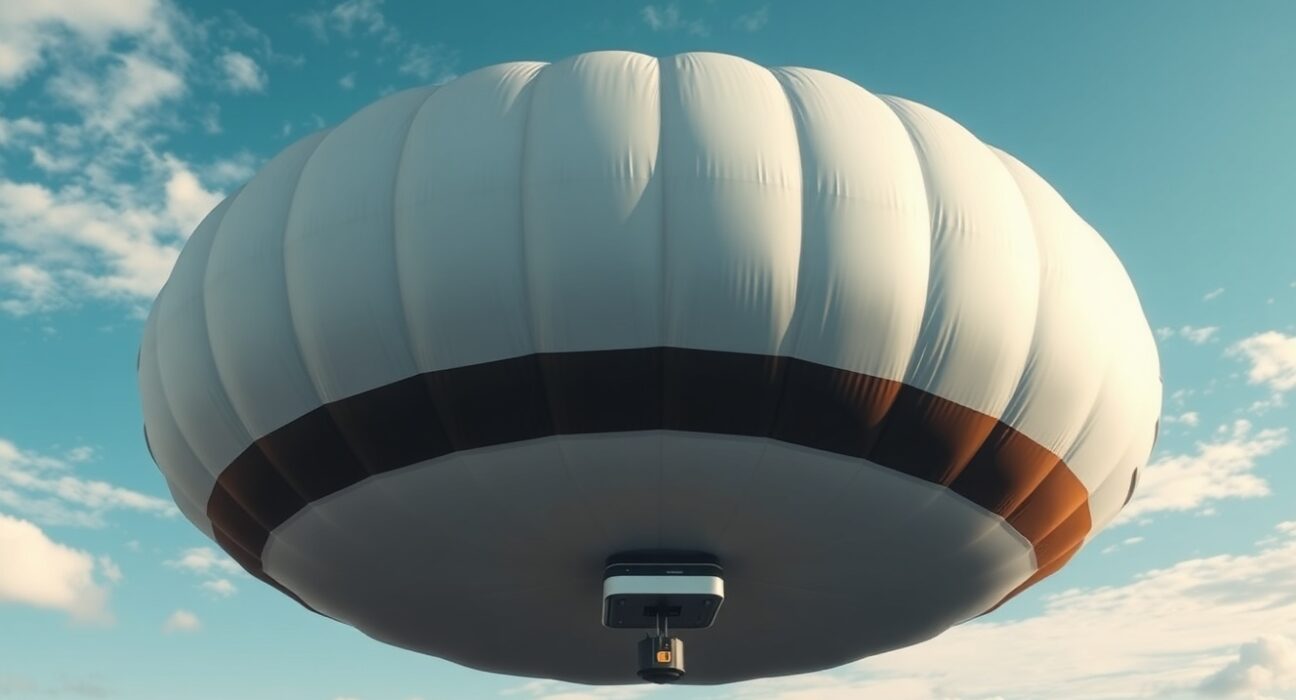
A startup founded by Stanford students is challenging the dominance of Europe’s premier weather forecasting agency with a new AI model that delivers more frequent and accurate predictions. Windborne Systems today released the sixth version of its WeatherMesh model, which the company says outperforms both traditional and AI-based forecasts from the European Centre for Medium-Range Weather Forecasting (ECMWF) on several key variables.
How WeatherMesh 6 improves on existing forecasts
Windborne’s chief product officer, Kai Marshland, described the improvement in simple terms: WeatherMesh 6 is as accurate five days out as a traditional forecast is the day before, especially for surface temperature measurements. The model produces a forecast every hour, compared to every six hours for conventional systems. Its resolution reaches 3 kilometers in Europe and the continental United States, where data quality is highest.
Traditional weather forecasting relies on complex physics models running on expensive supercomputers, a process that takes significant time. AI models, built by startups and major labs like Google DeepMind, are faster but have historically lagged in resolution, variable count, and long-term accuracy. Windborne’s latest release narrows that gap considerably.
The data advantage behind the model
Windborne’s edge comes from its unique combination of model building and proprietary data collection. The company operates about 400 balloons at any given time, launched from 15 sites worldwide, gathering atmospheric sensor readings. These readings are fed directly into the WeatherMesh model, a transformer-based deep learning system that has undergone a year of tuning and re-architecting to maintain stability.
Most AI weather models depend on data sets produced by the ECMWF and the U.S. National Oceanic and Atmospheric Administration (NOAA). Windborne is moving toward independence from those sources. CEO John Dean told Bitcoin World, ‘I don’t understand, personally, the business model of being an AI-based weather company without a data set advantage.’ The company’s head of AI, Joan Creus-Costa, confirmed that direct ingestion of balloon data and other sources is the key driver of WeatherMesh 6’s improvements.
Implications for weather forecasting and beyond
If Windborne’s claims hold up to independent verification, the development could reshape the weather forecasting industry. Government agencies like NOAA and the ECMWF have long been the gold standard, but AI models that learn directly from sensor data could offer faster, cheaper, and more granular predictions. This matters for agriculture, disaster preparedness, energy trading, and logistics, where accurate forecasts save money and lives.
Windborne already sells its balloon data to NOAA, the U.S. Air Force, and the Navy. The company also provides forecasts to investors and commodity traders, though Dean says the focus remains on building out model and data infrastructure rather than commercial products, citing the changing nature of how consumers will access information in the near future.
Safety and operational challenges
Last year, a United Airlines jetliner struck one of Windborne’s balloons, causing minor damage to the aircraft but no injuries. The company had followed U.S. regulations on sensor package size, which limited the damage. Since then, Windborne has added transponders to its balloons that report their location through the global aviation surveillance system, ADS-B, to reduce the risk of future collisions.
Conclusion
Windborne Systems has raised $25 million in venture funding, with a reported valuation of $85 million in 2024. Its WeatherMesh 6 model represents a significant step forward for AI-driven weather prediction, demonstrating that proprietary data combined with advanced deep learning can challenge established government systems. The long-term impact will depend on whether the model’s accuracy holds up across more variables and longer time horizons, and whether the company can scale its data collection without compromising safety.
FAQs
Q1: How does WeatherMesh 6 compare to ECMWF forecasts?
Windborne claims WeatherMesh 6 is more accurate than both traditional and AI-based ECMWF forecasts on several variables, with particular strength in surface temperature predictions. The model produces hourly forecasts instead of every six hours and has a resolution of 3 km in high-data regions.
Q2: What makes Windborne’s approach different from other AI weather models?
Windborne operates its own fleet of weather balloons that collect atmospheric data, which is fed directly into its AI model. Most other AI weather models rely on data sets from government agencies like ECMWF and NOAA, giving Windborne a proprietary data advantage.
Q3: Is the company’s technology safe after the airplane collision?
Following a collision with a United Airlines jet in 2024, Windborne added transponders to its balloons that report their location through the global aviation surveillance system (ADS-B). The company also follows U.S. regulations limiting sensor package size to minimize damage in the event of a strike.
Disclaimer: The information provided is not trading advice, Bitcoinworld.co.in holds no liability for any investments made based on the information provided on this page. We strongly recommend independent research and/or consultation with a qualified professional before making any investment decisions.