
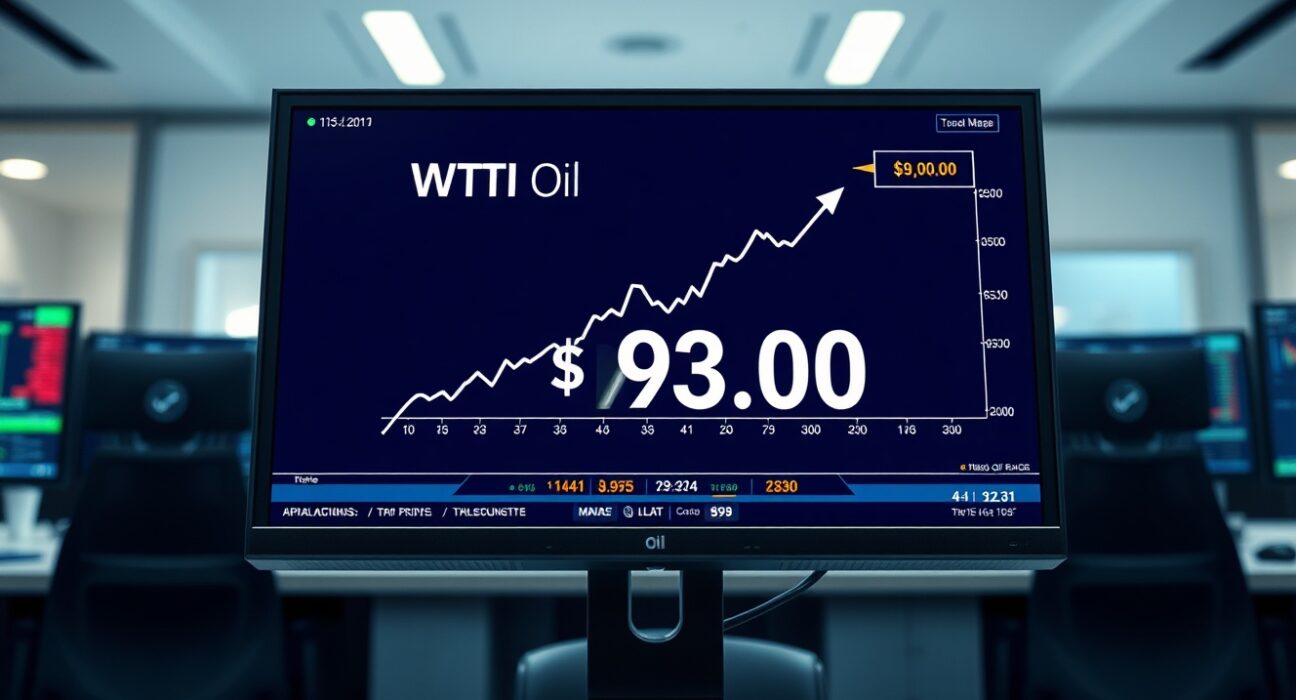
NEW YORK, March 2025 – WTI Crude Oil prices surged decisively above the $93.00 per barrel threshold today, marking a significant escalation in energy market volatility. This dramatic price movement directly correlates with growing international concerns about the stability of a proposed Middle East ceasefire agreement. Consequently, traders are rapidly adjusting their positions to account for potential supply disruptions.
WTI Crude Oil Price Surge and Market Mechanics
The West Texas Intermediate benchmark crossed the $93.00 resistance level during early trading hours. This represents a critical technical breakout from a consolidation pattern observed over the previous fortnight. Market analysts immediately identified several contributing factors to this upward pressure. Firstly, reported delays in diplomatic negotiations have injected fresh uncertainty into global supply forecasts. Secondly, inventory data from the American Petroleum Institute showed a larger-than-expected draw. Thirdly, refinery utilization rates are climbing ahead of the summer driving season.
Furthermore, the price action reflects a classic risk premium being priced into the market. This premium accounts for the potential of renewed conflict disrupting shipments through critical chokepoints. Historical data indicates that similar geopolitical tensions have previously added between $5 and $15 to the baseline price of oil. The current trajectory suggests markets are pricing in a mid-range risk scenario.
Geopolitical Context of the Ceasefire Concerns
The fragile ceasefire, initially brokered in late 2024, faces mounting challenges. Key stakeholder nations have expressed divergent interpretations of the agreement’s terms in recent days. Specifically, disputes over maritime security and energy infrastructure protection have stalled implementation. Regional analysts note that any escalation could immediately threaten transit through the Strait of Hormuz, a conduit for roughly 20% of global oil trade.
Diplomatic sources indicate that back-channel communications are ongoing but have yielded no public breakthroughs. The timeline for a definitive resolution remains unclear, which perpetuates market anxiety. This uncertainty is compounded by the upcoming OPEC+ meeting, where production policy will be set against this volatile backdrop.
Expert Analysis on Supply Chain Vulnerabilities
Energy security experts emphasize the interconnected nature of global supply chains. “The market is reacting to a tangible probability of disruption,” explains Dr. Anya Sharma, Lead Geopolitical Analyst at the Global Energy Institute. “When a major producing region enters a period of political uncertainty, the entire system prepares for contingencies. We are seeing that preparation manifest as higher prices. Storage levels, while adequate, are not sufficient to offset a prolonged closure of a major shipping lane.”
Data from maritime tracking services shows a slight increase in tanker insurance premiums for routes through the region, a leading indicator of perceived risk. Additionally, some shipping companies are reportedly considering longer alternative routes, which would increase transport costs and time, further tightening physical market supply.
Economic Impacts and Inflationary Pressures
The rally in oil prices carries immediate implications for the global economy. Central banks, particularly the Federal Reserve and European Central Bank, monitor energy costs as a core component of inflation metrics. A sustained price above $90 per barrel could complicate efforts to lower interest rates. Higher fuel costs translate directly into increased expenses for transportation, manufacturing, and agriculture.
Consumers will feel the impact at gasoline pumps and on utility bills. For instance, every $10 increase in the price of a barrel of oil typically adds approximately 25 cents to the price of a gallon of gasoline in the United States. This erodes disposable income and can slow economic growth. The following table illustrates the recent price trajectory:
| Date | WTI Price (USD/barrel) | Key Market Driver |
|---|---|---|
| Early March 2025 | $87.50 | Stable Ceasefire Hopes |
| Mid-March 2025 | $90.20 | Initial Diplomatic Delays |
| Today | $93.40 | Ceasefire Concerns Intensify |
Financial markets are also reacting. The S&P 500 energy sector is outperforming the broader index, while airline and logistics stocks are underperforming due to their cost sensitivity. Bond yields have edged higher on inflation fears, demonstrating the widespread ripple effects of the oil price move.
Historical Precedents and Market Psychology
Current events echo several historical episodes where geopolitical tension triggered oil price spikes. The market’s memory of supply shocks creates a reflexive selling of futures contracts by producers and a reflexive buying by speculators and end-users seeking to hedge. This dynamic can amplify price moves beyond what fundamental supply/demand balances might suggest.
Trading volumes for WTI futures contracts are significantly above their 30-day average, indicating heightened participation and conviction. Open interest—the total number of outstanding contracts—has also risen, suggesting new money is entering the market rather than just a repositioning of existing funds.
The Role of Strategic Petroleum Reserves
Governments possess a key tool to moderate prices: the release of crude from their Strategic Petroleum Reserves (SPRs). The United States, for example, maintains an SPR of over 350 million barrels. An International Energy Agency (IEA) coordinated release is a possible response if prices threaten global economic stability. However, analysts note that SPR levels in many nations were drawn down during previous crises and may not be as robust a deterrent as in the past. This reduces a potential ceiling on prices and adds to market nervousness.
Conclusion
The breach of the $93.00 level for WTI Crude Oil underscores the market’s acute sensitivity to geopolitical risk, particularly concerning Middle East stability. The growing concerns over the ceasefire agreement have acted as a catalyst, merging with existing tight supply fundamentals to propel prices higher. This development poses a clear challenge to global inflation management and economic growth projections. Market participants will now closely monitor diplomatic channels and official inventory data for signals that could either reinforce or reverse today’s significant WTI Crude Oil price surge.
FAQs
Q1: What is WTI Crude Oil?
WTI, or West Texas Intermediate, is a grade of crude oil used as a benchmark in oil pricing. It is a light, sweet crude primarily extracted in the United States and serves as a key reference price for global oil markets.
Q2: Why does a potential ceasefire breakdown raise oil prices?
The Middle East is a critical oil-producing region. Fears of renewed conflict create a “risk premium” as markets price in the potential for supply disruptions, such as blocked shipping lanes or damaged infrastructure, which would reduce the global supply of crude.
Q3: How do higher oil prices affect everyday consumers?
Higher oil prices lead to increased costs for gasoline, diesel, and heating oil. They also raise costs for transporting goods, which can lead to higher prices for a wide range of products, contributing to overall inflation.
Q4: What can bring oil prices back down?
Prices could retreat with a credible and durable ceasefire agreement, an increase in oil production from major suppliers like OPEC+ or the US, a significant release from global strategic petroleum reserves, or a marked slowdown in global economic demand.
Q5: What is the difference between WTI and Brent crude oil?
WTI and Brent are the two primary global oil benchmarks. WTI originates in the US midcontinent, while Brent comes from North Sea fields. They have slightly different qualities and pricing, but both react strongly to global geopolitical and economic events.
Disclaimer: The information provided is not trading advice, Bitcoinworld.co.in holds no liability for any investments made based on the information provided on this page. We strongly recommend independent research and/or consultation with a qualified professional before making any investment decisions.