

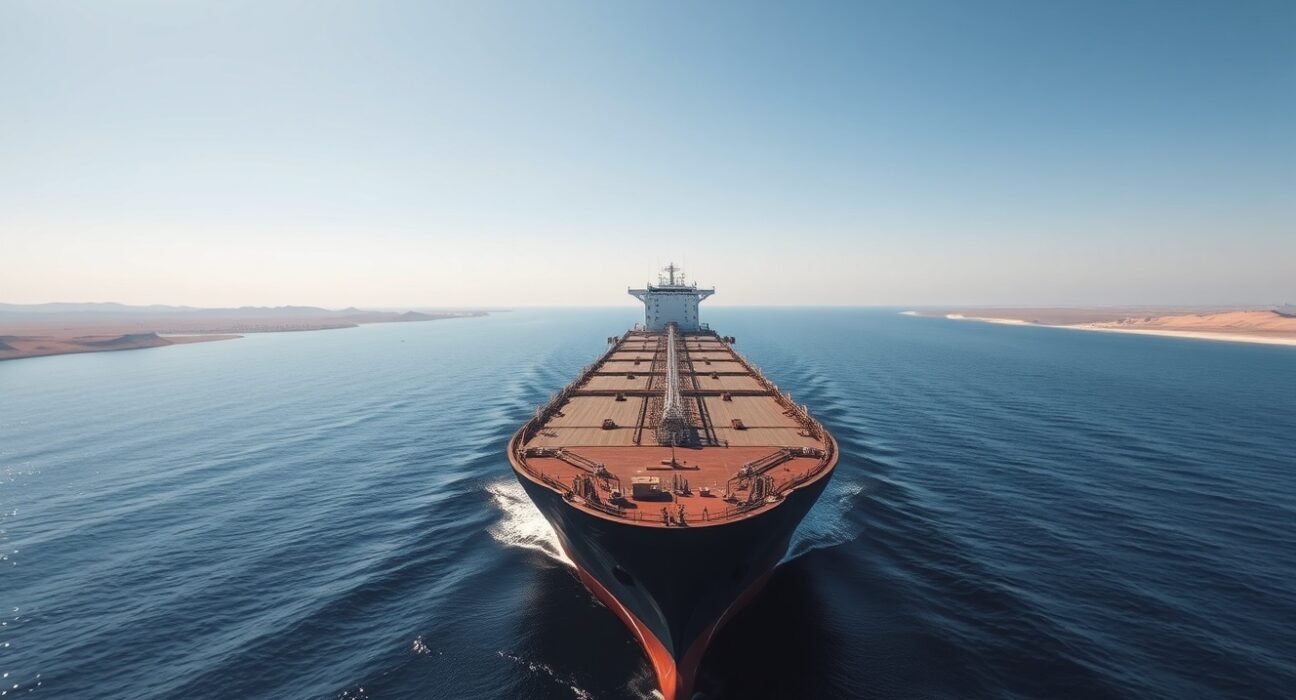
West Texas Intermediate (WTI) crude oil futures experienced a sharp decline during Tuesday’s trading session, driven by growing expectations that the United States and Iran may be nearing a preliminary agreement that could significantly reduce the risk of a blockade or disruption in the Strait of Hormuz. The strategic waterway, through which roughly one-fifth of the world’s petroleum passes, has been a central flashpoint in regional tensions for months.
Market Reaction and Price Movement
WTI crude for near-month delivery fell by more than 3% in early afternoon trading, dipping below the $72 per barrel mark before staging a modest recovery. The move marked one of the largest single-day declines in recent weeks, as traders rapidly repriced the likelihood of a supply disruption. Brent crude, the international benchmark, also retreated, though losses were slightly more contained as European markets weighed separate supply factors.
The sell-off was triggered by unconfirmed reports from diplomatic sources suggesting that negotiators in Doha had made tangible progress on a framework that would limit Iran’s nuclear enrichment activities in exchange for relief from certain economic sanctions. While no formal agreement has been signed, the mere prospect of de-escalation was enough to unwind a portion of the geopolitical risk premium that had been baked into oil prices since late last year.
Why the Strait of Hormuz Matters
The Strait of Hormuz, a narrow 21-mile-wide channel between Iran and Oman, is the world’s most critical oil transit chokepoint. According to the U.S. Energy Information Administration, approximately 17 million barrels of oil and petroleum products pass through it daily. Any credible threat to its security — whether from military confrontation, mine-laying, or political brinkmanship — tends to trigger immediate price spikes in global crude markets.
Iran has historically used the threat of closing the strait as leverage in negotiations. In 2019, after the U.S. withdrew from the Joint Comprehensive Plan of Action (JCPOA), a series of tanker seizures and drone attacks in the region sent insurance premiums soaring and briefly disrupted shipping schedules. The current talks, if successful, would mark a significant departure from that pattern.
Broader Implications for Energy Markets
Beyond the immediate price reaction, a durable US–Iran accord could have longer-term consequences for global oil supply dynamics. Iran currently produces around 3.2 million barrels per day, but international sanctions have severely limited its export capacity. A relaxation of those restrictions could bring an additional 1 to 1.5 million barrels per day back onto the market — a development that would weigh on prices at a time when OPEC+ is already grappling with demand uncertainty.
Analysts at several major investment banks have cautioned, however, that any deal is likely to be phased and conditional. Full normalization of Iranian oil exports would take months to implement, and verification mechanisms remain a sticking point. The market’s reaction, therefore, may be partly overdone in the short term.
Conclusion
The decline in WTI crude reflects a rational repricing of geopolitical risk as diplomatic channels show signs of life. While the situation remains fluid and no final agreement has been reached, the direction of travel is clearly toward de-escalation. For traders and consumers alike, the key question is whether this represents a temporary reprieve or the beginning of a more fundamental shift in Middle Eastern geopolitics. The coming weeks of negotiation will be critical in determining which narrative prevails.
FAQs
Q1: Why did WTI crude oil prices drop today?
A: Prices fell primarily due to reports of progress in US–Iran nuclear talks, which reduced fears of a blockade or disruption in the Strait of Hormuz, a key oil transit chokepoint.
Q2: How much oil passes through the Strait of Hormuz daily?
A: Approximately 17 million barrels of crude oil and petroleum products transit the strait each day, representing about 20% of global consumption.
Q3: Could a US–Iran deal actually increase global oil supply?
A: Yes, if sanctions are relaxed, Iran could potentially restore exports of 1 to 1.5 million barrels per day, though any increase would be phased and subject to verification.
Disclaimer: The information provided is not trading advice, Bitcoinworld.co.in holds no liability for any investments made based on the information provided on this page. We strongly recommend independent research and/or consultation with a qualified professional before making any investment decisions.
