
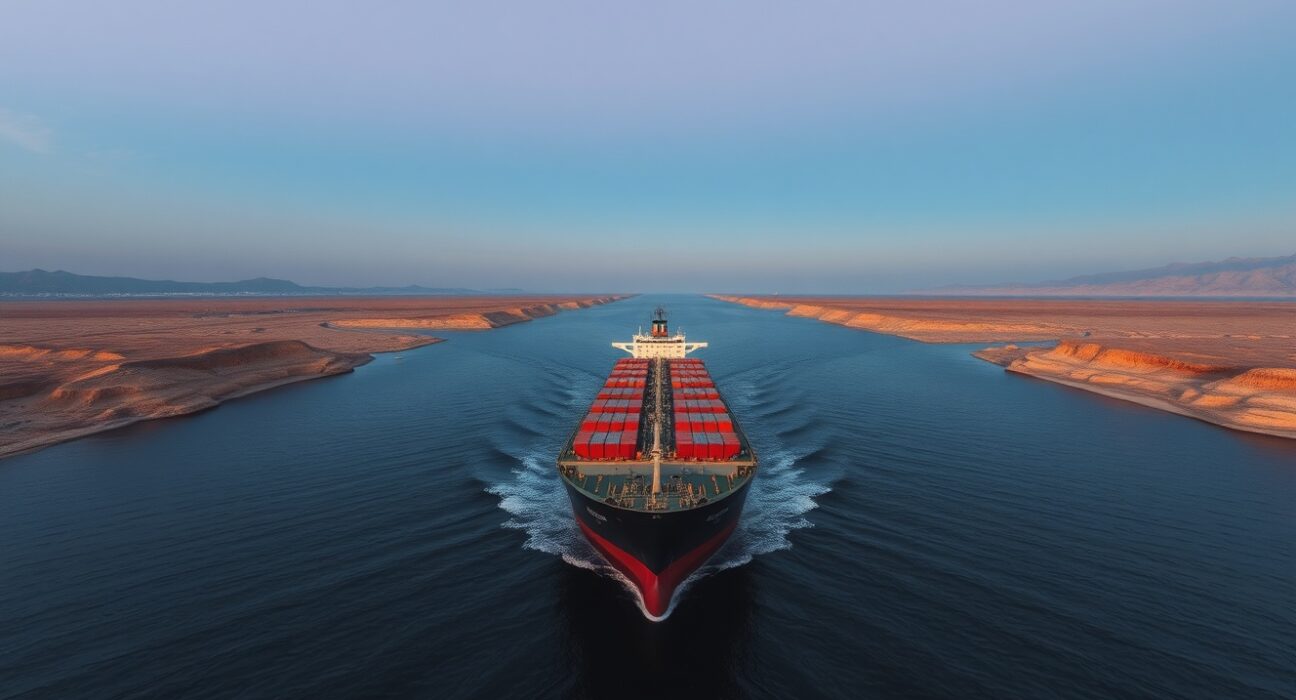
Global energy markets experienced significant volatility on Tuesday as West Texas Intermediate crude oil prices surged above $99 per barrel, marking the highest level in over a decade. This dramatic price movement follows escalating tensions across the Middle East and former U.S. President Donald Trump’s direct threats toward Iran regarding the strategic Strait of Hormuz. Market analysts immediately noted the potential for sustained price pressure as geopolitical risks intensify.
WTI Crude Oil Price Surge and Market Reaction
Benchmark WTI futures climbed 4.7% during Tuesday’s trading session, ultimately settling at $99.42 per barrel on the New York Mercantile Exchange. Consequently, this represents the first time since September 2014 that prices have breached the $99 threshold. Meanwhile, Brent crude, the international benchmark, followed a similar trajectory, rising 4.2% to $103.15 per barrel. Trading volumes exceeded 30-day averages by approximately 45%, indicating substantial institutional participation.
Energy market specialists quickly identified several contributing factors to this price movement. Primarily, renewed hostilities between Israel and Hezbollah along the Lebanon border created immediate supply concerns. Additionally, drone attacks on commercial shipping in the Red Sea disrupted traditional transport routes. Furthermore, production data from the U.S. Energy Information Administration showed unexpected inventory draws of 4.5 million barrels last week.
Technical Analysis and Trading Patterns
Chart analysis reveals critical resistance levels around the $100 psychological barrier. Notably, the 50-day moving average crossed above the 200-day moving average last week, forming a technical “golden cross” pattern. This technical development typically signals sustained bullish momentum. However, relative strength indicators now approach overbought territory at 72.3, suggesting potential near-term consolidation.
Geopolitical Context: Middle East Tensions Escalate
The Middle East currently faces multiple simultaneous security challenges that directly affect global energy markets. Specifically, recent developments include:
- Israel-Hezbollah exchanges: Cross-border rocket fire intensified significantly over the past 72 hours
- Red Sea shipping disruptions: Houthi attacks forced rerouting of approximately 15% of global container traffic
- Iranian nuclear program: International Atomic Energy Agency reports indicate accelerated uranium enrichment
- Gulf Cooperation Council security meetings: Emergency sessions addressed regional stability concerns
Historical data demonstrates clear correlation between Middle East instability and oil price volatility. For instance, during the 2019 attacks on Saudi Aramco facilities, prices spiked nearly 20% within 24 hours. Similarly, the 2020 U.S.-Iran tensions following General Soleimani’s death produced immediate market reactions. Currently, the geopolitical risk premium embedded in oil prices estimates between $8-12 per barrel according to Goldman Sachs analysis.
Trump’s Strait of Hormuz Statement and Market Impact
Former President Donald Trump issued a statement via his Truth Social platform threatening “severe consequences” if Iran attempted to disrupt shipping through the Strait of Hormuz. This critical waterway handles approximately 21 million barrels of oil daily, representing nearly 20% of global consumption. Trump specifically referenced his administration’s “maximum pressure” campaign and suggested reinstating similar policies if reelected.
Energy security experts immediately analyzed the statement’s potential implications. Dr. Sarah Chen, Senior Fellow at the Center for Strategic Energy Studies, commented: “The Strait of Hormuz represents the world’s most important oil chokepoint. Any credible threat to its security automatically triggers risk premium adjustments across global markets. Historical precedent shows even temporary disruptions can cause price spikes exceeding 30%.”
Market participants particularly noted Trump’s specific reference to naval capabilities. His statement mentioned “the world’s greatest naval force” being prepared to respond to any Iranian aggression. Consequently, shipping insurance rates for vessels transiting the Persian Gulf increased by 15% within hours of the statement’s publication.
Historical Context of Strait of Hormuz Tensions
The strategic waterway has witnessed multiple crises affecting global energy markets. In 2019, Iran seized a British-flagged tanker, prompting international naval deployments. During the 1980s “Tanker War,” approximately 400 commercial vessels suffered attacks. More recently, in 2021, Iranian forces briefly captured a Vietnamese-flagged tanker. Each incident produced measurable oil price impacts ranging from 5-15% increases depending on duration and severity.
Global Economic Implications and Inflation Concerns
Sustained oil prices above $95 per barrel create significant macroeconomic challenges. The International Energy Agency estimates each $10 increase in oil prices reduces global GDP growth by approximately 0.5 percentage points. Furthermore, transportation costs typically rise 3-5% for every $10 increase in crude prices, creating inflationary pressure throughout supply chains.
Central banks worldwide now face complicated policy decisions. Federal Reserve Chair Jerome Powell recently acknowledged energy price volatility as a “complicating factor” in inflation management. Similarly, European Central Bank President Christine Lagarde noted the potential for “second-round effects” from sustained energy price increases. Emerging markets with energy subsidies face particular fiscal challenges as oil import costs escalate.
| Country | Oil Import Dependency | Estimated GDP Impact | Inflation Effect |
|---|---|---|---|
| United States | Net Exporter | -0.2% | +0.4% |
| China | 70% Imported | -0.7% | +0.8% |
| India | 85% Imported | -1.1% | +1.2% |
| Germany | 97% Imported | -0.9% | +0.9% |
| Japan | 99% Imported | -0.8% | +0.7% |
Energy Market Fundamentals and Supply Dynamics
Beyond geopolitical factors, underlying supply-demand fundamentals support higher price levels. The Organization of the Petroleum Exporting Countries and allies (OPEC+) maintains production cuts totaling 3.66 million barrels per day through 2025. Simultaneously, non-OPEC production growth has slowed due to capital discipline among U.S. shale producers. Global oil inventories have declined for eight consecutive months, reaching five-year seasonal lows.
Demand projections remain robust despite economic uncertainties. The International Energy Agency’s latest monthly report forecasts 2025 demand growth of 1.2 million barrels per day, primarily driven by Asian economies. Transportation fuel demand continues recovering post-pandemic, while petrochemical feedstock requirements expand steadily. However, energy transition investments have reduced spare production capacity to historically low levels below 2 million barrels per day.
Alternative Energy Considerations
Renewable energy sources cannot immediately offset oil supply disruptions. Solar and wind generation capacity continues expanding but primarily addresses electricity generation rather than transportation needs. Electric vehicle adoption progresses steadily but currently represents only 4% of the global vehicle fleet. Biofuels production faces scalability challenges due to agricultural constraints. Consequently, oil remains indispensable for global transportation systems in the near term.
Conclusion
The WTI crude oil price surge above $99 per barrel reflects converging geopolitical risks and tightening market fundamentals. Escalating Middle East tensions combined with specific threats to Strait of Hormuz security create substantial uncertainty for global energy markets. Market participants must monitor both military developments and diplomatic initiatives that could either escalate or de-escalate current tensions. Ultimately, sustained prices at these levels will test economic resilience and energy security policies worldwide.
FAQs
Q1: What is the Strait of Hormuz and why is it important for oil markets?
The Strait of Hormuz is a narrow waterway between Oman and Iran connecting the Persian Gulf with the Gulf of Oman. Approximately 21 million barrels of oil pass through daily, representing 20% of global consumption. Any disruption immediately affects global energy supplies and prices.
Q2: How do Middle East tensions typically affect WTI crude oil prices?
Historical data shows Middle East conflicts typically add a “geopolitical risk premium” of $5-15 per barrel to oil prices. The premium varies based on conflict proximity to oil infrastructure, duration, and potential supply disruptions. Markets price this risk immediately upon credible threat emergence.
Q3: What are the main factors driving current oil price increases?
Multiple factors converge: escalating Israel-Hezbollah conflict, Red Sea shipping disruptions, OPEC+ production cuts, declining global inventories, and specific threats to Strait of Hormuz security. These create both actual and perceived supply risks that markets price accordingly.
Q4: How might sustained high oil prices affect global inflation?
Each $10 increase in oil prices typically raises overall inflation by 0.4-0.6 percentage points. Transportation costs increase 3-5%, affecting all goods movement. Central banks may maintain higher interest rates longer to combat resulting inflationary pressures.
Q5: What historical events provide context for current market reactions?
Relevant precedents include: 2019 Saudi Aramco attacks (19.5% price spike), 2020 U.S.-Iran tensions (8.5% increase), 2011 Arab Spring disruptions (25% increase), and 1990 Gulf War (125% increase over five months). Markets typically overreact initially then adjust based on actual supply impacts.
Disclaimer: The information provided is not trading advice, Bitcoinworld.co.in holds no liability for any investments made based on the information provided on this page. We strongly recommend independent research and/or consultation with a qualified professional before making any investment decisions.