
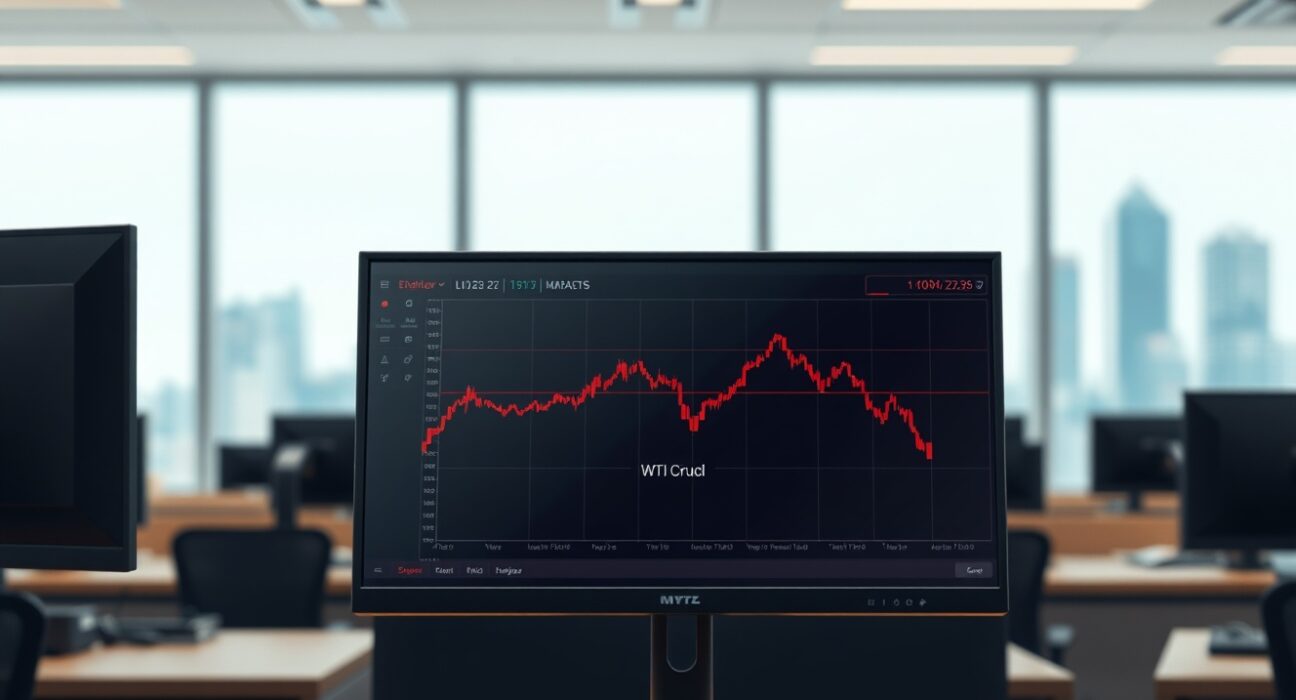
NEW YORK, October 27, 2025 – In a surprising market move, West Texas Intermediate (WTI) crude oil futures weakened decisively below the $93.00 per barrel mark today, trading near a weekly low. This decline unfolds against a backdrop of rising military tensions in the Middle East, a region historically known for triggering oil price spikes. The apparent decoupling of geopolitical risk from the WTI price presents a complex puzzle for energy traders and analysts, pointing to deeper fundamental forces at play in global commodity markets.
WTI Price Action and Technical Breakdown
The WTI crude oil benchmark for December delivery fell to a session low of $92.45 on the New York Mercantile Exchange. Consequently, this move erased gains from earlier in the week and brought prices dangerously close to testing the critical psychological support level of $92.00. Market charts reveal a clear bearish pattern, with the commodity failing to sustain momentum above its 50-day moving average. Furthermore, trading volume surged during the sell-off, indicating strong conviction among sellers.
Several key technical levels were breached during the session. Firstly, the $93.50 support, which held firm for three consecutive sessions, gave way under sustained selling pressure. Secondly, the Relative Strength Index (RSI) dipped into oversold territory, signaling potential for a short-term bounce. However, the overall trend remains negative as long as prices trade below the $95.00 resistance zone. The following table summarizes the key technical levels for WTI crude:
| Level | Type | Significance |
|---|---|---|
| $95.00 | Resistance | 50-day MA & previous consolidation high |
| $93.50 | Broken Support | Previous session low, now resistance |
| $92.00 | Support | Psychological level & weekly low |
| $90.50 | Major Support | October monthly low & 200-day MA |
Geopolitical Tensions Versus Market Fundamentals
Typically, escalating conflict in the Middle East sends shockwaves through the oil market. Recent events, including renewed hostilities along key shipping routes and drone attacks on energy infrastructure, would normally trigger a risk premium. However, the current price action suggests the market is prioritizing fundamental supply and demand data over geopolitical headlines. Analysts point to several concrete factors suppressing prices.
The U.S. Energy Information Administration (EIA) reported a larger-than-expected build in domestic crude inventories. Stockpiles rose by 4.3 million barrels last week, far exceeding analyst forecasts. Simultaneously, refinery utilization rates dipped, indicating weaker near-term demand. Globally, economic data from China, the world’s largest oil importer, showed continued softness in manufacturing activity. This data reinforces concerns about slowing global oil consumption growth.
Key fundamental pressures include:
- High U.S. Production: Output remains near record levels above 13 million barrels per day.
- Strategic Reserve Releases: Coordinated releases from global reserves add supply.
- Dollar Strength: A robust U.S. Dollar makes oil more expensive for foreign buyers.
- Recession Fears: Macroeconomic concerns dampen the demand outlook for 2025.
Expert Analysis on the Divergence
Dr. Anya Sharma, Chief Commodities Strategist at Global Markets Insight, provided context for this divergence. “The market is telling us it is adequately supplied for now,” she stated. “While the Middle East situation is serious, traders are focusing on tangible inventory data and demand signals. The risk premium from geopolitics is being overshadowed by the physical surplus evident in weekly reports.” Sharma emphasized that this does not mean geopolitical risk is irrelevant. Instead, it indicates the market perceives no immediate threat to physical supply flows from the current conflicts.
Other experts highlight the role of financial markets. Michael Chen, a veteran energy futures trader, noted the impact of algorithmic trading. “Many quantitative models are driven by inventory data and momentum signals,” Chen explained. “When the EIA report showed a significant build, sell algorithms were triggered, overpowering any geopolitical bid. This automated selling can accelerate moves that seem counterintuitive to human observers.”
Historical Context and Market Sentiment
This is not the first time oil prices have failed to react to Middle East tensions. During periods of perceived global surplus, similar decoupling has occurred. For instance, in 2015, prices continued to fall despite conflicts, as the market was flooded with shale oil. The current sentiment appears similarly focused on supply abundance. Traders are also looking ahead to the upcoming OPEC+ meeting. Market participants widely expect the producer group to reaffirm its current production quotas, a move already priced in.
Sentiment indicators, such as the Commitments of Traders (COT) report, show money managers have reduced their net-long positions in WTI futures for four consecutive weeks. This shift suggests professional traders are becoming less bullish on the commodity’s near-term prospects. The fear of a global economic slowdown is outweighing the fear of supply disruption, creating a powerful headwind for prices.
Conclusion
The weakening of WTI crude oil below $93.00, despite rising Middle East tensions, underscores a market dominated by fundamental supply and demand dynamics. Robust U.S. production, significant inventory builds, and concerns over global economic health are currently more influential than geopolitical risk premiums. While the situation in the Middle East remains a critical watchpoint for potential supply shocks, the immediate price trajectory for WTI appears tied to tangible inventory data and macroeconomic indicators. Traders will continue to monitor both geopolitical developments and weekly EIA reports with equal intensity to gauge the next major move for oil prices.
FAQs
Q1: Why is WTI crude oil falling when there is conflict in the Middle East?
The price is falling because current market fundamentals—specifically high U.S. production and large inventory builds—are creating a surplus that outweighs the geopolitical risk premium. The market sees no immediate disruption to physical supply.
Q2: What is the key support level for WTI crude oil now?
The immediate key support level is the psychological $92.00 per barrel mark, which coincides with the weekly low. A break below this could see prices test the more significant support at $90.50.
Q3: Could prices reverse and spike higher quickly?
Yes. While fundamentals are currently dominant, a direct threat to major shipping lanes like the Strait of Hormuz or a significant attack on production infrastructure could trigger a rapid and sharp price spike, as the market would reassess supply risks.
Q4: How does a strong U.S. Dollar affect WTI prices?
Oil is priced in U.S. Dollars globally. A stronger dollar makes crude oil more expensive for buyers using other currencies, which can dampen international demand and put downward pressure on the dollar-denominated price.
Q5: What should traders watch next?
Traders should closely monitor the weekly U.S. crude inventory reports from the EIA, any statements from OPEC+ regarding production policy, and macroeconomic data from major economies like China and the Eurozone for demand clues, alongside geopolitical developments.
Disclaimer: The information provided is not trading advice, Bitcoinworld.co.in holds no liability for any investments made based on the information provided on this page. We strongly recommend independent research and/or consultation with a qualified professional before making any investment decisions.