
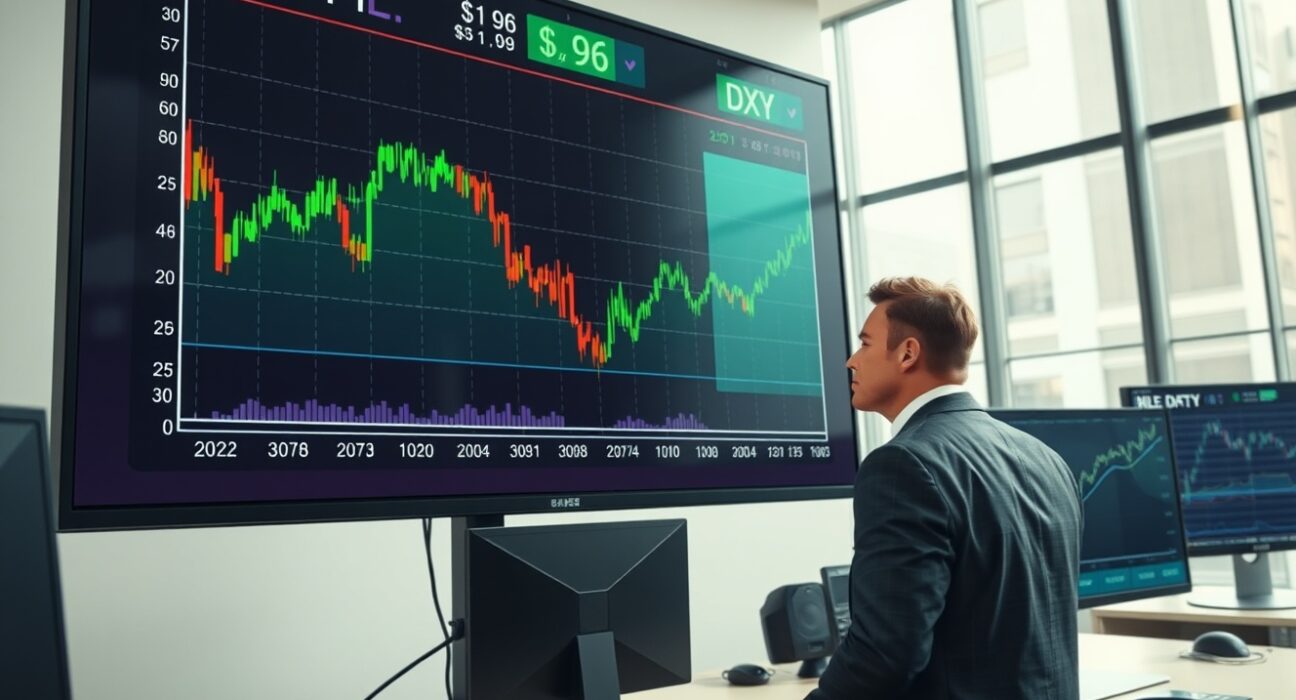
Global energy markets witnessed a significant shift as West Texas Intermediate (WTI) crude oil futures retreated sharply, trading near the $96 per barrel mark. This notable decline in the benchmark US oil price coincides directly with a substantial strengthening of the US Dollar against a basket of major currencies. Consequently, traders and analysts are scrutinizing escalating geopolitical tensions in the Middle East, a region critical to global oil supply, for their potential to reverse the current bearish pressure. The interplay between currency dynamics and regional instability creates a complex landscape for commodity investors worldwide.
WTI Price Action and Key Market Drivers
The recent price movement for WTI crude oil highlights the powerful influence of macroeconomic forces. A robust US Dollar typically makes dollar-denominated commodities like oil more expensive for holders of other currencies, dampening international demand. This fundamental relationship exerted clear downward pressure on prices. However, the market narrative remains bifurcated. Simultaneously, reports of renewed hostilities and strategic posturing in the Middle East provide a countervailing bullish force, as the region accounts for nearly a third of global seaborne oil trade. This tension between a strong dollar and geopolitical risk defines the current trading range.
Market data reveals several concurrent factors influencing the WTI slide:
- DXY Surge: The US Dollar Index (DXY), which measures the dollar against six major peers, climbed to multi-week highs, appreciating over 1.5% in the session.
- Interest Rate Expectations: Stronger-than-expected US economic data bolstered expectations that the Federal Reserve will maintain a restrictive monetary policy for longer, supporting the dollar’s yield appeal.
- Inventory Dynamics: The latest US Energy Information Administration (EIA) report showed a larger-than-forecast build in commercial crude stocks, suggesting temporary supply adequacy.
The US Dollar’s Dominant Role in Commodity Markets
The inverse correlation between the US Dollar and crude oil prices represents a cornerstone of global finance. When the dollar appreciates, the purchasing power of international buyers using euros, yen, or yuan diminishes unless local currencies also strengthen. This dynamic often leads to reduced buying activity in physical and futures markets. Furthermore, a strong dollar can signal broader market risk aversion, prompting investors to exit speculative positions in volatile assets like commodities. The current dollar strength stems from comparative economic resilience and interest rate differentials that favor dollar-denominated assets.
Historical analysis demonstrates the persistence of this relationship. For instance, during periods of sustained dollar bull markets, commodity indices frequently underperform. The table below illustrates recent comparative performance:
| Asset | 5-Day Performance | Primary Driver |
|---|---|---|
| US Dollar Index (DXY) | +1.8% | Fed Policy Outlook |
| WTI Crude Oil | -3.2% | Dollar Strength / Inventory Build |
| Brent Crude Oil | -2.7% | Global Demand Concerns |
Expert Analysis on Currency and Oil Linkage
Senior commodity strategists emphasize that while the dollar is a primary short-term driver, its effect can be overwhelmed by acute supply shocks. “The dollar-oil correlation is strong in calm markets,” notes a lead analyst from a major investment bank, citing internal research. “However, during genuine supply crises, such as a major disruption in the Strait of Hormuz, the pricing mechanism shifts almost entirely to physical availability and risk premiums. The dollar factor becomes secondary.” This expert perspective underscores the conditional nature of current market forces and the latent potential for a rapid sentiment shift.
Geopolitical Tensions in the Middle East: A Constant Wildcard
Despite the bearish pressure from forex markets, the risk premium embedded in oil prices remains elevated due to ongoing instability in the Middle East. The region, home to key producers like Saudi Arabia, Iraq, and the United Arab Emirates, faces persistent threats to infrastructure and shipping lanes. Recent incidents involving maritime security in the Red Sea and the Persian Gulf have kept traders on alert. Any escalation that threatens production or export flows could trigger a swift and violent price spike, as seen in historical precedents following regional conflicts. Market participants are therefore maintaining a cautious stance, balancing immediate dollar headwinds against longer-term supply risks.
The strategic importance of specific chokepoints cannot be overstated. For example, the Strait of Hormuz sees the passage of approximately 21 million barrels of oil per day. A closure or significant attack in this area would have an immediate and dramatic impact on global prices, likely severing the temporary link to dollar strength. Intelligence reports and diplomatic communications from the region are thus parsed by analysts for any sign of changing threat levels that could alter the supply-demand calculus.
Broader Market Impacts and Trader Sentiment
The slide in WTI prices reverberates beyond the energy trading pits. Equity markets, particularly the energy sector, often move in sympathy with underlying commodity prices. Companies involved in exploration, production, and oilfield services may see pressure on their stock valuations. Conversely, transportation and manufacturing sectors that are heavy consumers of fuel could experience a margin benefit from lower input costs, though a strong dollar may complicate international earnings for multinational firms. This creates a complex web of intermarket relationships for portfolio managers to navigate.
Futures market data reveals shifting trader positioning. Commitments of Traders (COT) reports indicate that managed money, or speculative funds, have reduced their net-long positions in WTI contracts in recent weeks. This reduction in bullish bets can itself become a reinforcing factor in a downtrend. However, open interest—the total number of outstanding contracts—remains high, signaling continued engagement and the potential for rapid repositioning should the fundamental picture change. The market, therefore, exhibits characteristics of consolidation rather than a definitive break in the long-term trend.
Conclusion
The decline of WTI crude oil to near $96 per barrel presents a clear case study in competing market forces. The strengthening US Dollar has emerged as the dominant short-term price driver, applying consistent downward pressure by affecting global demand economics. Nevertheless, the ever-present specter of escalation in the Middle East maintains a firm floor under prices, injecting volatility and a risk premium. For market participants, the immediate trajectory of the WTI crude oil price hinges on whether macroeconomic currency trends continue to overshadow simmering geopolitical tensions. Vigilant monitoring of both Federal Reserve communications and developments in key oil-producing regions remains essential for navigating this uncertain landscape.
FAQs
Q1: Why does a stronger US Dollar cause oil prices to fall?
A stronger US Dollar makes oil, which is priced in dollars, more expensive for buyers using other currencies. This can reduce international demand, leading to lower prices.
Q2: What specific Middle East tensions are affecting the oil market?
Markets are monitoring general regional instability, including security threats to key shipping lanes like the Strait of Hormuz and the Red Sea, which are vital for global oil exports.
Q3: Could WTI prices rebound quickly from this level?
Yes. While dollar strength is a headwind, any significant geopolitical event that threatens physical supply could trigger a rapid price spike, overriding the currency effect.
Q4: How does this WTI price move compare to Brent crude oil?
Brent crude, the international benchmark, often moves in correlation with WTI but can be more sensitive to Middle East disruptions due to its pricing basis. It also experienced declines but may hold a slightly higher risk premium.
Q5: What should traders watch next for clues on oil’s direction?
Traders should monitor the US Dollar Index (DXY) for continued strength, weekly US oil inventory data, and any official statements or news regarding military or diplomatic actions in the Middle East.
Disclaimer: The information provided is not trading advice, Bitcoinworld.co.in holds no liability for any investments made based on the information provided on this page. We strongly recommend independent research and/or consultation with a qualified professional before making any investment decisions.