

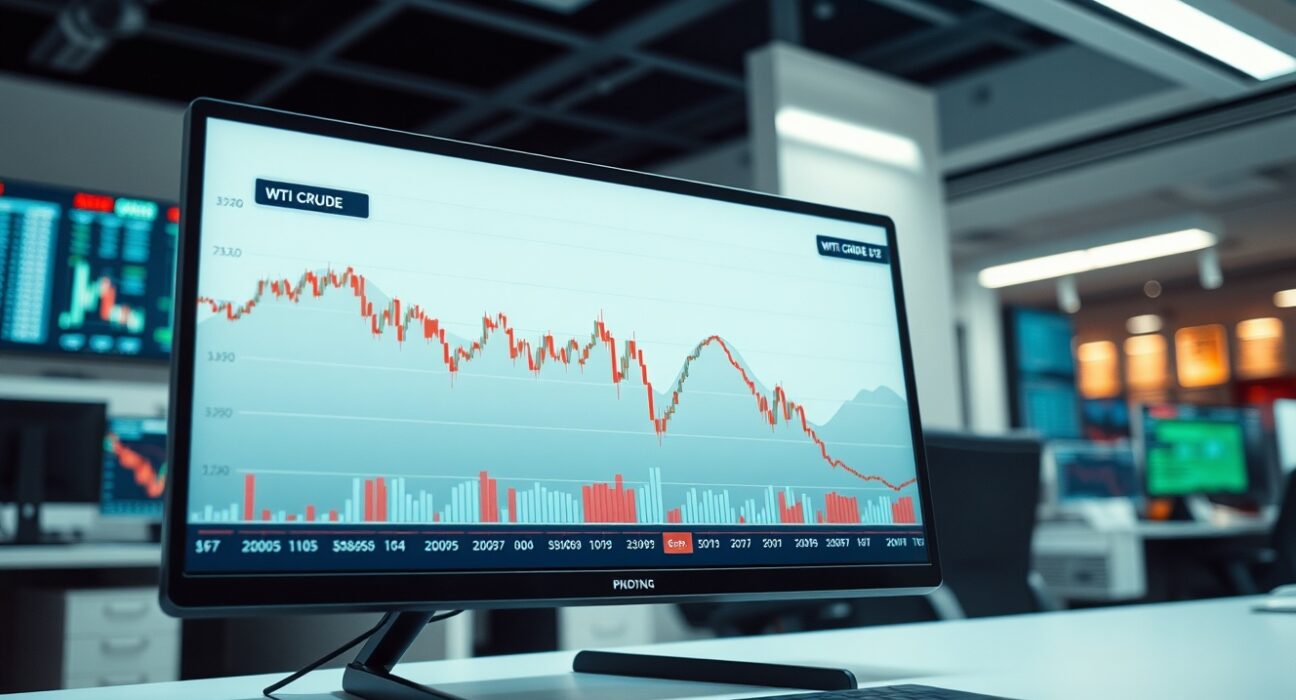
Global oil markets exhibited cautious relief on Thursday, with West Texas Intermediate (WTI) crude futures struggling to maintain a foothold above the $76 per barrel threshold. This price action follows emerging diplomatic signals suggesting a potential de-escalation in the protracted Middle East conflict, a region critical to global energy supply chains. The immediate market reaction highlights the delicate balance between geopolitical risk premiums and fundamental supply-demand dynamics.
WTI Crude Oil Price Reacts to Geopolitical Headlines
Benchmark U.S. oil futures experienced notable volatility during the session. Initially, prices found support from ongoing regional tensions. However, subsequent reports of behind-the-scenes negotiations prompted a swift recalibration. Consequently, the risk premium embedded in oil prices—a financial buffer for supply disruption fears—began to erode. Analysts closely monitor these shifts as they reflect real-time assessments of global stability. Furthermore, trading volumes spiked above recent averages, indicating heightened institutional attention. This activity underscores the market’s sensitivity to developments in the Strait of Hormuz and other key transit corridors.
Anatomy of the Middle East Conflict Risk Premium
The geopolitical landscape directly influences commodity valuations. For instance, the Middle East accounts for nearly one-third of global seaborne oil trade. Any threat to this flow triggers immediate financial consequences. The recent risk premium, estimated by some analysts at $4 to $7 per barrel, acted as an insurance cost against potential outages. Now, diplomatic progress is chipping away at this buffer. Verified data from the U.S. Energy Information Administration (EIA) shows inventory levels also play a concurrent role. Last week’s report indicated a larger-than-expected build in crude stocks, applying additional downward pressure on prices alongside the geopolitical news.
Expert Analysis on Market Sentiment
“Markets are fundamentally forward-looking,” notes Dr. Anya Sharma, Lead Commodities Strategist at Global Energy Insights. “The price movement from $78.50 to a struggle at $76 is a textbook example of the market pricing out immediate disruption risk. However, it’s crucial to distinguish between headline-driven volatility and structural supply deficits. The current price reflects a complex calculus of strategic petroleum reserve levels, OPEC+ production discipline, and global demand forecasts from the International Energy Agency (IEA).”
Comparative Impact on Global Oil Benchmarks
While WTI, the U.S. benchmark, showed weakness, the global benchmark Brent crude also retreated. The spread between the two contracts remained stable, indicating a broad-based market reaction rather than a localized North American event. The table below summarizes the key price movements for the session:
| Commodity | Price Change | Key Support Level | Primary Driver |
|---|---|---|---|
| WTI Crude | -2.8% | $75.20 | Middle East Diplomacy |
| Brent Crude | -2.5% | $79.50 | Geopolitical Risk Reassessment |
| Natural Gas | -1.2% | $2.10/mmBtu | Separate Storage Dynamics |
This synchronized move confirms the geopolitical origin of the sell-off. Moreover, energy sector equities and related exchange-traded funds (ETFs) mirrored the decline in the underlying commodity.
Fundamental Supply and Demand Factors Persist
Beyond geopolitics, several foundational factors continue to shape the oil market’s trajectory. These elements provide context for WTI’s price floor and ceiling.
- OPEC+ Production Policy: The producer alliance maintains its output cuts, providing a structural base for prices.
- Global Economic Health: Manufacturing data from major economies like China and the Eurozone influences demand projections.
- U.S. Shale Output: Domestic production rates remain at near-record levels, capping significant upward spikes.
- Refinery Demand: Seasonal maintenance schedules and gasoline consumption patterns affect crude drawdowns.
- U.S. Dollar Strength: A stronger dollar makes oil more expensive for holders of other currencies, potentially dampening demand.
These factors collectively establish a trading range. Geopolitical events then act as the primary catalyst for moves within that band. The current situation demonstrates how quickly the market can reprice when the geopolitical catalyst appears to weaken.
Historical Context and Market Memory
Financial markets possess a long memory. Previous episodes of Middle East tension, such as the 2019 attacks on Saudi Aramco facilities, led to sharp, short-lived price spikes. However, prices typically normalized once the immediate threat of prolonged supply loss faded. The current pattern suggests a similar mechanistic response. Traders are effectively asking whether the conflict will materially remove barrels from the market over the medium term. Present diplomatic efforts are leading many to tentatively conclude the answer is ‘no,’ for now. This conclusion is fluid and subject to revision with any new aggressive action or breakdown in talks.
The Role of Algorithmic Trading
Modern markets amplify news-driven moves through algorithmic and high-frequency trading (HFT). These systems parse news wires and execute trades in milliseconds. Therefore, a headline about diplomatic talks can trigger an automated selling program. This technological layer adds speed and magnitude to price reactions, often before human traders fully digest the context. The struggle for WTI to hold $76 may partially reflect this automated selling pressure meeting human-driven buy orders at key technical levels.
Conclusion
The WTI crude oil price battle at the $76 level serves as a clear financial barometer for Middle East tensions. The market’s downward shift, while significant, does not erase underlying supply tightness from OPEC+ policy. Instead, it removes the speculative overlay of fear. Investors and analysts will now scrutinize verifiable data on inventory draws, refinery runs, and compliance with production cuts. Ultimately, the trajectory for WTI will depend on whether diplomacy solidifies into a lasting détente or proves to be a temporary pause. For consumers and industries worldwide, this delicate balance between war and peace continues to translate directly into energy costs and economic planning.
FAQs
Q1: What is the ‘risk premium’ in oil prices?
The risk premium is the additional amount buyers are willing to pay for oil due to the perceived risk of a supply disruption. It is not based on current physical shortages but on the potential for future shortages caused by events like geopolitical conflict. When fears ease, this premium evaporates from the price.
Q2: Why is the Middle East so important for oil prices?
The Middle East holds approximately 48% of the world’s proven oil reserves and is a linchpin for global maritime shipping routes. Major producers like Saudi Arabia, Iraq, and the UAE, along with critical chokepoints like the Strait of Hormuz, are located there. Instability threatens the physical flow of crude to global markets.
Q3: How does WTI differ from Brent crude oil?
WTI (West Texas Intermediate) is a lighter, sweeter crude oil primarily produced in the U.S. and priced in Cushing, Oklahoma. Brent is a blend from North Sea fields and serves as the primary benchmark for waterborne crude outside the Americas. Both prices move together, but the spread between them reflects regional supply-demand differences and transportation costs.
Q4: Can oil prices fall even if a conflict is still ongoing?
Yes. Oil prices reflect the market’s expectation of future supply, not just current events. If traders believe a conflict will be contained and not disrupt physical shipments—perhaps due to strategic reserves, spare capacity, or secure alternative routes—prices can stabilize or fall despite ongoing hostilities.
Q5: What other factors should I watch besides geopolitics?
Key factors include weekly U.S. crude inventory reports from the EIA, OPEC+ production decisions, global economic growth forecasts (especially from China), the value of the U.S. dollar, and seasonal demand patterns for refined products like gasoline and jet fuel.
Disclaimer: The information provided is not trading advice, Bitcoinworld.co.in holds no liability for any investments made based on the information provided on this page. We strongly recommend independent research and/or consultation with a qualified professional before making any investment decisions.