

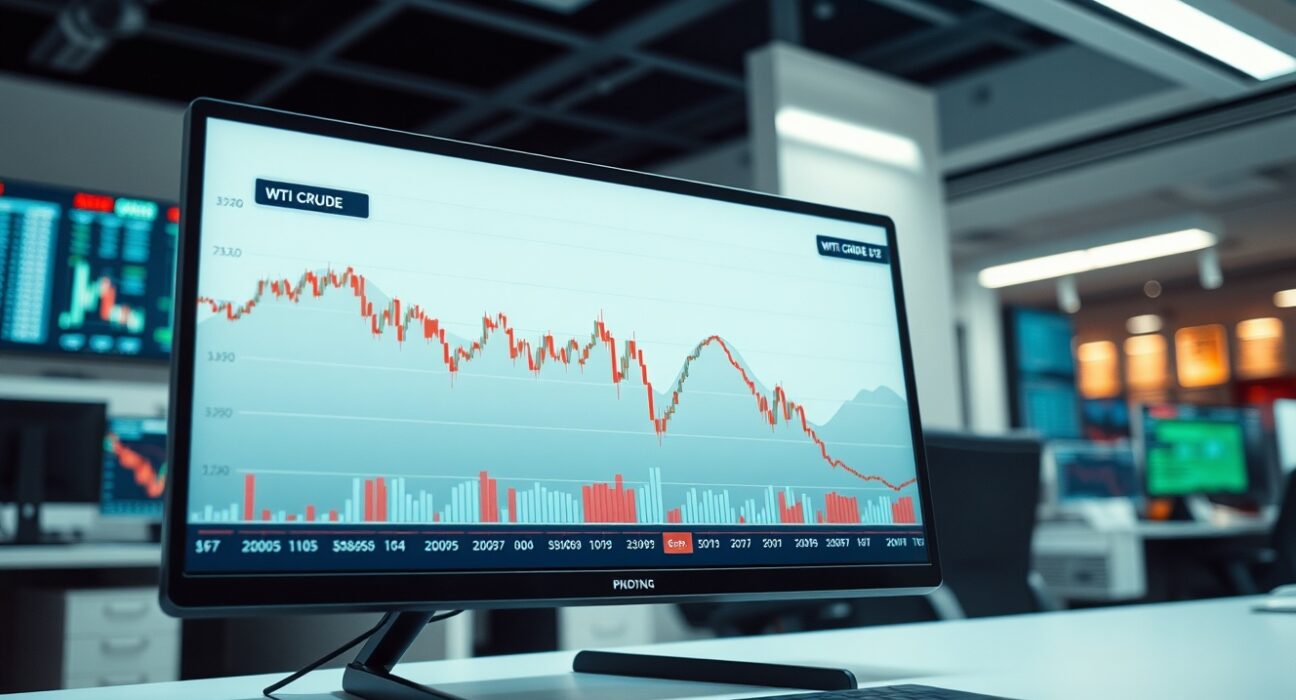
In a surprising market development, the price of West Texas Intermediate (WTI) crude oil inched lower, trading near the $99.00 per barrel mark this week despite a significant broadening of military conflict in the Middle East. This price action defies conventional market wisdom, which typically associates regional instability with immediate upward pressure on global oil benchmarks. Consequently, analysts are scrutinizing a complex interplay of supply, demand, and strategic reserves to explain this counterintuitive movement. The situation underscores the multifaceted nature of modern energy markets, where geopolitical risk represents just one variable in a dense equation.
WTI Crude Oil Price Movement Defies Expectations
The recent price trajectory for WTI crude oil presents a compelling puzzle for traders and economists. Historically, escalating tensions in the Middle East, a region responsible for nearly a third of the world’s seaborne oil trade, trigger swift and substantial price rallies. However, the current phase has seen WTI futures retreat from recent highs, consolidating around the $99.00 level. This specific price point acts as a critical psychological and technical threshold for market participants. Several concurrent factors are applying downward pressure, effectively cushioning the expected geopolitical premium. Market data reveals that trading volumes have remained elevated, indicating active repositioning by major funds rather than a simple lack of interest.
Furthermore, the structure of the futures curve provides additional context. Analysts observe that the market remains in a state of backwardation, where near-term contracts trade at a premium to those further out. This structure typically signals current supply tightness. Nevertheless, the premium has narrowed slightly, suggesting traders perceive a marginally improved supply outlook over the coming months. This subtle shift in forward expectations contributes to the cap on front-month prices. Daily price swings have also moderated compared to the extreme volatility witnessed in prior quarters, pointing to a market cautiously weighing opposing forces.
Key Factors Applying Downward Pressure on Oil
To understand the subdued price reaction, one must examine the powerful fundamental headwinds confronting the market. First, concerns over global economic growth, particularly in major oil-consuming regions like China and Europe, continue to dampen demand projections. Second, consistent and sizable releases from the U.S. Strategic Petroleum Reserve (SPR) have added immediate supply to the physical market. Third, the relentless strength of the U.S. dollar makes dollar-denominated commodities like oil more expensive for holders of other currencies, suppressing international demand. Finally, ongoing efforts by the OPEC+ alliance to manage output provide a floor but also introduce a level of predictable supply that the market has already priced in. These elements collectively create a powerful counterbalance to regional conflict risks.
Analyzing the Broadening Middle East Conflict
The geopolitical landscape in the Middle East has undeniably deteriorated, with conflicts expanding beyond traditional flashpoints. Military engagements have intensified, involving both state and non-state actors across a wider geographical area. This broadening scope inherently raises the risk of potential disruptions to critical infrastructure, including oil production facilities, refineries, and most importantly, maritime chokepoints like the Strait of Hormuz. Any significant interruption to traffic through this strait, through which about 20% of global oil consumption flows, would have an instantaneous and dramatic impact on prices worldwide. The market’s relative calm, therefore, suggests that traders currently assess the probability of such a catastrophic disruption as low.
Simultaneously, the involved nations have so far largely avoided directly targeting energy infrastructure. This strategic restraint is a crucial factor in the market’s calculus. Additionally, other major global producers, including the United States, Brazil, and Guyana, have increased their output, providing alternative supply sources. The market is effectively operating with a heightened awareness of risk but is not yet reacting to an immediate physical shortage. Intelligence reports and shipping data, which show continued oil flows from the region, reinforce this assessment. The situation remains fluid, however, and the risk premium embedded in the price is dynamic, changing with each new headline.
Expert Insight on Market Sentiment and Risk Pricing
“The market is telling us it sees a difference between geopolitical noise and tangible supply disruption,” explains a senior analyst from a leading energy consultancy. “While the conflict is serious and concerning, the actual barrels are still moving. Traders are focused on real-time tanker tracking data, inventory reports, and refinery demand signals. The current price near $99.00 reflects a balance between a high, static risk premium and softer-than-expected physical market fundamentals.” This expert view highlights the data-driven nature of modern commodity trading. Risk managers at oil companies and hedge funds use complex models that quantify disruption probabilities, allowing them to make calculated bets rather than purely emotional reactions to news headlines.
The Critical Role of Global Inventories and Demand
Global oil inventory levels serve as the ultimate buffer against supply shocks. Recent data from the International Energy Agency (IEA) and the U.S. Energy Information Administration (EIA) indicates that commercial stockpiles in OECD nations, while below their five-year average, are not at critically low levels. This inventory cushion provides the market with a degree of confidence. On the demand side, the post-pandemic recovery surge has plateaued. High inflation and rising interest rates are pressuring consumer and industrial activity, leading to downward revisions in oil demand growth forecasts for 2024 and 2025. The following table contrasts key demand drivers from the previous year with current projections:
| Demand Driver | 2023 Outlook | Current 2025 Outlook |
|---|---|---|
| Global GDP Growth | Strong Post-Covid Recovery | Moderating, Regionally Divergent |
| Jet Fuel Consumption | Rapid Rebound in Air Travel | Normalized Growth Rate |
| Chinese Industrial Activity | Expected Robust Reopening | Subdued Due to Property Sector |
| Electric Vehicle Adoption | Gradual Impact | Accelerating, Capping Long-Term Demand |
This shift in the demand narrative is a fundamental reason why geopolitical supply fears are not translating into runaway prices. The market is processing two opposing narratives simultaneously: one of potential supply risk and another of potential demand weakness. The current price equilibrium near $99.00 represents the temporary resolution of this tension.
Technical Analysis and Trader Positioning
From a charting perspective, the $99.00 level for WTI crude oil coincides with several important technical indicators. It sits near a key Fibonacci retracement level from the recent rally and has acted as both support and resistance in the past. The 50-day and 200-day moving averages are converging nearby, often signaling a period of consolidation before the next significant directional move. Commitment of Traders (COT) reports from exchanges show that managed money positions, while still net long, have seen some profit-taking and a reduction in bullish bets. This reduction in speculative length removes one source of upward momentum. Meanwhile, commercial hedgers—the producers and consumers of physical oil—have increased their selling activity, locking in prices at these levels, which further reinforces the resistance.
Option market activity also provides clues. The pricing of put options (bets on price declines) versus call options (bets on price increases) has become more balanced. Earlier in the year, the skew was heavily toward calls, reflecting rampant bullish sentiment. The current balance indicates a market that is uncertain and preparing for potential moves in either direction, rather than confidently betting on a continued surge. This technical and positioning backdrop creates a environment where prices can be range-bound, even amid dramatic news flow.
Conclusion
The current WTI crude oil price, inching lower to near $99.00 despite a broadening Middle East conflict, demonstrates the sophisticated and sometimes counterintuitive nature of global commodity markets. The price is the result of a fierce tug-of-war between palpable geopolitical risks and tangible macroeconomic headwinds. While the conflict introduces a volatile and dangerous premium, powerful forces—including strategic stockpile releases, demand concerns, and a strong dollar—are providing an effective counterweight. For now, the market’s assessment suggests that physical supply flows remain intact, allowing fundamentals to temper fear. The situation remains highly sensitive, and the balance at $99.00 is fragile, poised to shift dramatically with any change to the physical supply landscape or a significant escalation that directly threatens production or transit corridors.
FAQs
Q1: Why is the price of WTI crude oil falling when there is a war in the Middle East?
The price is influenced by many factors beyond geopolitics. Currently, concerns about slower global economic growth (reducing oil demand), releases from government oil reserves, and a strong US dollar are applying significant downward pressure, offsetting the risk premium from the conflict.
Q2: What is the ‘risk premium’ in oil prices?
A risk premium is the extra amount traders are willing to pay for oil due to the potential for future supply disruptions. It’s embedded in the price. The current market suggests this premium is high but stable, as traders see conflict but not yet an immediate threat to oil shipments.
Q3: Could oil prices spike suddenly?
Yes, absolutely. The current relative calm is fragile. Any direct attack on major oil infrastructure, a key pipeline, or a blockade of a critical shipping lane like the Strait of Hormuz would likely cause prices to spike violently and rapidly.
Q4: How do US Strategic Petroleum Reserve (SPR) releases affect the price?
By selling millions of barrels of oil from government stockpiles into the market, the US increases immediate supply. This additional supply helps to lower prices or, as in the current case, helps prevent them from rising even higher due to geopolitical events.
Q5: What does ‘backwardation’ mean in oil markets?
Backwardation is when the current price of oil for immediate delivery is higher than the price for delivery in future months. It usually indicates that the market is worried about short-term supply tightness, which is a sign that the geopolitical risk is still being priced in, even if the headline price isn’t surging.
Disclaimer: The information provided is not trading advice, Bitcoinworld.co.in holds no liability for any investments made based on the information provided on this page. We strongly recommend independent research and/or consultation with a qualified professional before making any investment decisions.
