
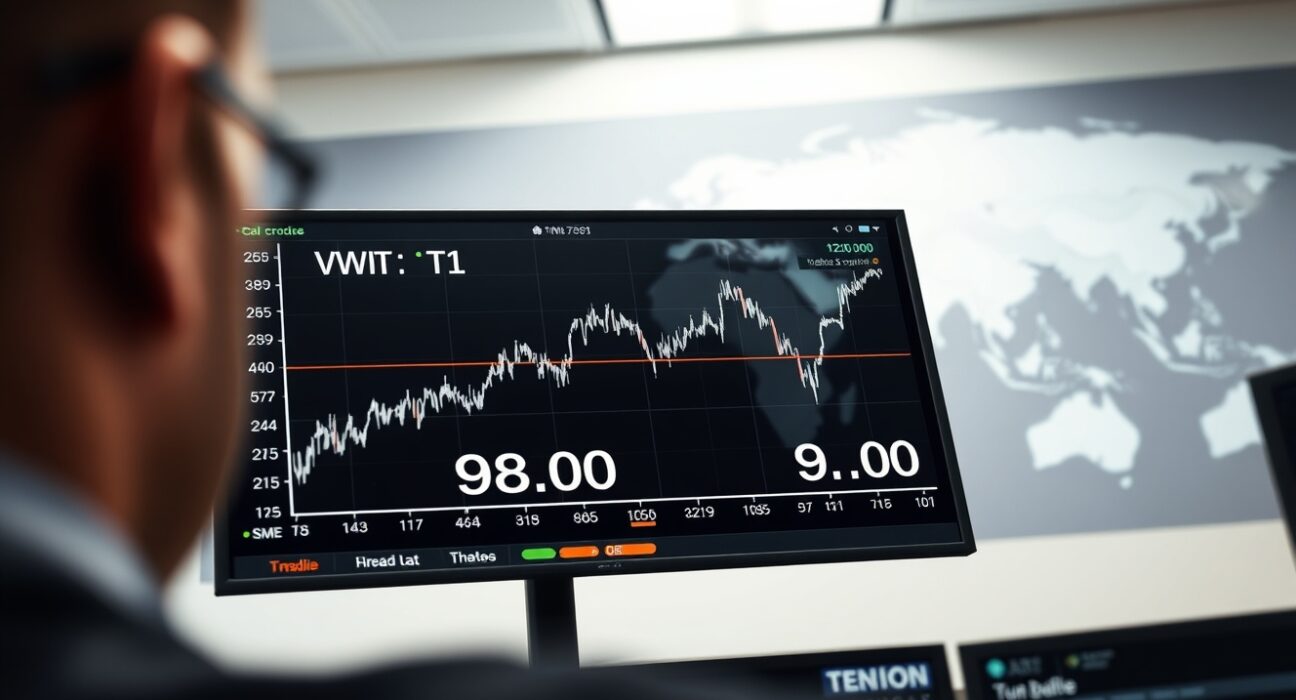
Global energy markets face renewed pressure as West Texas Intermediate (WTI) crude oil futures hover persistently around the $98.00 per barrel threshold. This significant price level, observed in early 2025 trading sessions, reflects deep-seated anxieties about supply stability emanating from the Middle East. Consequently, traders and analysts closely monitor geopolitical developments that could further disrupt the delicate balance between global oil production and consumption. The current price action underscores a market grappling with fundamental supply risks rather than mere speculative trading.
WTI Crude Oil Price Analysis and Market Drivers
WTI crude, the primary U.S. benchmark, has demonstrated remarkable resilience above the $95.00 support level for several consecutive weeks. Market data reveals that the $98.00 price point represents a critical psychological and technical resistance zone. Furthermore, trading volumes have increased substantially during periods of heightened Middle East tension. The price trajectory directly correlates with specific geopolitical events, including recent disruptions to maritime shipping routes. Analysts from major financial institutions consistently cite supply chain vulnerabilities as the core driver behind this sustained price elevation. Therefore, the market structure remains fundamentally bullish despite occasional profit-taking episodes.
Several key factors contribute to the current price environment. First, inventory data from the U.S. Energy Information Administration shows consistent draws on crude stocks. Second, global demand forecasts, particularly from emerging Asian economies, remain robust. Third, the forward price curve for WTI futures indicates a state of backwardation, where near-term contracts trade at a premium to later dates. This market condition typically signals immediate supply tightness. For instance, the spread between the front-month and six-month WTI futures contracts has widened significantly in recent days.
Comparative Analysis with Brent Crude
The price differential between WTI and Brent crude, the international benchmark, provides crucial market insights. Historically, Brent trades at a premium to WTI due to its status as a waterborne crude more sensitive to global disruptions. However, the current spread has narrowed considerably, indicating that U.S. benchmark prices are catching up to global risk premiums. This convergence suggests that Middle East supply concerns now impact all major benchmarks almost equally. The following table illustrates recent price movements:
| Benchmark | Price (USD/barrel) | Weekly Change | Key Support Level |
|---|---|---|---|
| WTI Crude | ~98.00 | +2.8% | 95.50 |
| Brent Crude | ~101.50 | +2.5% | 99.00 |
| Oman Crude | ~100.75 | +3.1% | 98.25 |
Persistent Middle East Supply Concerns and Geopolitical Context
The Middle East region accounts for approximately one-third of global seaborne oil trade, making its stability paramount to energy markets. Recent escalations have directly threatened two critical chokepoints: the Strait of Hormuz and the Bab el-Mandeb Strait. Consequently, shipping insurance premiums for vessels traversing these routes have skyrocketed, adding a tangible cost to physical oil deliveries. Major oil producers in the Gulf Cooperation Council have maintained official production levels, but market participants increasingly fear unscheduled outages. These concerns are not unfounded, given the historical precedent of supply shocks originating from the region.
Key developments influencing market sentiment include:
- Maritime Security Incidents: Multiple reported incidents involving commercial tankers have raised safety concerns.
- Infrastructure Vulnerability: Critical pipeline and port facilities remain potential targets in regional conflicts.
- OPEC+ Policy Uncertainty: The producer alliance’s spare capacity, concentrated in the Middle East, represents the world’s primary supply buffer.
- Strategic Stockpile Releases: International Energy Agency member countries have discussed potential coordinated stock releases to calm markets.
Expert Analysis on Supply Chain Resilience
Energy market specialists from organizations like the Oxford Institute for Energy Studies emphasize the interconnected nature of global supply chains. “The market is pricing in a persistent risk premium,” notes Dr. Elena Rodriguez, a senior fellow specializing in geopolitical risk. “This premium, currently estimated at $8-12 per barrel above fundamental value, reflects the probability-weighted expectation of a supply disruption.” Rodriguez’s research indicates that modern just-in-time inventory systems have reduced the global economy’s resilience to such shocks. Therefore, even minor disruptions can now cause disproportionate price reactions compared to previous decades.
Global Economic Impacts and Market Reactions
Sustained oil prices near $100 per barrel create significant headwinds for the global economy. Central banks worldwide monitor energy-driven inflation closely, as transportation and production costs rise across all sectors. Emerging market economies, which often spend a larger percentage of GDP on energy imports, face particular strain. Conversely, major oil-exporting nations experience substantial revenue windfalls, potentially altering fiscal policies and investment flows. The foreign exchange markets have already reacted, with commodity-linked currencies strengthening against the U.S. dollar in recent sessions.
Equity markets display sectoral divergence in response to the oil price movement. Energy sector indices have outperformed broader market benchmarks by a considerable margin. Meanwhile, airline, transportation, and heavy manufacturing stocks have underperformed due to rising input cost concerns. Bond markets have also adjusted, with inflation expectations embedded in Treasury breakeven rates ticking upward. This multifaceted market reaction demonstrates the pervasive influence of oil prices on global financial assets.
The Role of Alternative Energy and Substitution Effects
High fossil fuel prices historically accelerate investment in alternative energy sources. Current price levels make renewable energy projects and electric vehicle adoption more economically attractive. However, analysts caution that the substitution effect operates with a significant time lag. “Infrastructure transitions require years, not weeks,” explains Michael Chen, a clean energy analyst at BloombergNEF. “In the short term, demand for oil remains relatively inelastic, meaning consumption doesn’t drop immediately when prices rise.” This inelasticity explains why prices can remain elevated despite economic pain, as consumers and businesses lack immediate alternatives.
Technical Outlook and Trader Positioning
From a technical analysis perspective, the $98.00 level represents a major resistance zone that has capped several rally attempts over the past year. A sustained break above this level, confirmed by a weekly close above $99.50, could open the path toward the psychologically significant $100.00 mark and beyond. Trading data from the Commodity Futures Trading Commission shows that managed money accounts, including hedge funds, have built substantial net-long positions in WTI futures. This positioning suggests professional traders anticipate further price appreciation. However, it also creates the risk of a sharp correction if these positions are unwound rapidly.
Key technical levels to monitor include:
- Immediate Resistance: $98.50 – $99.50 range
- Primary Support: $95.00 – $95.50 zone
- Major Support: $91.00 (200-day moving average)
- Volume Profile: High trading volume nodes around $96.50 indicate value area
Market volatility, as measured by the CBOE Crude Oil Volatility Index (OVX), has risen in tandem with prices. Elevated volatility typically indicates trader uncertainty and can lead to wider price swings in both directions. Options market activity shows increased demand for call options (bets on higher prices) at strike prices of $100 and $105, reflecting bullish sentiment among some market participants.
Conclusion
The WTI crude oil price hovering around $98.00 per barrel serves as a clear barometer of market anxiety regarding Middle East supply stability. This price level reflects a complex interplay of geopolitical risk, fundamental supply-demand balances, and financial market positioning. While alternative energy development continues, the global economy remains acutely sensitive to oil price fluctuations in the near term. Market participants should prepare for continued volatility as geopolitical developments unfold. Ultimately, the trajectory of the WTI crude oil price will depend heavily on whether current supply concerns materialize into actual disruptions or gradually recede from market focus.
FAQs
Q1: What does WTI stand for and why is it important?
WTI stands for West Texas Intermediate. It is a grade of crude oil used as a benchmark in oil pricing and the underlying commodity of New York Mercantile Exchange’s oil futures contracts. Its importance stems from its role as the primary benchmark for oil produced in the United States, influencing global energy prices.
Q2: How do Middle East tensions specifically affect oil supply?
Tensions can affect supply through direct attacks on infrastructure (pipelines, ports), disruptions to critical shipping chokepoints (like the Strait of Hormuz), sanctions on producer nations, or internal instability that halts production. Even the threat of disruption causes markets to price in a “risk premium.”
Q3: What is the difference between WTI and Brent crude oil?
WTI is a lighter, sweeter (lower sulfur) crude extracted primarily in the U.S., priced at Cushing, Oklahoma. Brent is a blend from North Sea fields, serving as the international benchmark. Brent typically trades at a premium to WTI due to transportation costs and its responsiveness to global disruptions.
Q4: What happens if WTI breaks above $100 per barrel?
A sustained break above $100 would signal a major bullish breakout, likely triggering further technical buying. It would increase inflationary pressures globally, potentially forcing central banks to maintain tighter monetary policy, and could accelerate investment in energy efficiency and alternatives.
Q5: How do high oil prices impact everyday consumers?
High oil prices lead to increased costs for gasoline, diesel, heating oil, and airfare. They also raise production and transportation costs for goods, contributing to broader inflation. This reduces disposable household income and can slow economic growth.
Disclaimer: The information provided is not trading advice, Bitcoinworld.co.in holds no liability for any investments made based on the information provided on this page. We strongly recommend independent research and/or consultation with a qualified professional before making any investment decisions.