

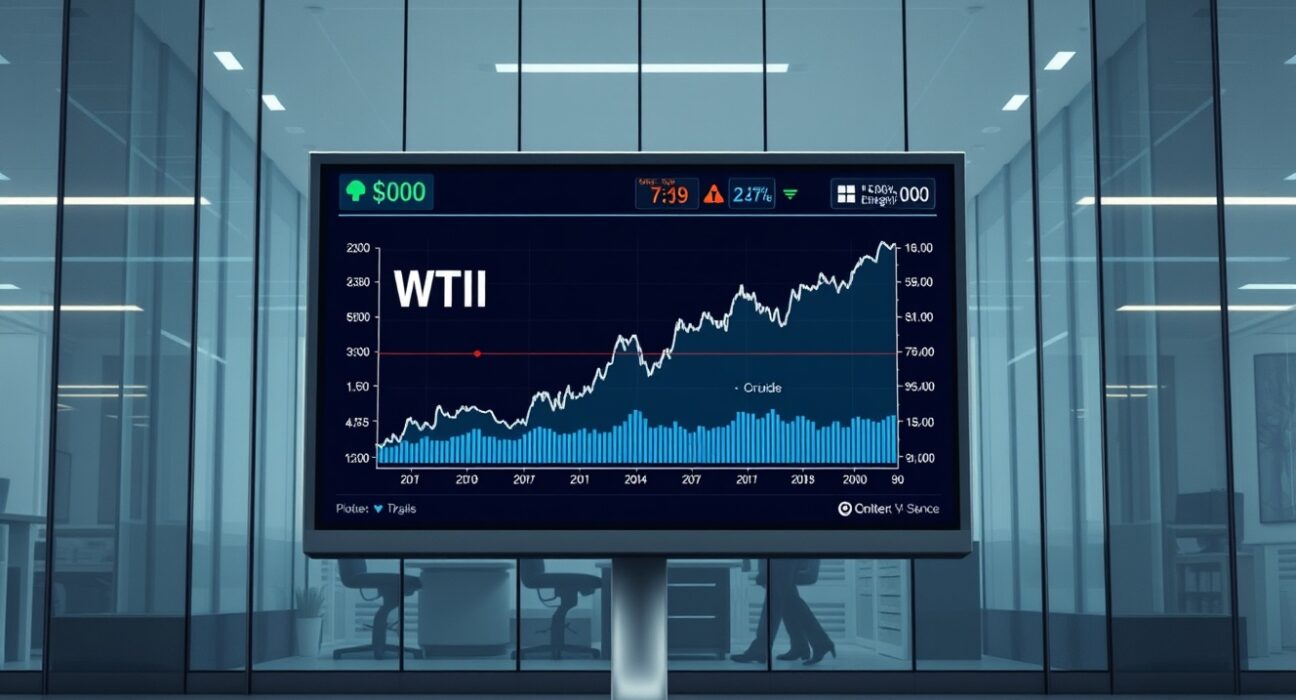
Global energy markets face renewed volatility as West Texas Intermediate (WTI) crude oil futures maintain a firm stance above the critical $100 per barrel threshold. This significant price level, observed in early 2025, follows escalating geopolitical rhetoric that has directly targeted Iran’s vast energy production and export capabilities. Consequently, traders and analysts worldwide are assessing the potential for sustained supply disruptions in one of the world’s most crucial oil-producing regions.
WTI Crude Oil Price Surge and Market Mechanics
The recent price action for WTI crude oil demonstrates a classic risk premium response. Typically, the market prices in potential future supply shortages when geopolitical instability threatens major producers. In this instance, the specific focus on Iran’s energy infrastructure—including its oil fields, refineries, and export terminals—creates a tangible fear of reduced global supply. Furthermore, the Strait of Hormuz, a vital maritime chokepoint for global oil shipments, remains a focal point of regional tension. Market data from the New York Mercantile Exchange shows sustained buying pressure, with trading volumes spiking significantly above monthly averages. This activity underscores the market’s acute sensitivity to developments in the Middle East.
Understanding the Risk Premium
A risk premium represents the additional cost buyers are willing to pay for a commodity due to perceived future supply risks. For crude oil, this premium can fluctuate dramatically based on news flow and expert assessments. Several key factors contribute to the current premium:
- Iran’s Production Capacity: Iran holds some of the world’s largest proven oil reserves.
- Global Spare Capacity: The ability of other OPEC+ nations to offset potential losses is limited.
- Inventory Levels: Commercial and strategic petroleum reserves in consuming nations are being closely monitored.
These elements combine to create a market environment where even the threat of disruption commands a higher price.
Geopolitical Context: Iran’s Energy Infrastructure in Focus
Iran’s energy sector is a cornerstone of its economy and a pivotal component of global oil markets. The country’s infrastructure network is extensive but also potentially vulnerable. Key installations include the massive South Pars gas field, the Abadan refinery complex—one of the largest in the world—and critical export hubs on the Persian Gulf. Historical precedents, such as attacks on Saudi Aramco facilities in 2019, have shown how targeted strikes can immediately remove millions of barrels per day from the market. Therefore, any credible threat to similar infrastructure prompts immediate recalibration by market participants. Energy analysts from firms like Rystad Energy and the International Energy Agency (IEA) consistently model various disruption scenarios, and their published reports influence trading desks globally.
Historical Price Reactions to Regional Conflict
Examining past events provides context for current price movements. For example, the initial phase of the Russia-Ukraine conflict in 2022 saw Brent crude prices briefly exceed $130 per barrel. Similarly, the 2020 drone attacks on Saudi facilities caused the largest single-day price spike in decades. The current situation shares characteristics with these events, namely the concentration of risk on specific, high-value infrastructure. However, the market’s response is also tempered by longer-term factors like the global energy transition and current demand forecasts from Asia.
Global Economic and Sectoral Impacts
Sustained oil prices above $100 per barrel create ripple effects throughout the global economy. The transportation sector feels the most immediate impact, with jet fuel, diesel, and gasoline prices rising. This increase directly contributes to higher logistics costs and consumer inflation. Central banks, including the Federal Reserve and the European Central Bank, monitor energy-driven inflation closely as they formulate monetary policy. Additionally, certain industries face disproportionate pressure.
| Sector | Primary Impact | Secondary Effect |
|---|---|---|
| Aviation & Shipping | Soaring fuel costs erode profit margins. | Potential for higher passenger fares and freight rates. |
| Chemical Manufacturing | Increased feedstock (naphtha) costs. | Downstream pressure on plastics and fertilizer prices. |
| Consumer Discretionary | Reduced household spending power. | Slowdown in retail and automotive sales. |
Conversely, the energy sector itself experiences a complex dynamic. While integrated oil majors may see higher revenues, independent refiners can face margin compression if crude input costs rise faster than refined product prices.
Market Sentiment and Trader Positioning
Commitments of Traders reports from the Commodity Futures Trading Commission (CFTC) reveal a notable shift in market positioning. Managed money accounts, which include hedge funds and other speculators, have increased their net-long positions in WTI futures contracts significantly. This trend indicates a collective bet on continued price strength. Meanwhile, commercial hedgers—like airlines and shipping companies—are actively locking in future prices to manage their cost exposure. The put-call skew in options markets also shows heightened demand for protection against further upside price moves, a clear signal of prevailing bullish sentiment tempered by fear of volatility.
The Role of the U.S. Strategic Petroleum Reserve
One potential mitigating factor is the U.S. Strategic Petroleum Reserve (SPR). The U.S. Department of Energy maintains this stockpile specifically for supply emergencies. Previous administrations have authorized sales or exchanges from the SPR to calm markets during supply shocks. However, the reserve’s current inventory levels, which were drawn down significantly in 2022, may limit the scale and duration of any potential intervention. Market participants are therefore weighing the likelihood and potential impact of such a policy response against the scale of the perceived threat.
Conclusion
The WTI crude oil market remains firmly above $100 per barrel, a level that reflects deep-seated concerns over the stability of global energy supplies. The specific geopolitical focus on Iran’s energy infrastructure has injected a substantial risk premium into prices, affecting everything from trader portfolios to consumer gasoline costs. While historical patterns provide a framework for understanding these movements, each event carries unique variables. The trajectory of prices will ultimately depend on the evolution of the geopolitical situation, the actual physical impact on production and exports, and the subsequent policy responses from both producing and consuming nations. For now, the market’s message is clear: stability in the Persian Gulf is inextricably linked to stability in global energy prices.
FAQs
Q1: What is WTI crude oil?
A1: West Texas Intermediate (WTI) is a grade of crude oil used as a benchmark in oil pricing. It is a light, sweet crude primarily extracted in the United States and serves as the underlying commodity for futures contracts traded on the New York Mercantile Exchange (NYMEX).
Q2: Why do threats to Iran’s infrastructure affect global oil prices?
A2: Iran is a major oil producer and exporter. Threats to its energy infrastructure, such as refineries, pipelines, and export terminals, create fear of a sudden reduction in global oil supply. Markets preemptively price in this potential shortage, driving prices higher in a phenomenon known as a “geopolitical risk premium.”
Q3: How does a $100+ oil price impact the average consumer?
A3: Higher crude oil prices typically lead to increased costs for gasoline, diesel, and heating oil. This can raise transportation and manufacturing costs, which often filter down to higher prices for goods and services, contributing to broader inflationary pressures.
Q4: What other factors influence crude oil prices besides geopolitics?
A4: Key factors include global supply and demand balance, production decisions by OPEC+ nations, inventory levels, the strength of the U.S. dollar, global economic growth forecasts, and, increasingly, policies related to the energy transition and renewable adoption.
Q5: Can other countries increase production to offset potential losses from Iran?
A5: Several OPEC+ members, notably Saudi Arabia and the United Arab Emirates, hold some spare production capacity. However, this capacity is finite, and mobilizing it quickly involves complex decisions within the producer group. The United States, as the world’s largest producer, also watches market conditions, but its shale production response time is measured in months, not days.
Disclaimer: The information provided is not trading advice, Bitcoinworld.co.in holds no liability for any investments made based on the information provided on this page. We strongly recommend independent research and/or consultation with a qualified professional before making any investment decisions.
