
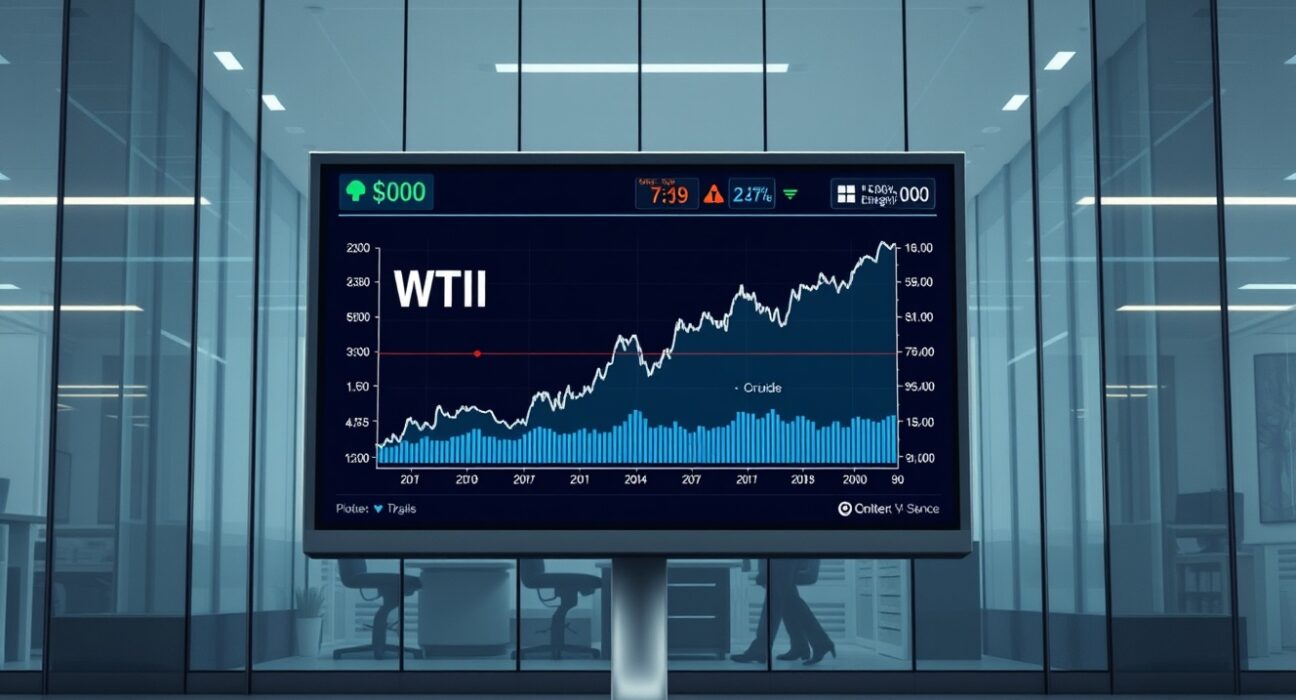
Global energy markets experienced a significant shockwave on Tuesday, March 18, 2025, as the benchmark West Texas Intermediate (WTI) crude oil price surged approximately 10% to trade near the critical $104.00 per barrel level. This dramatic move, one of the largest single-day gains in recent years, was directly triggered by escalating geopolitical rhetoric concerning Iran, highlighting the persistent fragility of global oil supply chains.
WTI Price Surge: Analyzing the 10% Geopolitical Shock
The trading session opened with relative calm before a cascade of buy orders flooded the market. Consequently, WTI futures catapulted from a pre-news level around $94.50 to briefly touch $104.50. This rapid ascent underscores the market’s acute sensitivity to supply disruption risks in the Strait of Hormuz, a chokepoint for roughly 20% of global oil consumption. Historically, similar geopolitical events have caused volatile but often temporary price spikes. However, analysts from the International Energy Agency (IEA) note that current global inventories are tighter than during previous crises, potentially amplifying the price impact.
Market mechanics immediately reflected the fear premium. Trading volumes for WTI futures contracts spiked to more than double their 30-day average. Furthermore, the options market showed a dramatic skew toward calls, indicating traders were betting on further price increases. The price surge also had a pronounced ripple effect across the entire energy complex.
- Brent Crude: The international benchmark rose in tandem, narrowing its spread to WTI.
- Energy Equities: Shares of major oil producers and service companies rallied sharply.
- Refined Products: Gasoline and diesel futures also posted significant gains, presaging higher pump prices.
The Geopolitical Catalyst: Iran and Regional Stability
The immediate catalyst was a series of statements renewing focus on Iran’s nuclear program and regional activities. These developments reignited deep-seated market anxieties about the security of maritime transit through the Persian Gulf. The Strait of Hormuz, at its narrowest point, is only 21 miles wide. Any credible threat to shipping in this corridor triggers an automatic risk premium in oil prices. Energy strategists often refer to this as the “Hormuz Premium,” which can add $5 to $15 to the price of a barrel during periods of high tension.
This event occurs within a complex historical context. The global oil market has weathered numerous regional conflicts and sanctions regimes over the past decade. For instance, the market response differs from the initial shock of the 2022 Ukraine invasion, which caused a longer-term structural repricing of energy flows. Conversely, it bears similarities to the 2019 spike following attacks on Saudi oil infrastructure, which was a sharp, event-driven shock.
Expert Analysis on Market Fundamentals and Sentiment
“While the geopolitical headline is the match, the market fundamentals provided the tinder,” explained Dr. Anya Sharma, Lead Commodities Strategist at Global Macro Advisors. “Global oil demand has proven resilient, and OPEC+ production discipline has kept supply growth in check. Therefore, the market lacks a significant buffer to absorb a sudden supply shock. The 10% move reflects not just current fear, but a reassessment of downside risks for the remainder of 2025.”
Data from the U.S. Energy Information Administration (EIA) supports this view. Commercial crude inventories in OECD nations are currently 5% below their five-year average for this time of year. Additionally, spare production capacity among key OPEC members is estimated at a multi-year low of around 2-3 million barrels per day. This limited cushion means any physical disruption would have immediate price consequences, a fact clearly understood by algorithmic and institutional traders who drove Tuesday’s surge.
Broader Economic and Consumer Impacts
The ramifications of sustained higher oil prices extend far beyond trading desks. Primarily, transportation costs for goods would rise, applying upward pressure on broader inflation metrics like the Consumer Price Index (CPI). Central banks, including the Federal Reserve, monitor energy price volatility closely as it complicates inflation forecasts and monetary policy decisions. For consumers, the most direct impact is at the gasoline pump. A simple correlation suggests that a $10 sustained increase in crude oil typically translates to a $0.25 to $0.30 per gallon increase in U.S. retail gasoline prices.
| Market Indicator | Pre-Event Level | Post-Surge Level | Change |
|---|---|---|---|
| WTI Front-Month Future | $94.50/bbl | $104.00/bbl | +10.1% |
| U.S. National Avg. Gasoline | $3.65/gal | Est. $3.90-$4.00/gal | +7-10% (Projected) |
| Energy Select Sector ETF (XLE) | $95.20 | $102.50 | +7.7% |
Furthermore, industries with high energy intensity, such as aviation, shipping, and manufacturing, face immediate margin pressure. Airlines often hedge fuel costs, but sudden spikes can outpace their hedging programs. Conversely, energy-exporting nations and related sectors see a direct boost to revenues and investment prospects.
Conclusion
The dramatic 10% surge in the WTI crude oil price to near $104.00 serves as a stark reminder of the energy market’s intrinsic link to geopolitics. While the initial price move was rapid and sentiment-driven, its persistence will depend on the evolution of the underlying geopolitical situation and the tangible state of global oil inventories and spare capacity. This event underscores the critical importance of energy security and diversified supply in an interconnected world. Market participants, policymakers, and consumers will now closely monitor whether this represents a short-term spike or the beginning of a new, higher trading range for crude oil in 2025.
FAQs
Q1: What caused the sudden 10% jump in oil prices?
The primary catalyst was a significant escalation in geopolitical rhetoric targeting Iran, raising immediate fears about the security of oil shipments through the critical Strait of Hormuz shipping lane.
Q2: How does a price rise in WTI crude affect gasoline prices?
Crude oil is the main feedstock for gasoline. Historically, a $10 per barrel sustained increase in crude typically leads to a $0.25 to $0.30 per gallon increase at the pump within a few weeks, depending on refinery margins and taxes.
Q3: What is the “Hormuz Premium” in oil markets?
This is the additional amount—often $5 to $15 per barrel—that traders build into the oil price due to the risk of supply disruption in the Strait of Hormuz, through which about 20% of global oil consumption flows.
Q4: Are current global oil inventories able to cushion such a shock?
According to IEA and EIA data, global commercial inventories are below their five-year average, and OPEC+ spare capacity is relatively low. This means the market has less buffer to absorb a physical supply loss, amplifying price moves.
Q5: What are the broader economic consequences of oil at $104?
Sustained higher oil prices increase transportation and production costs, contributing to broader inflation. This can complicate central bank policy and reduce disposable income for consumers, potentially slowing economic growth.
Disclaimer: The information provided is not trading advice, Bitcoinworld.co.in holds no liability for any investments made based on the information provided on this page. We strongly recommend independent research and/or consultation with a qualified professional before making any investment decisions.