
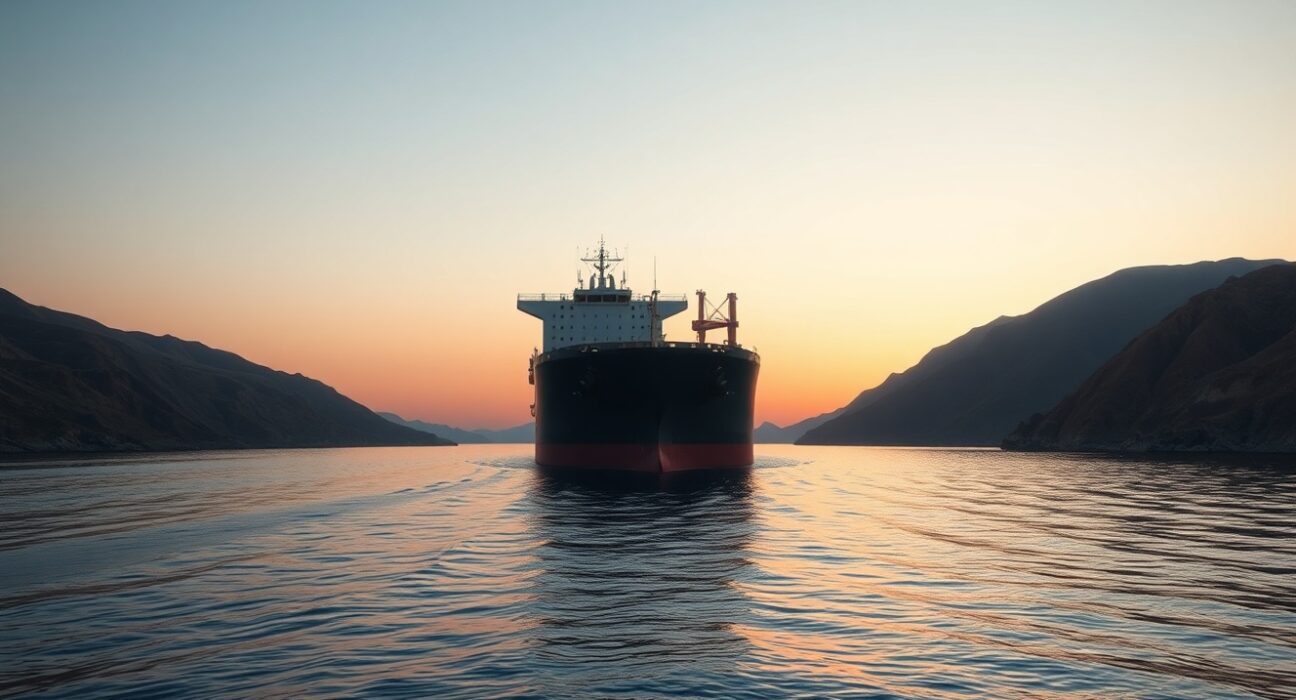
Global energy markets entered a state of heightened vigilance on Thursday as West Texas Intermediate (WTI) crude oil futures maintained a firm stance above the $92.00 per barrel threshold. This price resilience follows the unprecedented and ongoing closure of the Strait of Hormuz, a vital maritime artery for global oil shipments. Consequently, market participants are now grappling with a complex web of logistical disruptions and geopolitical uncertainty, which is tempering bullish momentum despite the clear supply-side shock.
WTI Crude Oil Holds Ground Amidst Geopolitical Turmoil
The WTI crude oil benchmark, a primary gauge for North American oil prices, demonstrated notable stability in early trading sessions. Market data from the New York Mercantile Exchange showed the front-month contract consolidating between $92.10 and $92.80. This price action reflects a market caught between two powerful forces. On one hand, the physical disruption of supply creates a fundamental case for higher prices. On the other hand, traders exhibit clear hesitation, fearing a potential rapid de-escalation or a coordinated global strategic petroleum reserve release.
Analysts point to several factors contributing to this cautious sentiment. Firstly, global crude inventories, while tightening, remain above critical shortage levels recorded in previous crises. Secondly, the demand outlook for 2025 shows signs of moderation due to broader economic headwinds. Finally, the market is actively pricing in the probability of alternative shipping routes being activated, albeit at a higher cost and longer transit time.
The Strait of Hormuz Closure: A Timeline of Events
The current crisis stems from a multi-faceted incident that began approximately 48 hours prior. According to maritime security reports and shipping advisories, a complex situation involving maritime safety and regional tensions led to a full suspension of transit through the strait. This chokepoint, located between Oman and Iran, is arguably the world’s most important oil transit lane.
- Normal Daily Flow: An estimated 20.5 million barrels per day, or about 21% of global petroleum liquids consumption.
- Primary Exporters Affected: Saudi Arabia, Iraq, the United Arab Emirates, Kuwait, and Qatar.
- Key Importers Impacted: China, India, Japan, South Korea, and Singapore.
Historical context is crucial here. The strait has been a flashpoint for decades, but a complete closure of this duration is a rare event. The last significant disruption occurred in 2019, involving tanker attacks, which caused a sharp but short-lived price spike. The current closure, however, represents a more systemic blockage of traffic.
Expert Analysis on Market Mechanics and Bullish Hesitation
Dr. Anya Sharma, Lead Commodities Strategist at Global Energy Insights, provided context on the market’s tempered reaction. “The oil prices we see today are a function of both immediate physical scarcity and longer-term expectations,” she explained. “While the closure of the Strait of Hormuz is a severe supply shock, the futures market is inherently forward-looking. Traders are already modeling the duration of the closure, the availability of spare capacity from other regions, and potential diplomatic resolutions.”
This expert perspective underscores the energy markets‘ complexity. The market’s “hedged bullishness” is visible in the term structure of the futures curve. While near-month contracts are elevated, prices for delivery six months out show a much smaller premium, indicating that traders believe the disruption will be resolved before causing long-term structural damage to global supply chains.
Global Impacts and Alternative Supply Routes
The immediate impact has been a scramble for available crude from other sources. Tanker tracking data shows a significant increase in bookings for cargoes from the Atlantic Basin, including the United States, Brazil, and West Africa. Furthermore, attention has turned to overland pipelines that bypass the strait.
| Alternative Route | Estimated Capacity (Million bpd) | Key Limitation |
|---|---|---|
| East-West Pipeline (Saudi Arabia) | 5.0 | Terminates at Red Sea, longer voyage to Asia |
| Abu Dhabi Crude Oil Pipeline | 1.5 | Bypasses Strait to Fujairah port |
| SUMED Pipeline (Egypt) | 2.5 | Handles diverted cargoes via Suez Canal |
However, these pipelines collectively cannot replace the full capacity of the waterway. This gap forces a combination of inventory drawdowns and demand destruction, where high prices naturally curb consumption. The International Energy Agency (IEA) has stated it is monitoring the situation closely and is in contact with major producers and consumers regarding potential coordinated action.
Conclusion
The WTI crude oil market is currently defined by a precarious balance. The price holding above $92.00 validates the serious risk posed by the Strait of Hormuz closure. Yet, the evident hesitation among bulls signals a market that is weighing this immediate crisis against a broader set of economic and geopolitical variables. The coming days will be critical, hinging on diplomatic developments and the operational success of alternative logistics. For now, the market sentiment remains one of alert stability, with all participants acutely aware that the situation could change with a single headline. The stability of the WTI crude oil price is therefore a calm before a potential storm, not an indication that the danger has passed.
FAQs
Q1: Why is the Strait of Hormuz so important for oil markets?
The Strait of Hormuz is the world’s most critical oil transit chokepoint. It is the only sea passage from the Persian Gulf to the open ocean, making it essential for exports from Saudi Arabia, Iran, the UAE, Kuwait, Iraq, and Qatar. Approximately 21% of global petroleum liquids consumption passes through it daily.
Q2: What does ‘bullish hesitation’ mean in this context?
It describes a market where the fundamental news (a supply shutdown) is bullish and should push prices sharply higher, but traders are reluctant to aggressively buy. This hesitation stems from uncertainty over how long the closure will last, fears of a swift political resolution, or expectations of a coordinated global response to release reserves.
Q3: How does the WTI price relate to the global Brent crude benchmark?
WTI (West Texas Intermediate) is the primary benchmark for oil in the Americas, while Brent is the main benchmark for waterborne crude from the Atlantic Basin and the Middle East. Typically, during a Middle East supply disruption, the price of Brent crude reacts more sharply than WTI, as it is more directly linked to those exports. The spread between the two benchmarks often widens.
Q4: What are the main alternative routes for Middle Eastern oil?
Key alternatives include Saudi Arabia’s East-West Pipeline to the Red Sea, the Abu Dhabi Crude Oil Pipeline to the port of Fujairah (which bypasses the strait), and the SUMED pipeline in Egypt which transports oil from the Red Sea to the Mediterranean. However, their combined capacity is less than half of the Strait’s normal flow.
Q5: How might this event affect gasoline prices for consumers?
There is always a lag between crude oil price moves and retail fuel prices. A sustained period with WTI above $92.00 would inevitably put upward pressure on gasoline and diesel prices worldwide. The magnitude and speed of the increase would depend on the duration of the closure and the ability of refineries to source crude from other regions.
Disclaimer: The information provided is not trading advice, Bitcoinworld.co.in holds no liability for any investments made based on the information provided on this page. We strongly recommend independent research and/or consultation with a qualified professional before making any investment decisions.