
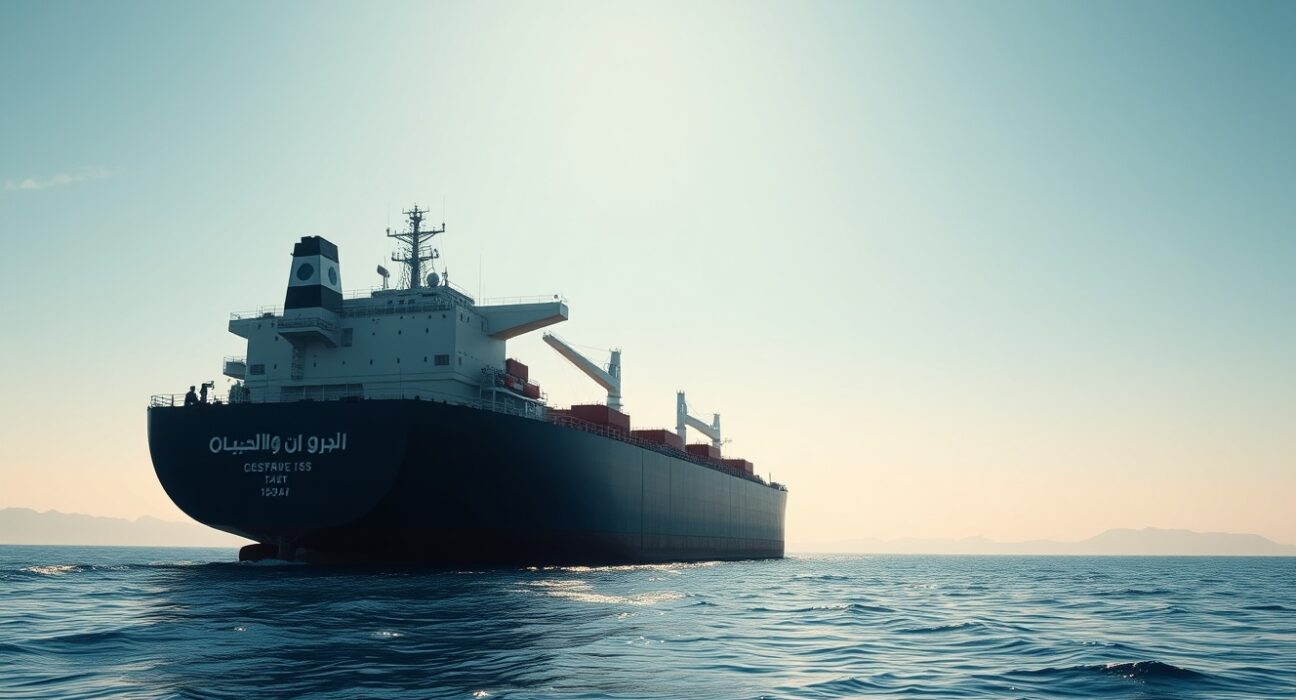
NEW YORK, April 12, 2025 – Global energy markets experienced a seismic shock today as WTI crude oil prices surged a staggering 10.00% intraday to settle at $105.33 per barrel. Consequently, this dramatic spike represents the largest single-day percentage gain in over two years. The catalyst is a significant escalation in Middle East tensions following the collapse of diplomatic talks between the United States and Iran.
WTI Crude Oil Price Surge Follows Failed Diplomacy
The immediate trigger for the oil price surge was the announcement from U.S. Central Command. Specifically, the statement confirmed a full maritime blockade on all traffic to and from Iranian ports. This decisive action takes effect from 2:00 p.m. UTC on April 13. However, the military was careful to clarify a critical detail. Importantly, the blockade will not restrict vessels merely transiting the Strait of Hormuz to non-Iranian destinations.
This policy follows a weekend of high-stakes negotiations in Islamabad, Pakistan. Ultimately, the first round of peace talks concluded without any agreement. The core dispute remains Iran’s nuclear program. Analysts immediately interpreted the U.S. naval move as a maximum-pressure tactic. Therefore, the market’s violent reaction reflects deep concerns over potential supply disruptions.
Geopolitical Context and the Strait of Hormuz
To understand the market’s fear, one must examine the geography. The Strait of Hormuz is arguably the world’s most critical oil transit chokepoint. According to data from the U.S. Energy Information Administration (EIA), approximately 20-21% of global petroleum liquids consumption passed through it in 2023. That translates to about 20.5 million barrels per day.
Any military activity or perceived threat in this region historically triggers volatility. For instance, past incidents like tanker attacks or seizures have caused immediate price spikes. The current U.S. blockade announcement directly injects uncertainty into this vital artery. While the U.S. assures freedom of navigation for through-traffic, the risk of miscalculation or escalation remains high.
Expert Analysis on Market Mechanics
Market strategists point to several amplifying factors behind the 10% gain. First, global oil inventories are relatively tight. Second, OPEC+ has maintained production discipline. Third, demand projections for 2025 remain robust. Consequently, the market had little buffer to absorb a major geopolitical shock.
“The price move is a classic risk premium being priced in,” explained a veteran energy analyst from a major investment bank. “It’s not that Iranian oil is immediately removed from the market. Rather, traders are pricing in the heightened probability of a broader conflict that could physically disrupt flows. The options market shows a dramatic skew toward higher prices in the coming months.”
Historical Precedents and Price Impact Timelines
This event invites comparison to previous geopolitical crises. The table below outlines key historical spikes driven by Middle East tensions:
| Event | Year | Approximate Price Impact | Duration of Spike |
|---|---|---|---|
| Iranian Revolution | 1979 | ~100% Increase | Several Months |
| First Gulf War | 1990 | ~50% Increase | ~3 Months |
| U.S.-Iran Tensions (Strait Incident) | 2019 | ~10% Intraday Spike | Days to Weeks |
| Current U.S. Blockade Announcement | 2025 | 10% Intraday Spike | To Be Determined |
The speed of today’s move is notable. Modern electronic trading and algorithmic systems can amplify news-driven volatility. Furthermore, the widespread use of oil as an inflation hedge in institutional portfolios means money flows quickly during crises.
Broader Economic and Sectoral Impacts
The ripple effects of a sustained higher crude oil price are far-reaching. Key impacts include:
- Transportation Costs: Immediate pressure on airline, shipping, and trucking margins.
- Consumer Inflation: Higher gasoline and diesel prices feed directly into CPI calculations.
- Central Bank Policy: Complicates the inflation fight for the Federal Reserve and ECB.
- Corporate Earnings: Boosts energy sector profits but pressures most other industries.
- Alternative Energy: Accelerates investment appeal in renewables and EVs.
For the U.S. consumer, the national average gasoline price could rise 25-40 cents per gallon in the coming weeks if the price holds. This translates to a tangible hit to household disposable income.
The Diplomatic Road Ahead and Market Scenarios
Market direction now hinges on diplomatic and military developments. Analysts outline three primary scenarios:
- De-escalation: Swift back-channel talks lead to a modified blockade or new negotiations. Oil prices would retreat significantly.
- Status Quo: The blockade holds but no further escalation occurs. A persistent risk premium of $5-$15 per barrel could remain.
- Escalation: An incident at sea or Iranian retaliation triggers a wider conflict. Prices could test levels above $120-$130 per barrel.
The U.S. administration faces a complex calculus. The blockade exerts pressure but also carries economic costs at home. Furthermore, it tests relations with allies in Europe and Asia who rely on stable energy supplies.
Conclusion
The dramatic 10% surge in WTI crude oil to $105.33 per barrel is a stark reminder of the commodity’s sensitivity to geopolitics. The failed U.S.-Iran talks and the subsequent maritime blockade have injected a substantial risk premium into the market. While the immediate physical supply impact may be limited, the threat to the vital Strait of Hormuz transit route has traders bracing for volatility. The coming days will be critical. Market stability now depends heavily on whether this confrontation de-escalates or becomes a prolonged standoff with profound consequences for global energy security and economic growth.
FAQs
Q1: What exactly caused the WTI crude oil price to jump 10%?
A1: The primary cause was the U.S. announcement of a maritime blockade on Iranian ports after peace talks failed. This escalated Middle East tensions and raised fears of potential supply disruptions from the critical Strait of Hormuz region.
Q2: Will the U.S. blockade stop all oil from leaving the Middle East?
A2: No. The U.S. statement specifically said it would not restrict freedom of navigation for vessels passing through the Strait of Hormuz to non-Iranian ports. The blockade targets traffic directly to and from Iranian ports only.
Q3: How does this price surge compare to past oil shocks?
A3: While significant, a 10% intraday move is smaller than historic spikes like the 1979 Iranian Revolution. However, it is one of the largest single-day moves in the last decade, amplified by today’s fast electronic trading environment.
Q4: What does this mean for gasoline prices?
A4: Higher crude oil prices typically lead to higher gasoline prices with a lag of 1-3 weeks. Analysts suggest the national average could rise 25-40 cents per gallon if current crude levels are sustained.
Q5: Could this event trigger a global recession?
A5: A single-day spike is unlikely to cause a recession. However, if oil prices remain elevated above $100 for a prolonged period, it would act as a tax on consumers and businesses, slowing economic growth and complicating central bank efforts to control inflation.
Disclaimer: The information provided is not trading advice, Bitcoinworld.co.in holds no liability for any investments made based on the information provided on this page. We strongly recommend independent research and/or consultation with a qualified professional before making any investment decisions.