
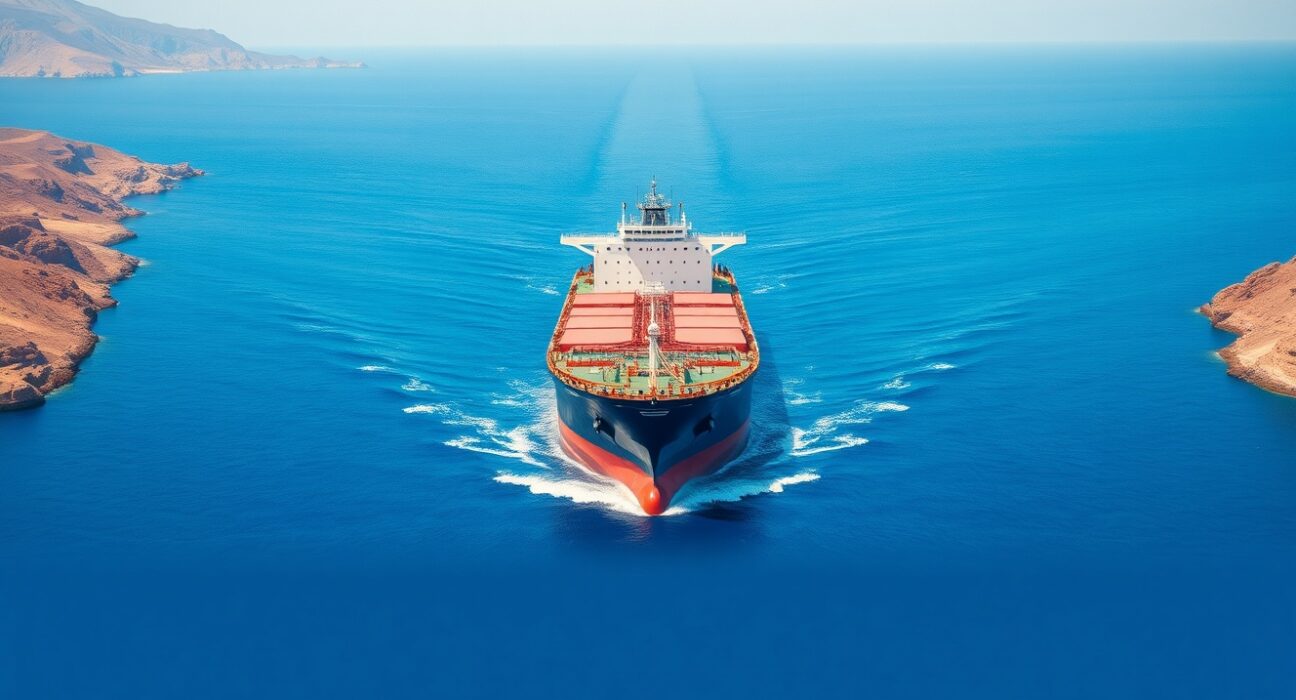
Global oil markets experienced a dramatic sell-off today as West Texas Intermediate (WTI) crude futures nosedived below the critical $90 per barrel threshold. This sharp decline follows Iran’s unexpected announcement of a temporary, two-week reopening of the strategic Strait of Hormuz, a vital chokepoint for nearly a third of the world’s seaborne oil.
WTI Price Plunge Follows Hormuz Announcement
Benchmark WTI crude oil futures for December delivery fell sharply in early trading, breaching the $90 support level to trade near $88.50 per barrel at the time of reporting. Consequently, this represents the lowest price point in over three months. The immediate catalyst was a statement from Iranian naval authorities confirming a 14-day reopening of the strait for unimpeded commercial traffic. Previously, heightened military exercises and geopolitical tensions had raised fears of a potential closure, which had buoyed prices through a significant risk premium.
Market analysts quickly recalibrated their short-term supply models. “The immediate pressure on prices is a direct function of reduced geopolitical risk,” explained Dr. Anya Sharma, Lead Commodities Strategist at Global Energy Insights. “Traders are pricing out the ‘fear premium’ that had been baked into contracts since the escalation began. The two-week window provides a tangible relief valve for global inventories.”
The Strait of Hormuz’s Critical Role in Global Supply
The Strait of Hormuz, a narrow passage between the Gulf of Oman and the Persian Gulf, is arguably the world’s most important oil transit corridor. According to data from the U.S. Energy Information Administration, an average of 21 million barrels of oil per day flowed through it in 2023. This volume represents about 21% of global petroleum liquids consumption. Major exporters like Saudi Arabia, Iraq, the United Arab Emirates, and Kuwait rely almost exclusively on this route.
Any disruption to traffic creates immediate global shockwaves. For instance, past incidents, including tanker seizures and attacks, have triggered rapid price spikes of 5-10%. Therefore, the mere threat of closure adds a persistent volatility layer to markets. The table below illustrates the strait’s pivotal role:
| Country | Approximate Oil Exports via Hormuz (Million bpd) |
|---|---|
| Saudi Arabia | 6.2 |
| Iraq | 3.3 |
| United Arab Emirates | 2.7 |
| Kuwait | 1.8 |
| Qatar (LNG & Condensate) | 1.5 |
Geopolitical Context and Market Psychology
The reopening decision arrives amid complex diplomatic maneuvers. Observers note the two-week timeframe aligns with a scheduled round of indirect nuclear talks. Analysts interpret the move as a potential confidence-building gesture. However, market reaction remains cautious. “This is a tactical pause, not a strategic shift,” noted commodities veteran Mark Chen of Petra Capital. “The market is breathing a sigh of relief, but the underlying structural risks—regional tensions, OPEC+ policy, and global demand uncertainty—remain firmly in place.”
Furthermore, the price drop interacts with other key market fundamentals. Notably, U.S. crude inventories have shown consecutive builds, and concerns over economic growth in China and Europe persist. The Hormuz news acted as a trigger, accelerating a correction that was already technically overdue after a prolonged period of elevated prices driven by supply fears.
Immediate Impacts and Broader Market Reactions
The sell-off extended beyond WTI. Internationally traded Brent crude also fell sharply, dropping over 4% to trade below $93. Energy sector equities followed suit, with major oil and gas company shares declining across European and Asian markets. Conversely, transportation and airline stocks saw modest gains on the prospect of lower fuel costs.
The price movement highlights several key dynamics in modern energy markets:
- Geopolitical Sensitivity: Prices react instantly to perceived changes in supply route security.
- Liquidity and Speed: Electronic trading amplifies the velocity of such corrections.
- Interconnected Markets: A single chokepoint event affects global benchmarks, equities, and currencies.
Looking ahead, traders will monitor vessel tracking data closely to confirm the increased traffic flow. Additionally, they will scrutinize statements from other regional powers and the U.S. Navy’s Fifth Fleet for any operational responses.
Conclusion
The sudden drop in WTI crude oil price below $90 serves as a powerful reminder of the oil market’s fragility in the face of geopolitical friction. Iran’s temporary reopening of the Strait of Hormuz provided immediate, tangible relief to supply anxieties, eroding the risk premium that had supported prices. However, the two-week nature of this reprieve ensures market volatility will persist as traders assess the next move. Ultimately, the event underscores that while fundamental supply and demand set the long-term trajectory, the security of critical maritime passages like the Strait of Hormuz remains a dominant short-term price driver for global energy markets.
FAQs
Q1: Why is the Strait of Hormuz so important for oil prices?
The Strait of Hormuz is the world’s most critical oil transit chokepoint, handling about 21 million barrels per day. Any threat to its openness immediately creates a “risk premium” in oil prices, as markets fear a sudden supply shortfall. Its reopening reduces that fear, causing prices to fall.
Q2: How long is Iran reopening the Strait of Hormuz?
According to the announcement, Iran is permitting unimpeded commercial traffic for a period of two weeks (14 days). This is a temporary measure, and the situation will be reassessed after that period.
Q3: Does this mean oil prices will keep falling?
Not necessarily. The initial plunge reflects the removal of a specific geopolitical risk. Future price direction will depend on other factors like global oil inventory levels, OPEC+ production decisions, and macroeconomic demand, especially from major economies like China and the United States.
Q4: What is the difference between WTI and Brent crude oil?
WTI (West Texas Intermediate) is a primary benchmark for oil sourced from the U.S., particularly the Permian Basin. Brent crude is a benchmark for oil from the North Sea and is used to price two-thirds of the world’s internationally traded crude. Both benchmarks are highly correlated but can have different price levels due to regional supply and demand factors.
Q5: How might this affect gasoline prices for consumers?
Lower crude oil prices typically lead to lower costs for refining gasoline, which can translate to lower pump prices after a lag of several weeks. However, local taxes, refining margins, and distribution costs also play major roles in the final retail price consumers pay.
Disclaimer: The information provided is not trading advice, Bitcoinworld.co.in holds no liability for any investments made based on the information provided on this page. We strongly recommend independent research and/or consultation with a qualified professional before making any investment decisions.