
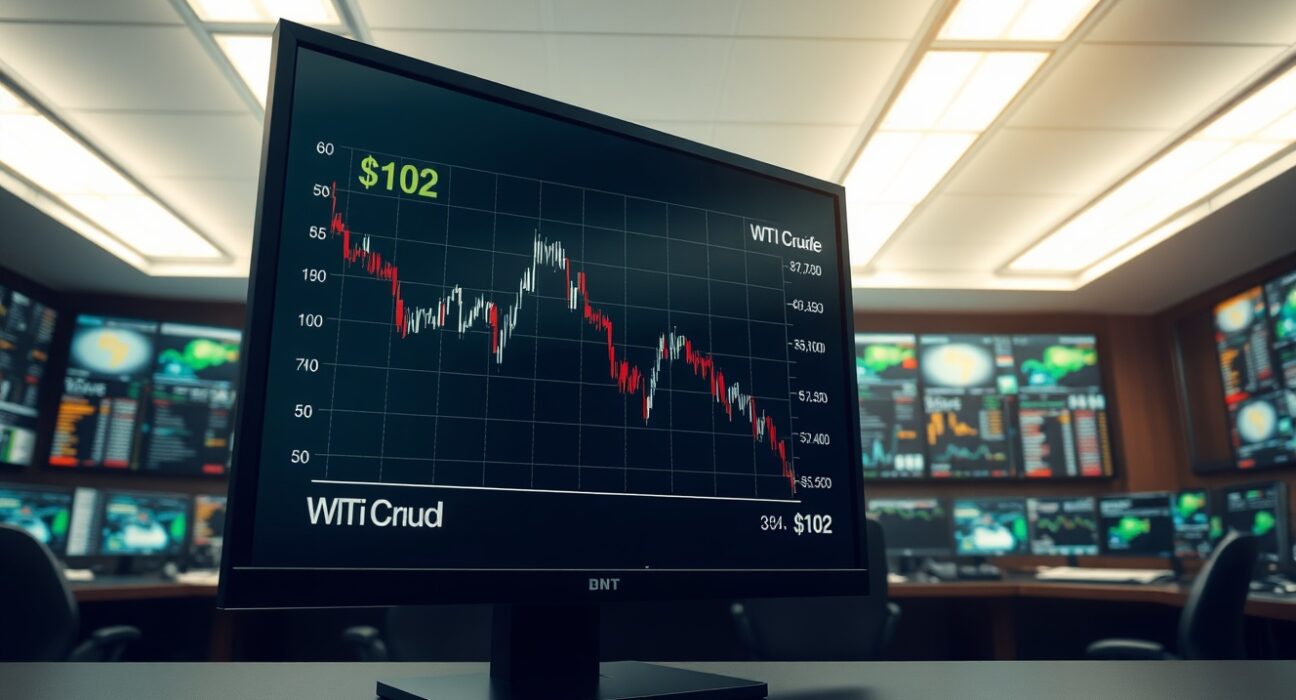
Global energy markets witnessed a significant shift on Thursday, March 20, 2025, as the benchmark West Texas Intermediate (WTI) crude oil price drifted below the critical $102.00 per barrel threshold. This notable decline, representing a multi-week low, directly correlates with burgeoning diplomatic optimism surrounding a potential peace agreement in Iran. Consequently, traders are swiftly reassessing the geopolitical risk premium baked into current oil valuations.
WTI Oil Price Movement and Immediate Catalysts
Market data from the New York Mercantile Exchange shows the front-month WTI futures contract settling at $101.45, marking a decline of over 3.5% for the session. This downward trajectory accelerated following credible reports from diplomatic corridors in Vienna. Negotiators appear closer to a framework that could de-escalate regional tensions. Historically, the Strait of Hormuz, a vital chokepoint for global oil shipments, faces threats during periods of instability. Therefore, any prospect of reduced friction immediately impacts trader sentiment.
Furthermore, the price action reflects a classic “sell the rumor” event. Market participants are pricing in a future where Iranian oil exports face fewer disruptions. The current price incorporates a significant geopolitical risk premium, estimated by analysts at Goldman Sachs to be between $8 and $12 per barrel. A credible peace deal would systematically erode this premium. Additionally, the U.S. Dollar Index (DXY) showed relative strength, applying further downward pressure on dollar-denominated commodities like oil.
The Geopolitical Context of the Iran Negotiations
The current diplomatic push represents the latest chapter in long-standing regional tensions. For years, incidents involving maritime security in the Gulf have periodically spiked oil prices. A formal peace deal would aim to address core security concerns for all Gulf Cooperation Council (GCC) states. Importantly, it could also pave the way for the full reintegration of Iranian oil into international markets under normalized trade terms.
According to a recent report from the International Energy Agency (IEA), global spare production capacity remains tight, primarily held by Saudi Arabia and the United Arab Emirates. However, the potential return of uninterrupted Iranian supply, which currently fluctuates around 1.2 million barrels per day, offers a crucial buffer. This buffer could mitigate price spikes from unexpected outages elsewhere, such as in Libya or Nigeria. The table below outlines recent Iranian oil export volumes according to tanker-tracking firms:
| Quarter | Estimated Exports (Million Barrels Per Day) | Primary Destinations |
|---|---|---|
| Q4 2024 | 1.15 | China, Syria, Venezuela |
| Q1 2025 | 1.22 | China, India, Syria |
Expert Analysis on Market Fundamentals
Dr. Anya Sharma, Lead Commodities Strategist at Global Energy Insights, provided context on the price reaction. “The market is reacting to a change in perceived probability, not a change in immediate physical barrels,” Sharma explained. “The current sell-off is rational. It discounts a future state of reduced volatility and higher predictable supply. However, underlying fundamentals remain firm. Global demand, particularly from Asian economies, continues its steady post-pandemic recovery path.”
Sharma also highlighted key technical levels. “The break below $102 is psychologically important. It opens the door for a test of the 100-day moving average, currently near $98.50. Should the diplomatic news flow remain positive, we could see a rapid unwinding of speculative long positions that built up during the last quarter of 2024.” This analysis aligns with CFTC commitment of traders data, which showed net-long positions in WTI futures near a six-month high just two weeks prior.
Broader Impacts on Global Energy Markets
The ripple effects of a sustained lower oil price environment are far-reaching. Firstly, consumer nations benefit from reduced import bills and lower inflationary pressures. For instance, transportation and manufacturing costs would decrease. Secondly, oil-producing nations and corporations must adjust their fiscal and investment plans. Projects with high break-even costs may face delays or cancellations.
Other key energy commodities are also reacting. Brent crude, the international benchmark, similarly fell, narrowing its premium to WTI. Meanwhile, natural gas prices showed muted movement, indicating the news is viewed as specifically oil-market relevant. The equity markets reflected this divergence. Shares of major integrated oil companies dipped slightly, while airline and shipping stocks rallied on the prospect of lower fuel expenses.
- Consumer Impact: Lower gasoline and diesel prices at the pump.
- Producer Impact: Pressure on national budgets for exporters like Saudi Arabia and Russia.
- Industry Impact: Potential slowdown in U.S. shale drilling activity if prices stabilize lower.
- Macro Impact: Easing of headline inflation figures in oil-importing countries.
Historical Precedents and Market Psychology
This event mirrors similar market reactions to past geopolitical developments. For example, the initial announcement of the 2015 Iran nuclear deal (JCPOA) led to a prolonged period of lower oil prices. Markets efficiently process new information about supply security. The speed of the current price adjustment underscores the high degree of algorithmic and high-frequency trading in modern commodity markets. These systems are programmed to execute trades based on news sentiment analysis in milliseconds.
However, analysts caution against assuming a one-way price move. The diplomatic process remains fragile. Any setback in talks could trigger a sharp reversal. Moreover, the global inventory situation, as reported by the U.S. Energy Information Administration (EIA), shows commercial stocks below the five-year seasonal average. This fundamental tightness provides a price floor, limiting the potential depth of any decline driven solely by sentiment.
Conclusion
The decline in the WTI oil price below $102.00 serves as a powerful testament to the sensitivity of energy markets to geopolitical developments. The hopeful signals from Iran peace deal negotiations have provided a catalyst for a significant repricing of risk. While the immediate move is sentiment-driven, its persistence will depend on the concrete outcomes of diplomacy and the underlying balance of physical supply and demand. Market participants will now closely monitor both the negotiating tables in Vienna and the weekly inventory data from Oklahoma to gauge the next major price direction for WTI oil.
FAQs
Q1: Why does an Iran peace deal affect global oil prices?
Iran is a major oil producer and exporter. Regional tensions, particularly around the Strait of Hormuz, threaten supply routes. A peace deal reduces the risk of supply disruptions, leading markets to remove the “geopolitical risk premium” from the oil price.
Q2: What is the difference between WTI and Brent crude oil?
WTI (West Texas Intermediate) is a light, sweet crude oil benchmark priced in Cushing, Oklahoma, and primarily reflects North American market conditions. Brent crude, sourced from the North Sea, is the international benchmark used to price oil from Europe, Africa, and the Middle East.
Q3: Could the oil price fall further?
Potentially. If a deal is finalized and Iranian exports increase predictably, prices could test lower support levels. However, strong global demand and low inventories may provide a floor, preventing a collapse.
Q4: How does this impact gasoline prices for consumers?
Lower crude oil prices typically lead to lower prices for refined products like gasoline and diesel, though the correlation is not always immediate due to refining margins and local taxes.
Q5: What other factors influence oil prices besides geopolitics?
Key factors include OPEC+ production decisions, global economic growth (demand), U.S. shale oil production levels, inventory data, and the strength of the U.S. dollar.
Disclaimer: The information provided is not trading advice, Bitcoinworld.co.in holds no liability for any investments made based on the information provided on this page. We strongly recommend independent research and/or consultation with a qualified professional before making any investment decisions.