

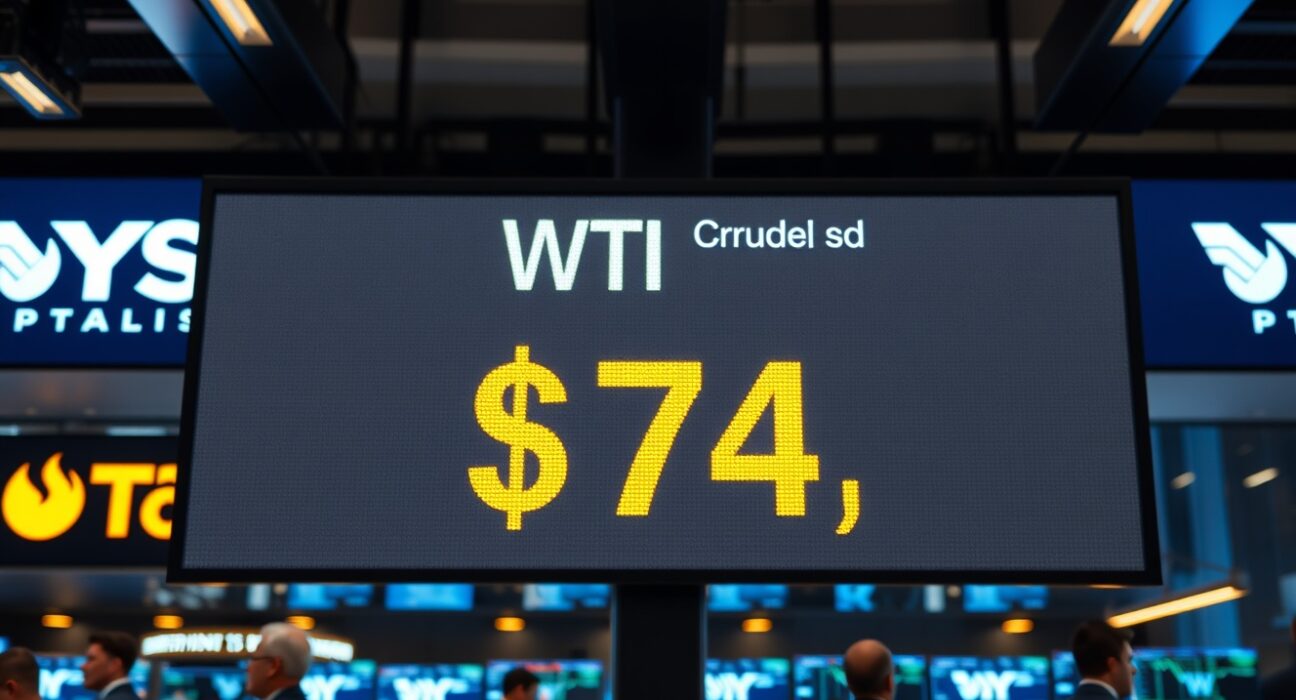
West Texas Intermediate (WTI) crude oil futures surged past the $74 per barrel mark on Tuesday following President Donald Trump’s confirmation that the Memorandum of Understanding (MoU) with Iran is effectively terminated. The announcement reintroduces significant geopolitical risk into global energy markets, as traders price in the potential for tighter supply from one of OPEC’s major producers.
Market Reaction and Price Movement
WTI crude for near-term delivery jumped over 3% in early trading, breaching the $74 resistance level for the first time in several weeks. The move reflects a swift repricing of supply risk, as the MoU had previously been viewed as a stabilizing factor that allowed for limited Iranian oil exports to continue under certain conditions. With the agreement now void, market participants anticipate a potential reduction in Iranian crude flows, adding to an already tight global supply picture.
Context of the Iran MoU Termination
The Memorandum of Understanding, initially signed during the previous administration, had provided a framework for diplomatic engagement and limited sanctions relief in exchange for curbs on Iran’s nuclear activities. President Trump’s statement, delivered during a press conference, confirmed that the United States considers the agreement no longer in effect, citing non-compliance and national security concerns. This marks a significant shift in U.S. policy toward Iran, returning to a maximum pressure strategy that could further isolate Tehran from international oil markets.
Implications for Global Oil Supply
Iran currently produces roughly 3.2 million barrels per day, with exports estimated at around 1.5 million bpd under the MoU framework. A full re-imposition of sanctions could remove 500,000 to 1 million bpd from global markets, a gap that would be difficult to fill quickly given current spare capacity constraints among other OPEC members. Analysts at major energy consultancies have warned that the move could push Brent crude toward $80 per barrel in the near term, with WTI following closely.
Broader Market and Economic Impact
Higher crude prices have immediate ripple effects across the economy, from increased gasoline costs for consumers to elevated input prices for industries reliant on petrochemicals. The timing is particularly sensitive, as central banks in the U.S. and Europe are still grappling with inflationary pressures. A sustained rise in oil prices could complicate monetary policy decisions and weigh on consumer spending. Energy sector stocks, however, rallied on the news, with major exploration and production companies seeing gains of 2% to 4% in early trading.
Conclusion
President Trump’s confirmation that the MoU with Iran is terminated has injected fresh volatility into oil markets, driving WTI above $74 per barrel. The development underscores the fragility of global supply balances and the outsized influence of geopolitical decisions on energy prices. Traders and policymakers alike will be watching closely for further signals from the White House and OPEC+ in the coming days.
FAQs
Q1: What is the Iran MoU that President Trump terminated?
The Memorandum of Understanding was a diplomatic agreement between the U.S. and Iran that allowed for limited sanctions relief in exchange for curbs on Iran’s nuclear program. President Trump confirmed its termination, citing non-compliance and national security concerns.
Q2: How does the MoU termination affect oil prices?
The termination raises the risk of reduced Iranian oil exports due to potential re-imposition of sanctions. This supply concern has driven WTI crude prices above $74 per barrel, as markets price in tighter global supply.
Q3: Could oil prices continue to rise?
Analysts suggest that if Iranian exports are significantly curtailed, Brent crude could move toward $80 per barrel, with WTI following a similar trajectory. However, the actual price impact will depend on OPEC+ production decisions and global demand trends.
Disclaimer: The information provided is not trading advice, Bitcoinworld.co.in holds no liability for any investments made based on the information provided on this page. We strongly recommend independent research and/or consultation with a qualified professional before making any investment decisions.
