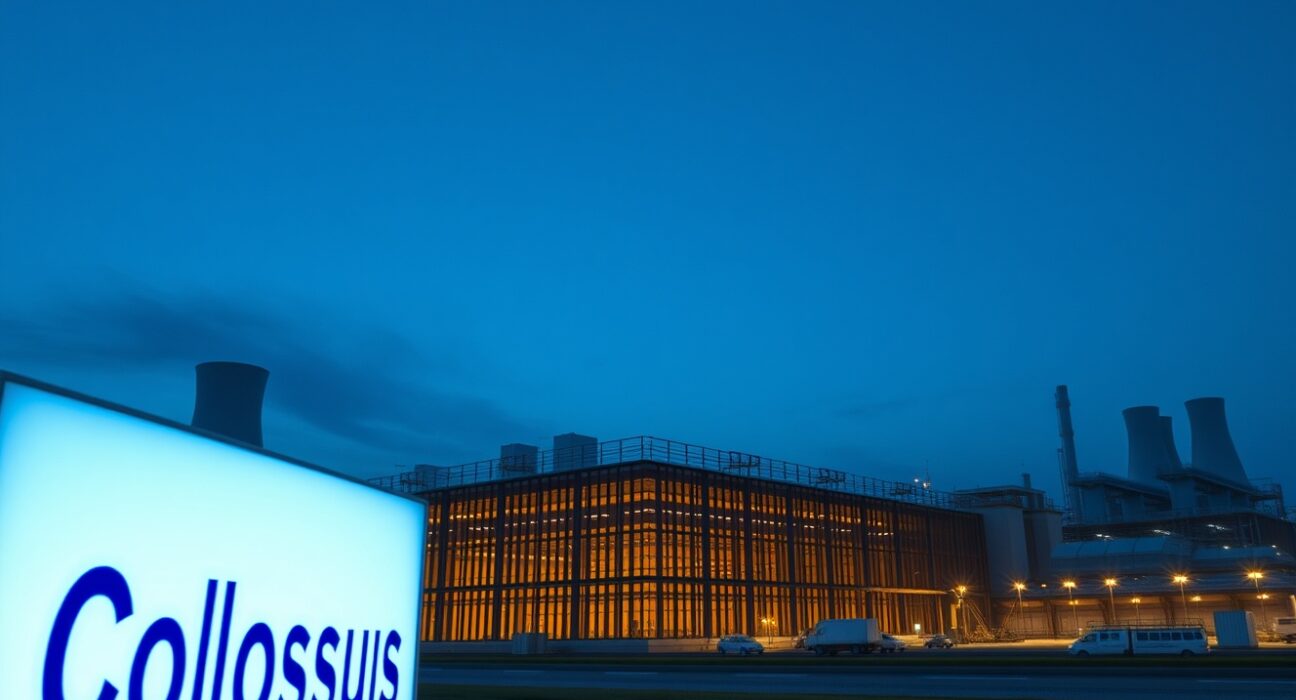
In a move that caught many in the AI industry off guard, xAI and Anthropic announced a surprise partnership this week. Under the deal, Anthropic will lease the entire compute capacity of xAI’s Colossus 1 data center — roughly 300 megawatts of power — a transaction likely worth billions of dollars. The agreement immediately raised Anthropic’s usage limits and, more significantly, monetized one of xAI’s most impressive assets, transforming the company from a consumer of compute into a provider.
A shift in strategy
Elon Musk, speaking on X, explained that xAI had already moved its training operations to a newer facility, Colossus 2, and no longer needed the older data center’s capacity. The logic is straightforward: xAI’s primary product, Grok, has seen declining usage following the image generation controversies earlier this year. If the company’s data center buildout far exceeds what Grok requires, leasing the surplus to a competitor like Anthropic adds substantial revenue to the balance sheet — especially useful as xAI, now combined with SpaceX, accelerates toward an IPO.
But the deal also raises a deeper question about where Musk’s priorities truly lie. It suggests that xAI’s real business may not be training AI models at all, but rather building and leasing data center infrastructure.
A rare move in tech
This kind of arrangement is unusual among major tech companies. Google, Meta, and others that are also training cutting-edge models are aggressively building more data centers, not selling off capacity. When forced to choose between renting out GPUs to customers or reserving them for internal product development, they consistently choose the latter.
Just last month, Sundar Pichai acknowledged on an earnings call that Google Cloud revenue was lower than it could have been because the company was ‘capacity constrained’ — and when given the choice, Google prioritized its own AI products over external cloud customers.
Meta has faced a similar dynamic, spinning up an entirely new cloud infrastructure arm, Meta Compute, to ensure it has enough GPU power for Mark Zuckerberg’s AI ambitions. As Zuckerberg said in January, ‘How we engineer, invest, and partner to build this infrastructure will become a strategic advantage.’
Strategic implications
The key word is ‘strategic.’ Both Zuckerberg and Pichai are betting on a future where AI powers the most popular and lucrative systems in the world. For them, computing power isn’t just about satisfying today’s inference demand — it’s about building tomorrow’s products. Running short on compute means missing out on that opportunity.
By focusing on data centers — both earthbound and, potentially, in space — xAI is positioning itself more like a neocloud business: buying GPUs from Nvidia and renting them out to model developers like Anthropic. It’s a more difficult business, squeezed by both chip suppliers and the shifting cycles of demand. The valuations reflect that reality: xAI was valued at $230 billion in its January funding round, while CoreWeave, which oversees a comparable amount of computing power, is worth less than a third of that.
Musk’s version of a neocloud is more ambitious. Some data centers may eventually be in space — at least by 2035, if plans proceed. xAI is also developing its own chips at the Terafab, which could reduce reliance on Nvidia. But none of this changes the fundamental economics of the neocloud business.
What this means for xAI’s software ambitions
As recently as February’s all-hands meeting, xAI had real ambitions in software. That presentation unveiled the orbital data center project, but also teased significant ambitions in coding — since bolstered by the Cursor partnership — and ideas like leveraging computer use into full-scale digital twins, under the unfortunately named Macrohard project. These are long-horizon projects that require committed computing resources to succeed. As long as xAI is selling large quantities of compute to competitors, it’s hard to see such new ambitions having much of a future.
Conclusion
The Anthropic partnership is a pragmatic short-term move for xAI, generating billions in revenue and strengthening the case for its broader infrastructure ambitions. But it also signals a fundamental strategic shift. By choosing to sell compute rather than hoard it for internal product development, xAI is positioning itself more as a neocloud provider than an AI model company. Whether that bet pays off — and what it means for Musk’s longer-term vision — remains to be seen.
FAQs
Q1: What is a neocloud?
A neocloud is a company that buys large quantities of GPUs and other computing hardware and rents them out to AI developers and enterprises, rather than building its own consumer-facing AI products.
Q2: Why is xAI selling compute to Anthropic?
xAI has moved its training to a newer data center, Colossus 2, and no longer needs the full capacity of Colossus 1. Leasing the older facility to Anthropic generates significant revenue as the company prepares for an IPO.
Q3: How does this affect xAI’s own AI products like Grok?
Grok has seen declining usage, and the deal suggests that xAI’s long-term focus may be more on infrastructure than on consumer AI products. This could limit resources available for developing new software features.
Disclaimer: The information provided is not trading advice, Bitcoinworld.co.in holds no liability for any investments made based on the information provided on this page. We strongly recommend independent research and/or consultation with a qualified professional before making any investment decisions.