

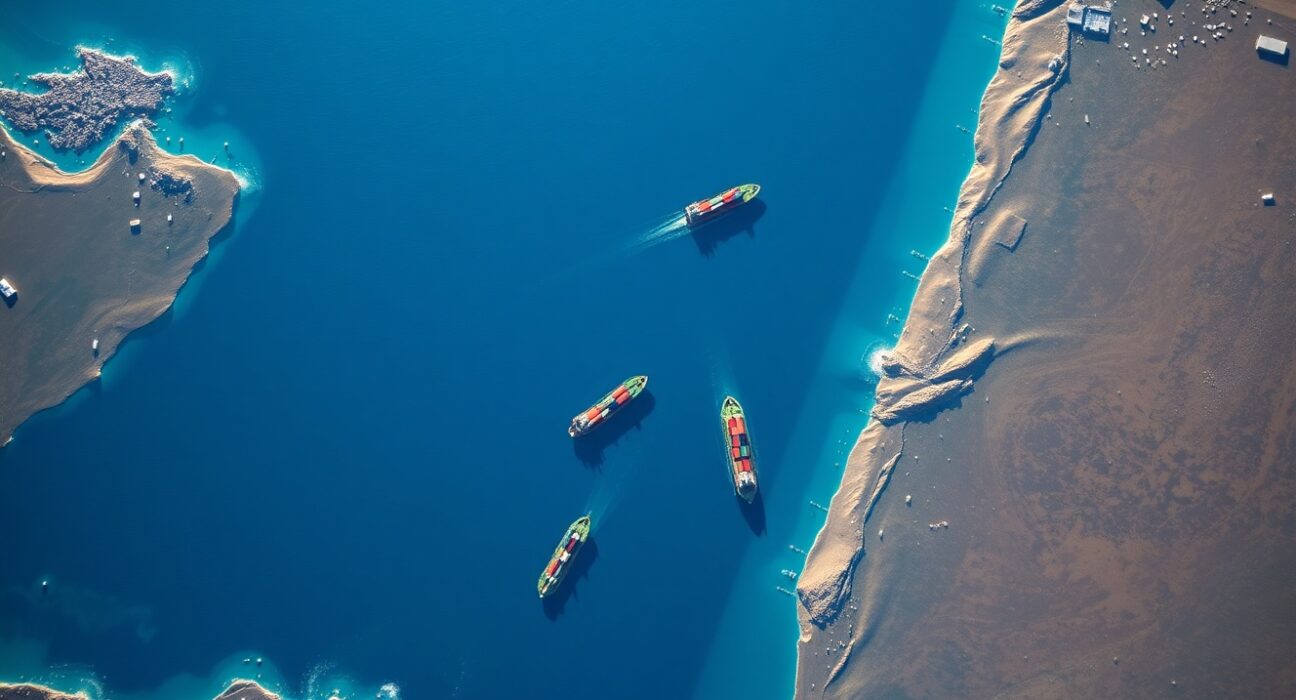
PARIS, March 15, 2025 – French President Emmanuel Macron delivered a significant diplomatic statement today, asserting that the vital Strait of Hormuz can only reopen through careful international concertation with Iran. This declaration comes amid escalating tensions that threaten global energy markets and regional stability. The strategic waterway, through which approximately 20% of the world’s oil passes daily, represents one of the most critical chokepoints in international trade.
Strait of Hormuz: The Global Energy Artery
The Strait of Hormuz serves as the maritime gateway between the Persian Gulf and the Gulf of Oman. Consequently, this narrow passage facilitates the transportation of nearly 21 million barrels of oil daily. Furthermore, countries including Saudi Arabia, Iraq, the United Arab Emirates, and Kuwait depend entirely on this route for their petroleum exports. The waterway measures just 21 nautical miles wide at its narrowest point, with shipping lanes only two miles wide in either direction. This geographical reality creates inherent vulnerabilities that global powers must address carefully.
Recent incidents have demonstrated these vulnerabilities clearly. For instance, between 2019 and 2021, multiple tanker attacks and seizures occurred in the region. Additionally, Iran has repeatedly conducted military exercises near the strait, showcasing its capability to disrupt shipping. These actions have prompted international responses, including increased naval patrols by Western powers. The table below illustrates recent significant incidents:
| Date | Incident | Impact |
|---|---|---|
| June 2019 | Tanker attacks near Fujairah | Oil prices rose 4% |
| July 2019 | British tanker seizure by Iran | UK deployed additional warships |
| January 2021 | Iranian naval exercises | Shipping insurance costs increased |
| November 2023 | Houthi missile attacks near strait | Redirection of shipping routes |
Macron’s Diplomatic Position on Iran Engagement
President Macron’s statement reflects France’s consistent diplomatic approach toward Iran. Specifically, France has maintained dialogue channels with Tehran even during periods of heightened tension. Macron emphasized that “concerted action” rather than unilateral measures represents the only viable path forward. This position aligns with European Union policy that favors diplomatic engagement over confrontation. Moreover, France has historical ties to the region dating back to earlier nuclear negotiations.
French diplomats have played crucial roles in previous nuclear agreements. For example, they helped negotiate the Joint Comprehensive Plan of Action (JCPOA) in 2015. Since the U.S. withdrawal from that agreement in 2018, France has worked to preserve its framework. The current situation requires balancing multiple considerations:
- Energy security for European nations dependent on Middle Eastern oil
- Regional stability amid ongoing proxy conflicts
- Non-proliferation goals regarding Iran’s nuclear program
- International law governing freedom of navigation
Expert Analysis: The Concertation Imperative
Regional security experts emphasize the complexity of Strait of Hormuz dynamics. Dr. Fatima Al-Mansoori, a Gulf security analyst at the Emirates Policy Center, explains: “The strait represents a classic security dilemma. Iran views control over adjacent waters as a legitimate security interest. Meanwhile, global powers consider free navigation essential for the world economy. Consequently, only multilateral frameworks can address these competing interests effectively.”
Historical precedents support this analysis. The 1980-1988 Iran-Iraq War featured numerous attacks on shipping in what became known as the “Tanker War.” International response at that time involved naval escorts and diplomatic initiatives. Similarly, current challenges require coordinated approaches rather than unilateral actions. The economic stakes remain extraordinarily high, with potential impacts including:
- Global oil price spikes affecting inflation worldwide
- Increased shipping costs passed to consumers
- Supply chain disruptions for multiple industries
- Investment uncertainty in energy markets
International Response and Regional Dynamics
Global reactions to Macron’s statement have varied significantly. The United States has traditionally favored stronger measures against Iran, including sanctions and military presence. Conversely, China and Russia have advocated for diplomatic solutions that respect Iranian sovereignty. Regional powers maintain their own complex positions. Saudi Arabia and Israel express concerns about Iranian influence, while Oman and Qatar often serve as mediators.
The European Union faces particular challenges in formulating a unified position. Member states have different energy dependencies and historical relationships with Middle Eastern nations. Germany and Italy import substantial petroleum through the strait, giving them strong economic interests in stability. Meanwhile, Eastern European countries focus more on diversification through alternative suppliers. These divergent priorities complicate consensus-building within EU institutions.
Recent developments have added urgency to the situation. Iran’s nuclear advancements have reduced the “breakout time” for weapon development. Simultaneously, domestic political changes in several regional countries have altered diplomatic landscapes. The convergence of these factors creates both risks and opportunities for renewed dialogue. International organizations monitor the situation closely, with the International Maritime Organization issuing updated guidance for shipping companies.
Economic Implications of Strait Disruptions
Energy economists calculate potential impacts using sophisticated models. A complete closure of the Strait of Hormuz could remove approximately 20% of global oil supply from markets. This scenario would likely trigger immediate price increases of 50-100%. Furthermore, alternative shipping routes would add significant costs and transit times. Tankers would need to navigate around the Arabian Peninsula via longer passages.
The global economy has developed some resilience through strategic petroleum reserves. International Energy Agency members maintain emergency stocks equivalent to 90 days of net imports. However, these reserves would only provide temporary relief during extended disruptions. Longer-term solutions require either diplomatic resolutions or fundamental changes in energy infrastructure. Current pipeline projects bypassing the strait remain limited in capacity compared to maritime transport volumes.
Conclusion
President Macron’s emphasis on concertation with Iran regarding the Strait of Hormuz reflects pragmatic diplomacy amid complex geopolitical realities. The strategic waterway remains indispensable to global energy security, making its stability an international priority. Successful navigation of current tensions will require multilateral engagement that addresses legitimate security concerns while preserving freedom of navigation. As global energy transitions progress, the strait’s importance may gradually diminish, but for the foreseeable future, it remains a critical focus for international diplomacy and economic planning.
FAQs
Q1: Why is the Strait of Hormuz so important globally?
The Strait of Hormuz handles approximately 20% of global oil consumption daily, making it the world’s most important oil transit chokepoint. Closure would immediately impact energy prices worldwide.
Q2: What does “concertation” mean in diplomatic terms?
Concertation refers to coordinated action through consultation and agreement among multiple parties, particularly in international relations where unilateral actions might prove counterproductive.
Q3: How has Iran historically used the strait in geopolitical disputes?
Iran has periodically conducted military exercises near the strait and threatened shipping restrictions to leverage its geographical position during international negotiations, particularly concerning sanctions and nuclear programs.
Q4: What alternatives exist if the strait becomes impassable?
Limited pipeline capacity exists through Saudi Arabia and the UAE, while longer maritime routes around the Arabian Peninsula add approximately 2,700 nautical miles and significant costs to shipping.
Q5: How do other global powers view Macron’s concertation approach?
European allies generally support diplomatic engagement, while the United States has historically favored stronger measures. China and Russia typically advocate for solutions respecting Iranian sovereignty and regional stability.
Disclaimer: The information provided is not trading advice, Bitcoinworld.co.in holds no liability for any investments made based on the information provided on this page. We strongly recommend independent research and/or consultation with a qualified professional before making any investment decisions.
