

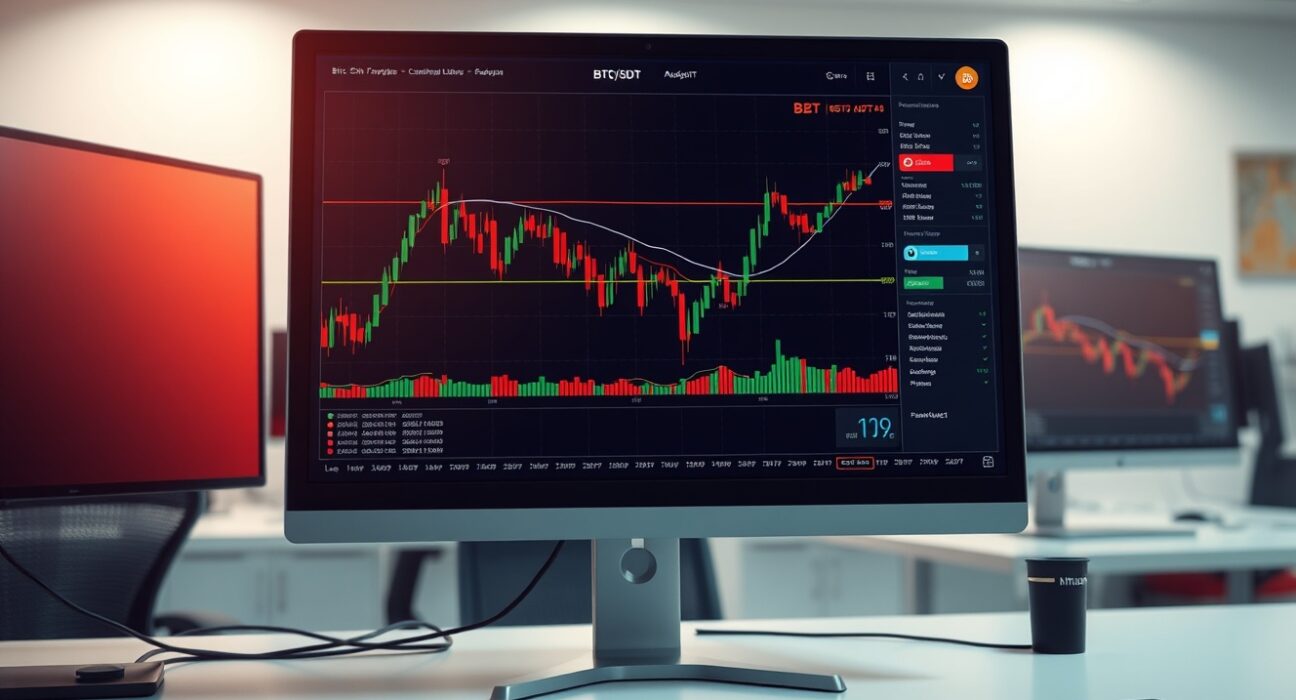
On April 6, 2025, at precisely 00:00 UTC, a critical snapshot of Bitcoin’s market structure emerged through the Spot CVD chart for the BTC/USDT pair. This analytical tool provides a transparent window into the underlying order book dynamics that often precede significant price movements. Consequently, professional traders and institutional analysts scrutinize these charts to gauge market sentiment and identify potential support and resistance zones. The data from this specific timestamp offers a foundational case study for understanding how volume and order flow interact in the world’s leading cryptocurrency market.
Deconstructing the Spot CVD Chart for BTC/USDT
The provided Spot CVD chart serves as a bifurcated analytical instrument. Primarily, it visualizes two distinct but interrelated datasets from the BTC/USDT spot market. The top section presents a Volume Heatmap, while the bottom section details the Cumulative Volume Delta (CVD). Together, they transform raw order book data into actionable intelligence. Market participants use this intelligence to make informed decisions, moving beyond simple price charts to understand the ‘why’ behind market movements. This approach aligns with modern trading methodologies that prioritize depth of market analysis.
The Volume Heatmap: Visualizing Trading Activity
The Volume Heatmap tracks trading volume at specific price levels over a defined period. Its function is straightforward yet powerful. As trading activity concentrates at certain prices, the background color on the heatmap intensifies. These brighter areas, often appearing as horizontal bands, indicate where the asset has spent considerable time or experienced heightened trading interest. For instance, a bright band forming around the $68,500 level would signal that level as a focal point for market activity. Analysts interpret these zones as potential future support or resistance levels. The logic is simple: high-volume areas represent price levels where many market participants have transacted, creating collective memory and often triggering reactions when revisited.
Key characteristics of an effective Volume Heatmap include:
- Color Gradient: Uses a spectrum (e.g., blue to red) to represent low to high volume concentration.
- Time Sensitivity: Reflects activity over a specific lookback period, making context essential.
- Price Precision: Maps volume to exact price levels, not just candlestick ranges.
Understanding Cumulative Volume Delta (CVD) and Order Size
The Cumulative Volume Delta indicator provides a more nuanced view by categorizing and accumulating buy and sell orders by their trade size. Fundamentally, it measures the net difference between buying and selling pressure over time. When the line for a specific order size category trends upward, it signifies that buy orders in that range are dominating. Conversely, a downward trend indicates prevailing sell pressure. The chart referenced uses color-coded lines for different order tiers, a standard practice for clarity.
| Line Color | Order Size Range | Typical Trader Profile |
|---|---|---|
| Yellow | $100 – $1,000 | Retail Traders |
| Blue | $1,000 – $10,000 | Experienced Retail / Small Institutions |
| Purple | $10,000 – $100,000 | High-Net-Worth Individuals |
| Brown | $1M – $10M | Institutional / Whale Activity |
Monitoring these lines separately is crucial. For example, a rising brown line (large orders) concurrent with a flat or falling yellow line (small orders) suggests institutional accumulation amidst retail hesitation. This divergence can be a powerful signal. The CVD’s cumulative nature means it doesn’t reset with each new candle; instead, it builds a running total, highlighting sustained trends in order flow that simple volume bars might obscure.
The Interplay Between Heatmap and CVD
The true analytical power emerges from correlating the Volume Heatmap with the CVD data. A bright zone on the heatmap at a specific price, coupled with a strongly positive CVD from large orders, suggests institutions are actively buying and establishing a support floor. Alternatively, a bright zone with negative CVD, especially from large orders, could indicate a distribution zone acting as resistance. This combined analysis helps distinguish between passive support/resistance (just high volume) and active support/resistance (high volume with confirming order flow).
Real-World Context and Market Impact of Order Book Analysis
Order book analysis, exemplified by the Spot CVD chart, forms the backbone of market microstructure studies. Major financial institutions and quantitative hedge funds have used similar principles in traditional markets for decades. Their adoption in cryptocurrency markets, particularly for flagship assets like Bitcoin, signifies the market’s maturation. Regulatory bodies like the SEC and CFTC also monitor aggregate order book data to assess market fairness and liquidity. The ability to see the breakdown of order sizes brings transparency, potentially revealing manipulative practices like spoofing if large orders are consistently placed and withdrawn without execution.
Furthermore, the data from such charts feeds into larger market narratives. Persistent buying from the $1M+ order cohort (brown line) might correlate with public news of a new Bitcoin ETF experiencing significant inflows. Similarly, sustained selling pressure from the same group could precede or accompany macroeconomic announcements affecting risk assets. Therefore, this chart is not an isolated tool but a piece of a larger puzzle that includes macroeconomic indicators, on-chain data, and news flow.
Conclusion
The Spot CVD chart for BTC/USDT at 00:00 UTC on April 6 provides a structured framework for interpreting market depth and trader intent. By separating volume by price level and order size, it offers a multidimensional view far superior to basic price and volume charts. Mastering the interpretation of the Volume Heatmap and Cumulative Volume Delta empowers traders to identify high-probability support and resistance levels and gauge the conviction behind market moves. As cryptocurrency markets evolve, such transparent, data-driven tools will remain essential for navigating volatility and making rational, evidence-based trading decisions.
FAQs
Q1: What is the main purpose of a Spot CVD chart?
The primary purpose is to visualize the balance between buying and selling pressure in the spot market order book, segmented by trade size, to identify trends, support/resistance levels, and the behavior of different market participant groups.
Q2: How does the Volume Heatmap differ from traditional support/resistance drawing?
The Volume Heatmap derives support and resistance levels objectively from actual traded volume concentration at price levels, whereas traditional drawing often relies on subjective trendline connections between swing highs and lows.
Q3: Why is it important to separate orders by size (e.g., $100-$1k vs. $1M-$10M)?
Separating orders by size helps distinguish between retail and institutional activity. The actions of large “whale” orders often have more significant and sustained market impact compared to the aggregate of many small retail orders.
Q4: Can a Spot CVD chart predict future Bitcoin price movements?
No single tool can reliably predict future prices. However, the Spot CVD chart can indicate the current balance of power between buyers and sellers and highlight key price levels where increased volatility or a reversal is more likely, based on historical activity.
Q5: How often should a trader check the CVD and heatmap data?
Frequency depends on trading style. Scalpers may monitor it in real-time or on short timeframes (e.g., 1-minute to 15-minute charts). Swing traders and investors might review it on higher timeframes like the 4-hour or daily chart to assess broader market structure.
Disclaimer: The information provided is not trading advice, Bitcoinworld.co.in holds no liability for any investments made based on the information provided on this page. We strongly recommend independent research and/or consultation with a qualified professional before making any investment decisions.
