

TEHRAN, IRAN – April 7, 2025: Multiple airstrikes struck Iran’s capital city today, marking a significant escalation in regional hostilities as explosions rocked Tehran and attacks on medical facilities claimed numerous lives across the country.
Tehran Airstrikes Target Iran’s Capital
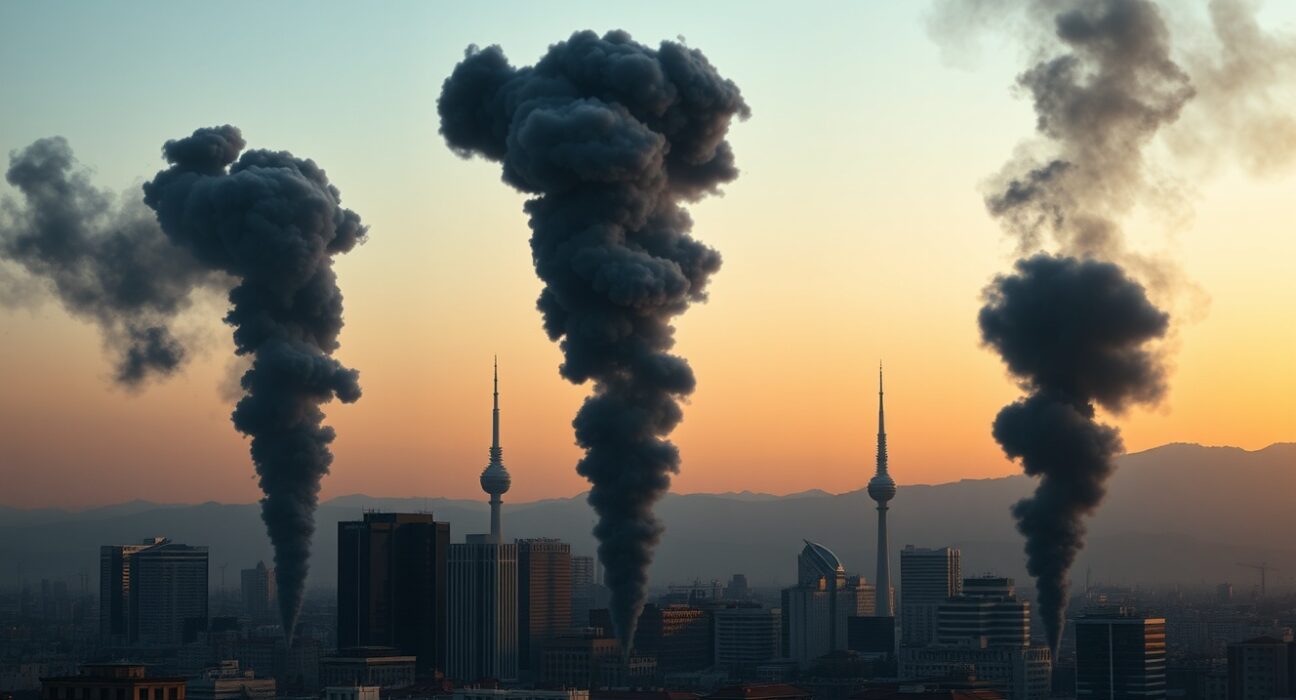
At least three separate airstrikes hit Tehran on Monday, April 7, according to multiple eyewitness accounts and official statements. Consequently, thick smoke billowed from multiple locations across the city, creating visible plumes that residents reported seeing for hours. Furthermore, another explosion occurred in a separate district, adding to the day’s chaos. These coordinated attacks represent the most significant assault on Iran’s capital in recent years.
Emergency services responded immediately to the affected areas. However, communication disruptions hampered initial rescue efforts. Meanwhile, Iranian authorities activated air defense systems across the region. The attacks occurred during daylight hours, maximizing their psychological impact on Tehran’s population of approximately 9 million residents.
Medical Infrastructure Under Attack
Iranian government spokesperson Mohajerani revealed alarming statistics about attacks on healthcare facilities. Specifically, he announced that 218 medical facilities nationwide have suffered attacks to date. Tragically, these assaults resulted in the deaths of 24 medical personnel. This systematic targeting of healthcare infrastructure violates international humanitarian law.
The attacks on medical facilities follow a disturbing regional pattern. For instance, similar incidents have occurred in conflict zones throughout the Middle East. Medical personnel face increasing dangers despite their protected status under the Geneva Conventions. Consequently, healthcare delivery suffers dramatically in affected regions.
| Facility Type | Number Attacked | Personnel Casualties |
|---|---|---|
| Hospitals | 47 | 14 |
| Clinics | 89 | 6 |
| Field Medical Units | 82 | 4 |
| Total | 218 | 24 |
Regional Security Implications
The Tehran airstrikes occur amid heightened regional tensions. Several factors contribute to the current volatile situation:
- Historical conflicts between regional powers
- Proxy warfare across multiple theaters
- Economic sanctions affecting regional stability
- Strategic competition for regional influence
Security analysts express concern about potential escalation. Moreover, they note the attacks’ sophistication suggests coordinated planning. Regional governments monitor developments closely. Additionally, international organizations call for restraint from all parties.
Humanitarian Consequences and Response
The attacks create immediate humanitarian challenges. Medical facilities struggle to treat casualties while damaged themselves. Emergency services operate under extreme duress. Furthermore, civilian populations face disrupted essential services.
International humanitarian organizations prepare response measures. They emphasize the need for protected humanitarian corridors. Additionally, they call for respect of international law. The protection of medical personnel remains a critical concern.
Historical Context of Regional Conflicts
The Middle East has experienced numerous conflicts in recent decades. Several factors contribute to persistent instability:
- Geopolitical rivalries between regional powers
- External intervention by global powers
- Economic disparities and resource competition
- Ethnic and religious divisions
These historical patterns inform current tensions. Understanding this context helps explain the attacks’ significance. Regional experts analyze potential escalation pathways. Diplomatic efforts continue despite the violence.
International Law and Accountability
Attacks on civilian infrastructure violate multiple international agreements. The Geneva Conventions specifically protect medical facilities. Additionally, customary international humanitarian law prohibits such attacks. Legal experts emphasize potential accountability mechanisms.
International organizations document potential violations. They collect evidence for possible future proceedings. Meanwhile, diplomatic channels address legal concerns. The international community watches developments closely.
Conclusion
The Tehran airstrikes represent a dangerous escalation in regional conflicts. Attacks on Iran’s capital and medical facilities demonstrate the conflict’s expanding scope. Consequently, regional stability faces significant threats. The international community must address both immediate humanitarian needs and underlying tensions. Protecting civilian infrastructure remains paramount for any resolution.
FAQs
Q1: When did the Tehran airstrikes occur?
The attacks happened on April 7, 2025, with at least three separate strikes hitting Iran’s capital during daylight hours.
Q2: How many medical facilities have been attacked in Iran?
According to Iranian officials, 218 medical facilities nationwide have suffered attacks, resulting in 24 medical personnel deaths.
Q3: What is the international legal status of attacking medical facilities?
Such attacks violate the Geneva Conventions and customary international humanitarian law, which specifically protect medical facilities and personnel.
Q4: How have regional governments responded to the attacks?
Regional governments monitor developments closely while calling for restraint, though official statements vary based on diplomatic relationships.
Q5: What are the immediate humanitarian concerns following the attacks?
Critical concerns include treating casualties with damaged medical infrastructure, restoring essential services, and protecting remaining healthcare facilities.
Q6: How might these attacks affect broader regional stability?
The Tehran airstrikes could escalate existing conflicts, potentially drawing in additional actors and further destabilizing the already volatile Middle East region.
Disclaimer: The information provided is not trading advice, Bitcoinworld.co.in holds no liability for any investments made based on the information provided on this page. We strongly recommend independent research and/or consultation with a qualified professional before making any investment decisions.
