

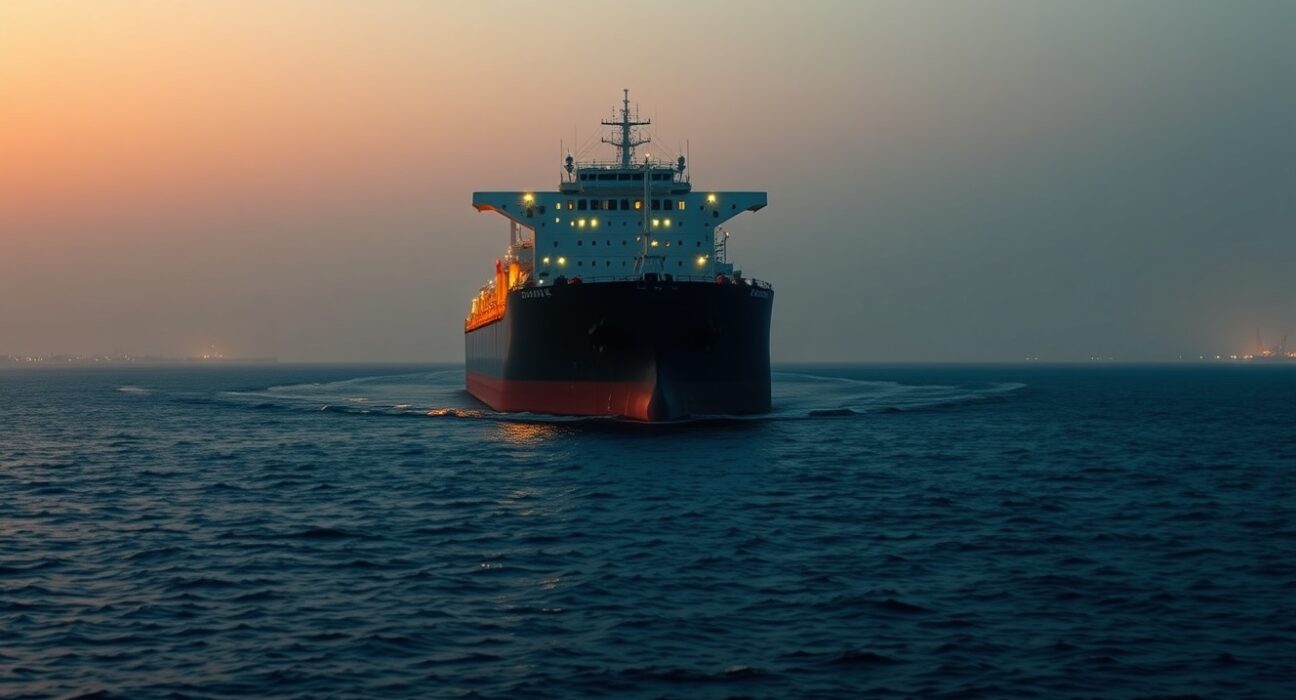
TEHRAN, Iran – March 15, 2025: Global energy markets face immediate disruption today after Iran’s Fars News Agency reported a complete halt of oil tanker traffic through the critical Strait of Hormuz. This decisive maritime action directly follows allegations from Iranian authorities of a significant breach in the recent Israel-Hamas ceasefire agreement. Consequently, the world’s most important oil chokepoint has effectively closed, threatening immediate supply shocks and escalating regional tensions to their highest level in years.
Strait of Hormuz Oil Tankers Face Unprecedented Halt
The reported stoppage affects all supertankers and cargo vessels carrying crude oil and liquefied natural gas (LNG). Furthermore, maritime tracking data from independent analysts shows at least twelve Very Large Crude Carriers (VLCCs) currently stationary in holding patterns outside the strait’s entrance. The Strait of Hormuz typically facilitates the transit of approximately 21 million barrels of oil per day, representing nearly 21% of global petroleum liquid consumption and 30% of all seaborne traded oil. Therefore, any prolonged closure risks triggering immediate price volatility and supply shortages across Asia, Europe, and beyond.
Iran’s Islamic Revolutionary Guard Corps (IRGC) Navy, which maintains a dominant presence in the waterway, appears to be enforcing the stoppage. Historically, the IRGC has conducted naval exercises and seized vessels in these waters to project power. However, a complete, coordinated halt of commercial transit marks a significant escalation in tactics. This action directly links regional maritime security to the fragile ceasefire dynamics hundreds of miles away in Gaza, creating a complex, multi-front geopolitical crisis.
Analyzing the Alleged Israel Ceasefire Breach
The catalyst for this crisis, according to the Fars News Agency report, is a claimed military operation by Israeli forces in the southern Gazan city of Rafah. Iranian state media characterized this operation as a “flagrant violation” of the temporary humanitarian pause that took effect just 72 hours prior. International mediators from Egypt and Qatar had brokered that pause to facilitate aid delivery and hostage releases. However, conflicting reports from the ground and a lack of immediate independent verification cloud the exact nature of the alleged breach.
Global diplomatic reactions are unfolding rapidly. The United Nations Security Council has announced an emergency session. Meanwhile, the United States Fifth Fleet, headquartered in Bahrain, has placed its forces in the Persian Gulf on heightened alert. A spokesperson for the International Energy Agency (IEA) stated the agency is “closely monitoring the situation” and is prepared to recommend a coordinated release of strategic petroleum reserves if the disruption persists. The table below outlines the immediate market impact observed in the first hours following the news:
| Commodity/Market | Initial Price Reaction | Key Factor |
|---|---|---|
| Brent Crude Oil Futures | +8.7% | Direct supply disruption risk |
| West Texas Intermediate (WTI) | +7.9% | Global benchmark spillover |
| Shipping Freight Rates (Middle East Gulf to Asia) | +15% (Est.) | Risk premium and rerouting costs |
| Energy Sector Stocks (Asia & Europe) | Mixed | Divergence between producers and consumers |
Expert Analysis on Maritime Security and Energy Geopolitics
Dr. Anya Petrova, a Senior Fellow at the Center for Maritime Strategy, explains the strategic calculus. “Iran has consistently viewed the Strait of Hormuz as its primary strategic lever,” she notes. “Linking its closure to events in Gaza represents a deliberate and dangerous expansion of the conflict’s geography. The immediate goal is likely to exert maximum economic pressure on Israel’s allies to enforce ceasefire terms.” This tactic, often termed “hybrid warfare,” uses economic tools to achieve geopolitical objectives.
From an energy security perspective, the global system has limited short-term alternatives. Key options include:
- Utilizing the Saudi Petroline (East-West Pipeline): This pipeline can redirect about 5 million barrels per day from the Gulf to the Red Sea, bypassing the Strait.
- Drawing on Strategic Reserves: IEA member countries hold over 1.5 billion barrels of emergency stocks.
- Rerouting via the Cape of Good Hope: Adds approximately 15 days and significant cost to Asia-bound voyages.
Each alternative carries economic costs and logistical challenges, meaning no single solution can fully replace the strait’s capacity.
Historical Context and Potential Pathways to De-escalation
This is not the first time the Strait of Hormuz has been a flashpoint. Recent history includes the 2019 tanker attacks, the 2021 seizure of the MV *Asphalt Princess*, and repeated IRGC naval exercises. However, a total stoppage of commercial traffic is a rare and severe action. Past incidents were typically resolved through intense behind-the-scenes diplomacy, often involving Omani or Qatari mediation, coupled with calibrated military posturing by the US and its allies to ensure freedom of navigation.
The pathway to de-escalation now appears inextricably tied to the ceasefire in Gaza. Diplomatic sources suggest that securing a verifiable cessation of hostilities in Rafah is the prerequisite for Iran reopening the waterway. This creates a direct chain of accountability from the battlefield in Gaza to the global price of gasoline. Consequently, world capitals are applying immense pressure on all parties to step back from the brink, recognizing that a prolonged closure could tip the fragile global economy into recession.
Conclusion
The reported halt of Strait of Hormuz oil tankers following allegations of an Israel ceasefire breach represents a severe and immediate threat to global energy security and geopolitical stability. This event demonstrates how regional conflicts can rapidly trigger worldwide economic consequences through critical maritime chokepoints. The coming days will test international diplomacy, the resilience of global energy supply chains, and the fundamental principle of freedom of navigation. The world now watches for signs of de-escalation in both Gaza and the Gulf, as the stakes for the global economy could not be higher.
FAQs
Q1: What exactly is the Strait of Hormuz and why is it so important?
The Strait of Hormuz is a narrow sea passage between Oman and Iran connecting the Persian Gulf to the Gulf of Oman and the open ocean. It is critically important because approximately one-fifth of the world’s oil supply passes through it daily, making it the world’s most significant maritime oil chokepoint.
Q2: Who has the authority to stop ships in the Strait of Hormuz?
While the strait is an international waterway governed by the United Nations Convention on the Law of the Sea (UNCLOS), Iran’s Islamic Revolutionary Guard Corps (IRGC) Navy maintains a heavy presence and has repeatedly asserted its ability to control and restrict traffic, citing its territorial waters near the strait’s narrowest point.
Q3: How long can the global economy withstand a closure of the Strait of Hormuz?
Analysts estimate that strategic petroleum reserves and alternative shipping routes could mitigate the worst effects for several weeks. However, significant price spikes and regional shortages would begin within days, and a prolonged closure of months would likely cause a global economic recession due to sustained high energy costs.
Q4: What is the reported connection between this event and the Israel-Hamas ceasefire?
Iranian authorities, via the Fars News Agency, have explicitly stated the halt is a direct response to what they claim is an Israeli military breach of the temporary ceasefire in Gaza. This links the maritime action to the broader regional conflict, using economic pressure as a tool of geopolitical leverage.
Q5: What are the main alternative routes for oil if the Strait remains closed?
The primary alternatives are: 1) The Saudi Petroline pipeline, which bypasses the strait to the Red Sea but has limited capacity. 2) Rerouting tankers around the southern tip of Africa (Cape of Good Hope), which adds significant time and cost. 3) Increased output from non-Gulf producers like the United States, Brazil, or Guyana, though this cannot be ramped up immediately.
Disclaimer: The information provided is not trading advice, Bitcoinworld.co.in holds no liability for any investments made based on the information provided on this page. We strongly recommend independent research and/or consultation with a qualified professional before making any investment decisions.
