

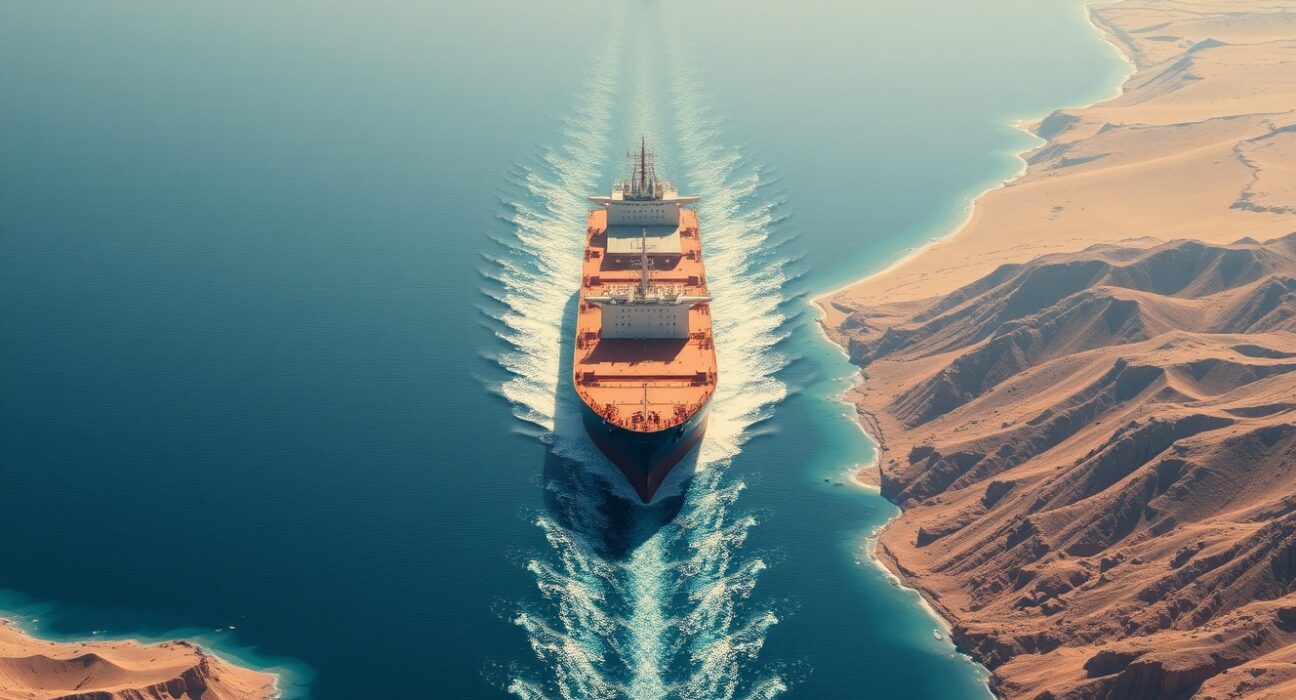
WASHINGTON, D.C. – President Donald Trump declared on Tuesday that Iran’s management of oil shipments through the Strait of Hormuz “is not the agreement we have,” escalating tensions over the world’s most critical oil transit chokepoint. This statement directly challenges Tehran’s maritime operations in a waterway that carries approximately 21 million barrels of oil daily, representing 21% of global petroleum consumption. Consequently, energy markets and geopolitical analysts immediately scrutinized the implications for global oil supply chains and regional security frameworks.
Trump’s Strait of Hormuz Statement and Immediate Context
President Trump made his remarks during a White House briefing on Middle East security policy. Furthermore, he specifically referenced Iran’s recent naval exercises and increased monitoring of commercial shipping. The Strait of Hormuz serves as the only sea passage from the Persian Gulf to the open ocean. Therefore, any disruption there would immediately impact global energy markets. Historical data from the U.S. Energy Information Administration confirms this waterway’s critical importance. For instance, in 2024, an average of 74 oil tankers traversed the strait daily. These vessels carried crude oil and petroleum products destined for markets across Asia, Europe, and North America.
Iran’s Islamic Revolutionary Guard Corps Navy maintains significant presence in these waters. Additionally, they regularly conduct military exercises near shipping lanes. The Trump administration has consistently criticized these activities as provocative. However, Iranian officials defend them as legitimate sovereignty protection. This fundamental disagreement now centers on interpretations of international maritime law. Specifically, the United Nations Convention on the Law of the Sea provides guidelines for transit passage. Nevertheless, the U.S. and Iran have different applications of these provisions.
Geopolitical Background of Hormuz Tensions
The current confrontation has deep historical roots. Previously, the 2015 Joint Comprehensive Plan of Action addressed Iran’s nuclear program. However, it did not specifically cover maritime security issues. President Trump withdrew from that agreement in 2018. Subsequently, tensions have steadily increased in the Persian Gulf region. Iran has repeatedly threatened to close the Strait of Hormuz if faced with severe sanctions. Meanwhile, the United States has deployed additional naval assets to the region. These include the USS Dwight D. Eisenhower carrier strike group.
Expert Analysis of Maritime Security Implications
Maritime security experts provide crucial context for this development. Dr. Sarah Chen, a senior fellow at the Atlantic Council’s Global Energy Center, explains the technical dimensions. “The Strait of Hormuz is only 21 nautical miles wide at its narrowest point,” Chen notes. “The shipping lanes in either direction are just two miles wide each. This creates natural bottlenecks where Iran can easily monitor or disrupt traffic.” Chen’s research indicates that even temporary disruptions would have immediate global consequences. For example, a one-week closure could remove 150 million barrels of oil from global markets. This would likely trigger price spikes exceeding 50%.
Regional security analysts emphasize the military balance. The United States Fifth Fleet maintains headquarters in Bahrain. Conversely, Iran has developed asymmetric naval capabilities. These include fast attack craft, naval mines, and anti-ship missiles. A comparative analysis reveals significant disparities in conventional naval power. However, Iran’s geographic position provides strategic advantages for controlling the strait.
Oil Market Impacts and Global Energy Security
Global energy markets reacted cautiously to President Trump’s statement. Initially, Brent crude futures increased by 2.3% following the announcement. This reaction reflects market sensitivity to Persian Gulf security developments. The following table illustrates key statistics about Strait of Hormuz oil transit:
| Metric | Volume/Value | Global Share |
|---|---|---|
| Daily Oil Transit | 21 million barrels | 21% |
| Liquefied Natural Gas | 85 million cubic meters | 20% |
| Total Petroleum | $1.2 billion daily | N/A |
| Primary Destinations | China, India, Japan, S. Korea | 65% of transit |
Major Asian economies depend heavily on Hormuz transit routes. Specifically, China imports 42% of its crude oil through this waterway. Similarly, Japan receives nearly 80% of its oil imports via the strait. Therefore, regional tensions directly affect global economic stability. Energy analysts identify several potential scenarios following Trump’s statement:
- Increased insurance premiums for shipping in the region
- Alternative route exploration including pipeline expansions
- Strategic petroleum reserve releases by consuming nations
- Accelerated energy transition investments reducing oil dependence
International Law and Diplomatic Dimensions
The legal framework governing Strait of Hormuz transit involves complex interpretations. The 1982 United Nations Convention on the Law of the Sea establishes transit passage rights. These rights allow vessels to pass through international straits without interference. However, coastal states maintain certain regulatory authorities. Iran and Oman share sovereignty over the territorial waters. Both nations have rights and responsibilities under international law.
Diplomatic channels remain active despite public tensions. The International Maritime Organization facilitates discussions about shipping security. Additionally, regional organizations like the Gulf Cooperation Council address security concerns. European nations have proposed maritime surveillance initiatives. These would increase transparency in the Persian Gulf. However, implementation requires cooperation from all regional stakeholders.
Historical Precedents and Conflict Prevention
Previous incidents provide important context for current tensions. In 2019, attacks on tankers near the Strait of Hormuz raised alarm. Subsequently, the United States established Operation Sentinel. This multinational maritime security initiative increased surveillance. However, participation remains limited to Western allies. Iran has criticized the operation as destabilizing.
The “Tanker War” of the 1980s offers historical parallels. During the Iran-Iraq conflict, both nations attacked commercial shipping. This resulted in significant insurance cost increases. It also prompted international naval interventions. Current military planners study these historical cases. They aim to prevent similar escalation patterns. Conflict prevention mechanisms include:
- Hotline communications between naval forces
- Clear rules of engagement documentation
- Multinational observation and reporting systems
- Regular diplomatic consultations at working levels
Conclusion
President Trump’s statement on Iran’s Strait of Hormuz oil handling highlights persistent geopolitical tensions. The strategic waterway remains essential for global energy security. Consequently, any disruption would have immediate worldwide consequences. Diplomatic solutions require careful navigation of sovereignty concerns and transit rights. Furthermore, international cooperation remains crucial for maintaining open sea lanes. The situation demands continued monitoring by policymakers and market participants alike. Ultimately, stability in the Strait of Hormuz serves fundamental global economic interests.
FAQs
Q1: What percentage of global oil passes through the Strait of Hormuz?
Approximately 21% of global petroleum consumption transits the Strait of Hormuz, representing about 21 million barrels daily according to U.S. Energy Information Administration data.
Q2: Which countries control the Strait of Hormuz?
Iran and Oman share sovereignty over the territorial waters of the Strait of Hormuz, with their coastlines forming the narrow passage between the Persian Gulf and Gulf of Oman.
Q3: What international laws govern transit through the strait?
The United Nations Convention on the Law of the Sea establishes transit passage rights through international straits, though specific interpretations and applications vary between nations.
Q4: How have oil markets reacted to previous Strait of Hormuz tensions?
Historical incidents have typically caused immediate price spikes of 5-15% for crude oil, with longer-term impacts on insurance costs and shipping route decisions.
Q5: What alternatives exist if the Strait of Hormuz becomes impassable?
Limited pipeline capacity from the Persian Gulf, primarily through Saudi Arabia and the UAE, could redirect some oil, but insufficient capacity exists to replace maritime transit completely.
Disclaimer: The information provided is not trading advice, Bitcoinworld.co.in holds no liability for any investments made based on the information provided on this page. We strongly recommend independent research and/or consultation with a qualified professional before making any investment decisions.
