

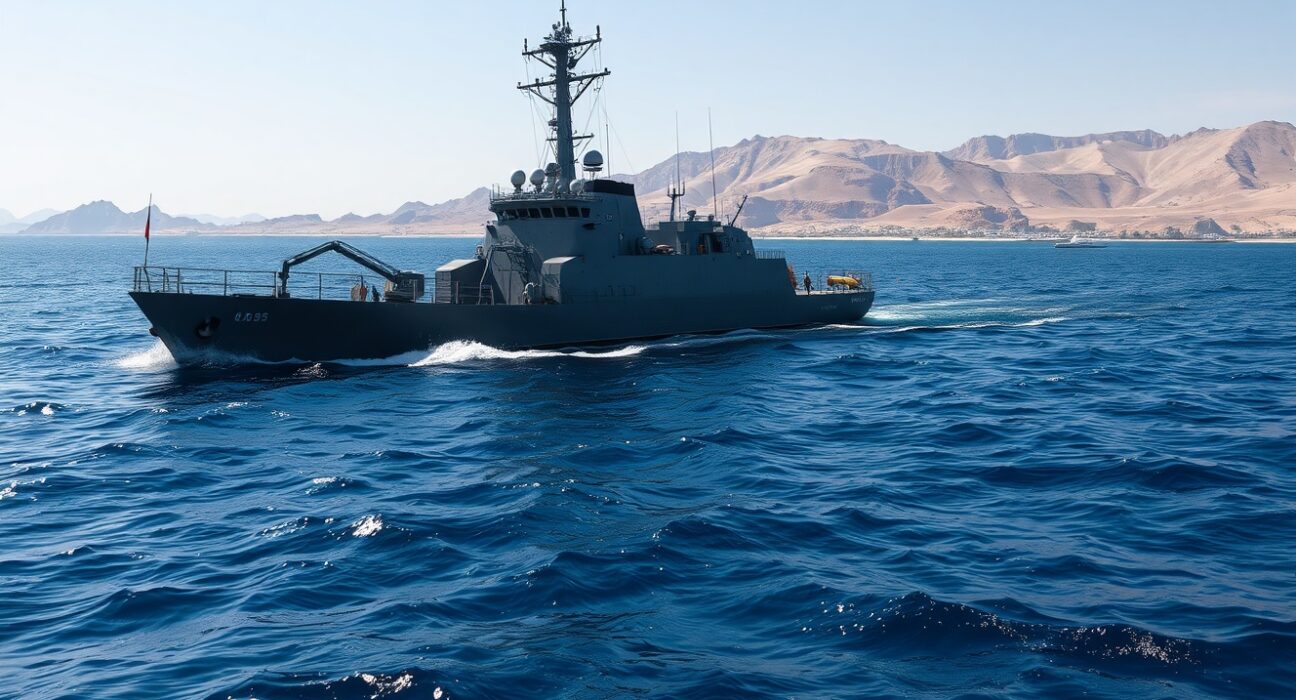
WASHINGTON, D.C. — U.S. officials announced significant maritime security operations in the Strait of Hormuz this week, coinciding with President Donald Trump’s declaration that Iran faces substantial military setbacks. The strategic waterway, which carries approximately 21 million barrels of oil daily, represents a critical global chokepoint for energy supplies. Consequently, mine-clearing operations there directly impact international markets and geopolitical stability.
Strait of Hormuz Operations and Regional Implications
The United States Navy initiated specialized mine-clearing operations in the Strait of Hormuz following recent security assessments. These operations aim to ensure safe passage for commercial vessels through the 21-mile wide shipping lane. Furthermore, maritime experts confirm that approximately 30% of the world’s seaborne oil passes through this narrow passage. The U.S. Fifth Fleet, based in Bahrain, coordinates these efforts using MH-53E Sea Dragon helicopters and dedicated mine countermeasure ships.
Regional analysts note that mine threats in the Strait have historical precedent. During the 1980s Tanker War, both Iran and Iraq targeted commercial shipping with mines. Today’s operations involve advanced sonar systems and unmanned underwater vehicles. These technologies systematically identify and neutralize potential threats. Meanwhile, commercial shipping continues under enhanced security protocols.
Assessment of Iran’s Military Capabilities
President Trump’s statements regarding Iran’s military status require careful examination against available intelligence. The Iranian military maintains significant asymmetric capabilities despite recent challenges. Specifically, Iran’s naval forces include numerous fast attack craft and coastal defense missiles. Additionally, their air defense network incorporates Russian-made S-300 systems and domestically produced Bavar-373 missiles.
International defense analysts provide measured assessments of Iran’s current military posture. While some missile facilities have sustained damage, Iran retains substantial underground storage and production sites. Moreover, their drone program continues development with various models operational. These include the Shahed-136 loitering munitions and more advanced Ababil and Mohajer variants.
Expert Analysis of Regional Military Balance
Former CENTCOM commander General Joseph Votel emphasizes Iran’s enduring strategic position. “Iran maintains layered defensive capabilities across multiple domains,” Votel stated in recent testimony. “Their geographic advantages in the Strait of Hormuz provide persistent leverage.” Similarly, International Institute for Strategic Studies data indicates Iran operates approximately 398 naval vessels, though most are small patrol craft.
The following table compares key military assets in the Persian Gulf region:
| Country | Major Naval Vessels | Coastal Defense Systems | Air Defense Networks |
|---|---|---|---|
| Iran | 5 frigates, 33 corvettes | Chinese C-802, Iranian Noor | S-300, Bavar-373 |
| U.S. 5th Fleet | 1-2 carrier groups, 15+ warships | Ship-based systems | Aegis, Patriot batteries |
| Saudi Arabia | 7 frigates, 4 corvettes | French MM40 Exocet | Patriot, THAAD |
Global Energy Market Impacts
The Strait of Hormuz operations immediately affect global energy markets. Oil tankers from multiple nations now adjust routing patterns. Specifically, vessels from South Korea, Japan, China, and Germany monitor security developments closely. Brent crude futures responded with moderate volatility following the announcements. However, market fundamentals remain stable due to sufficient global inventories.
Energy analysts identify several key factors influencing current oil flows:
- Alternative Routes: Some shippers consider longer passages around Africa
- Insurance Premiums: War risk insurance rates adjust based on security assessments
- Strategic Reserves: Major consumers maintain emergency stockpiles
- Pipeline Alternatives: Land-based pipelines bypass the Strait but have limited capacity
Furthermore, U.S. crude exports reached record levels recently. American production now exceeds 13 million barrels per day. This production surge provides additional market flexibility during regional disruptions.
Historical Context of Strait of Hormuz Tensions
The current situation follows decades of regional tension over maritime security. In 2019, multiple tankers experienced attacks near the Strait. Subsequently, the International Maritime Organization issued heightened security alerts. The U.S. then established Operation Sentinel as a multinational maritime security initiative. This operation currently involves vessels from eight allied nations.
Diplomatic efforts continue alongside military operations. European nations maintain communication channels with Iranian officials. Simultaneously, the International Atomic Energy Agency monitors Iran’s nuclear activities. These parallel tracks reflect the complex multidimensional nature of Persian Gulf security challenges.
Maritime Law and Freedom of Navigation
Legal experts emphasize the Strait’s status under international law. The United Nations Convention on the Law of the Sea guarantees transit passage through international straits. Consequently, all nations maintain rights to peaceful navigation. The U.S. operations specifically aim to preserve these rights for global commerce.
Commercial shipping associations express cautious support for security enhancements. “Safe passage through chokepoints remains essential for global trade,” stated the International Chamber of Shipping. “We welcome measures that protect seafarers and vessels without impeding lawful commerce.”
Conclusion
The Strait of Hormuz mine-clearing operations represent a significant development in Persian Gulf security. These efforts occur alongside evolving assessments of Iran’s military capabilities. Global energy markets demonstrate resilience through diversified supply routes and strategic reserves. Ultimately, maritime security in this critical waterway requires sustained international cooperation and diplomatic engagement. The situation continues evolving with implications for regional stability and global energy security.
FAQs
Q1: What percentage of global oil passes through the Strait of Hormuz?
Approximately 21% of global petroleum consumption passes through the Strait of Hormuz daily, representing about 21 million barrels of oil. This includes most exports from Saudi Arabia, Iran, the UAE, Kuwait, and Iraq.
Q2: What types of mines might be found in the Strait of Hormuz?
Naval experts typically encounter moored contact mines, bottom influence mines, and limpet mines in these waters. Modern mine countermeasure operations use sonar, magnetic sensors, and remotely operated vehicles for detection and neutralization.
Q3: How does Iran typically respond to U.S. naval operations in the region?
Iran generally conducts heightened naval patrols and occasionally stages military exercises. They often deploy fast attack craft and coastal defense systems while issuing diplomatic protests through United Nations channels.
Q4: What alternative routes exist if the Strait of Hormuz closes?
Major alternatives include the SUMED pipeline in Egypt (2.5 million bpd capacity), the Abu Dhabi Crude Oil Pipeline (1.5 million bpd), and longer sea routes around Africa’s Cape of Good Hope adding approximately 15 days transit time.
Q5: How do mine-clearing operations affect commercial shipping schedules?
Operations typically create temporary traffic separation schemes and speed restrictions. Most commercial vessels experience minimal delays when operations coordinate effectively with shipping lanes and provide advance notice to mariners.
Disclaimer: The information provided is not trading advice, Bitcoinworld.co.in holds no liability for any investments made based on the information provided on this page. We strongly recommend independent research and/or consultation with a qualified professional before making any investment decisions.
