

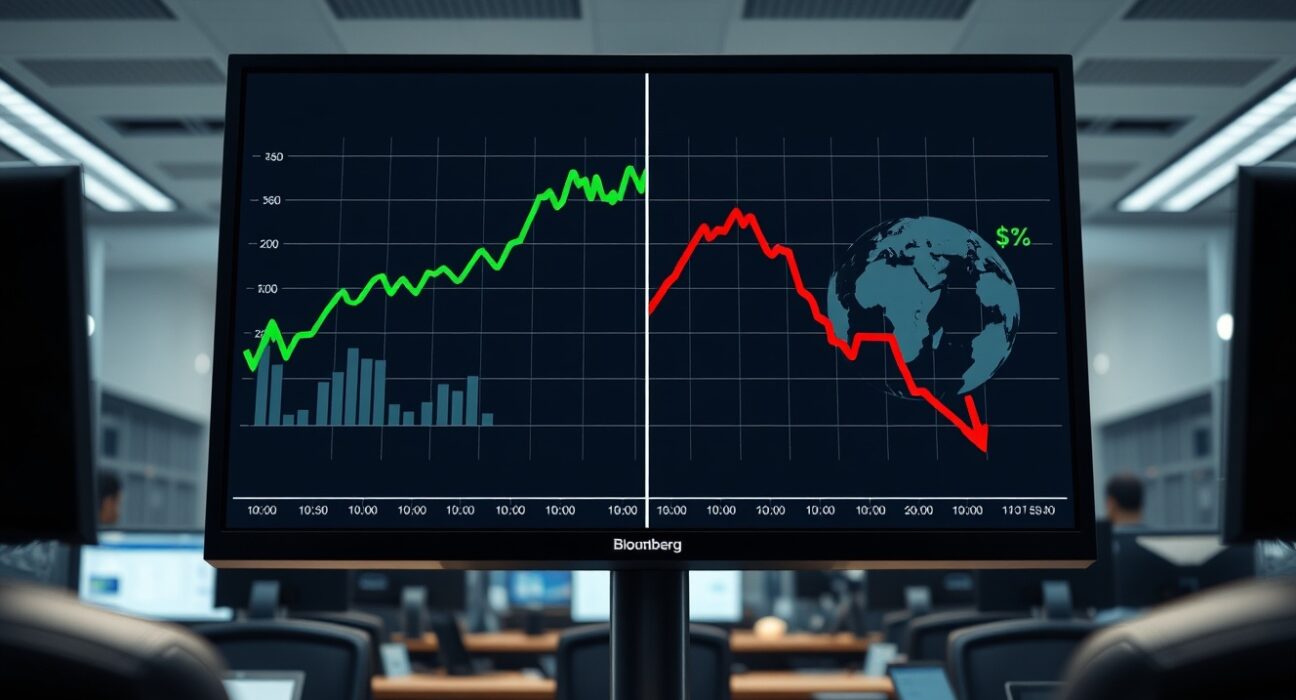
NEW YORK, March 2025 – The S&P 500 index currently navigates a precarious financial landscape, caught between two powerful and opposing forces. According to a recent pivotal analysis from Deutsche Bank, robust corporate earnings optimism directly clashes with the palpable shock of escalating global conflicts, creating a volatile equilibrium for investors. This fundamental tension defines the market’s trajectory as we move deeper into the year, demanding a clear-eyed assessment of underlying drivers.
S&P 500 Earnings Optimism: The Bullish Foundation
Corporate America continues to demonstrate remarkable resilience. Furthermore, fourth-quarter 2024 earnings season largely surpassed analyst expectations. The technology and healthcare sectors, in particular, reported significant profit growth. This strength primarily stems from sustained consumer spending and continued digital transformation investments. Consequently, forward earnings estimates for the S&P 500 have seen upward revisions. Major financial institutions cite several key supportive factors.
- Pricing Power: Many corporations maintain an ability to pass higher costs to consumers.
- Operational Efficiency: Widespread adoption of AI and automation boosts productivity margins.
- Healthy Balance Sheets: Aggregate corporate debt levels remain manageable relative to cash flows.
This earnings optimism provides a solid fundamental floor for equity valuations. However, it operates within a broader, more turbulent macroeconomic context.
The Geopolitical Conflict Shock: A Persistent Headwind
Simultaneously, a series of geopolitical flashpoints inject profound uncertainty into global markets. Deutsche Bank’s research highlights how conflict shock manifests across multiple channels. These events disrupt global supply chains, elevate energy and commodity prices, and foster risk aversion among institutional investors. The bank’s analysts specifically point to ongoing tensions in Eastern Europe and the Middle East as primary catalysts. These conflicts have tangible, measurable impacts on market psychology and capital flows.
| Conflict Channel | Impact on S&P 500 |
|---|---|
| Energy Price Volatility | Increases input costs, squeezes consumer discretionary spending |
| Supply Chain Disruption | Delays production, creates inventory shortages for manufacturers |
| Safe-Haven Demand | Triggers capital rotation from equities to Treasuries and gold |
| Currency Fluctuations | Affects multinational corporate earnings from overseas operations |
This environment creates a persistent overhang that limits market upside. It also amplifies volatility during news-driven events.
Deutsche Bank’s Analytical Framework
Deutsche Bank’s team employs a quantitative model weighing these dual factors. Their framework assigns probabilities to various macroeconomic scenarios. The base case suggests a period of elevated range-bound trading for the S&P 500. Earnings growth provides support, while geopolitical risks cap significant rallies. Historical precedent, such as market behavior during past periods of regional instability coupled with strong earnings, informs this outlook. The analysis remains strictly data-driven, avoiding speculative predictions. Instead, it outlines probable outcomes based on current observable trends and policy responses.
Market Mechanics: How the Tug-of-War Plays Out
Investors witness this struggle daily through specific market mechanics. Sector rotation becomes more pronounced as capital seeks defensive havens. Typically, money flows toward utilities, consumer staples, and healthcare during risk-off periods. Conversely, technology and consumer discretionary stocks rally on strong earnings news. The CBOE Volatility Index (VIX) frequently spikes in response to geopolitical headlines, only to settle as corporate news reassures. This creates a whipsaw effect for short-term traders. Long-term investors, however, focus on the enduring quality of earnings. The market’s direction hinges on which narrative gains dominance in a given week.
Historical Context and the Path Forward
Markets have historically navigated similar periods of tension. The late 2010s, for instance, saw trade war anxieties offset by tax cut-fueled earnings growth. The key differentiator today is the multipolar nature of geopolitical risks. Central bank policy remains a critical wildcard. The Federal Reserve must balance inflation concerns stemming from supply shocks with the need to avoid stifling economic growth. Its communication and interest rate decisions will significantly influence whether earnings or conflict narratives prevail. Corporate guidance in upcoming quarterly reports will be scrutinized for mentions of geopolitical impact on forecasts.
Conclusion
The S&P 500 stands at a complex crossroads, defined by the powerful clash between domestic corporate strength and international instability. Deutsche Bank’s analysis underscores that neither earnings optimism nor conflict shock operates in a vacuum. Investors must therefore adopt a nuanced perspective, recognizing the index’s resilience while respecting real geopolitical risks. The path forward for the S&P 500 will likely be one of moderated gains punctuated by episodic volatility, a direct reflection of this ongoing fundamental tug-of-war.
FAQs
Q1: What does “conflict shock” mean in financial markets?
In financial terminology, a conflict shock refers to the sudden negative impact on global markets caused by geopolitical events like wars, terrorism, or significant international tensions. It typically triggers risk aversion, supply chain fears, and commodity price spikes.
Q2: How can strong S&P 500 earnings coexist with high market volatility?
They can coexist because they are driven by different factors. Earnings reflect past corporate performance and future guidance, which can be positive. Volatility is often driven by real-time investor sentiment and fear regarding future geopolitical or macroeconomic events that may *later* impact those earnings.
Q3: Which S&P 500 sectors are most sensitive to geopolitical conflict shocks?
Industrials, energy, and materials sectors are often most directly sensitive due to supply chain and commodity price exposure. Technology can be sensitive due to its global sales footprint and reliance on complex international supply chains.
Q4: What is the main takeaway from Deutsche Bank’s analysis for a retail investor?
The main takeaway is the importance of diversification and a long-term perspective. While short-term volatility from geopolitical news is likely, the fundamental support from corporate earnings suggests maintaining a strategic equity allocation, potentially tilted toward quality companies with strong balance sheets.
Q5: Has the S&P 500 faced similar “tug-of-war” scenarios in the past?
Yes, markets frequently balance opposing forces. A recent example was the 2018-2019 period, where strong U.S. economic data and earnings were countered by U.S.-China trade war tensions, leading to a period of elevated volatility without a definitive bear market.
Disclaimer: The information provided is not trading advice, Bitcoinworld.co.in holds no liability for any investments made based on the information provided on this page. We strongly recommend independent research and/or consultation with a qualified professional before making any investment decisions.
