

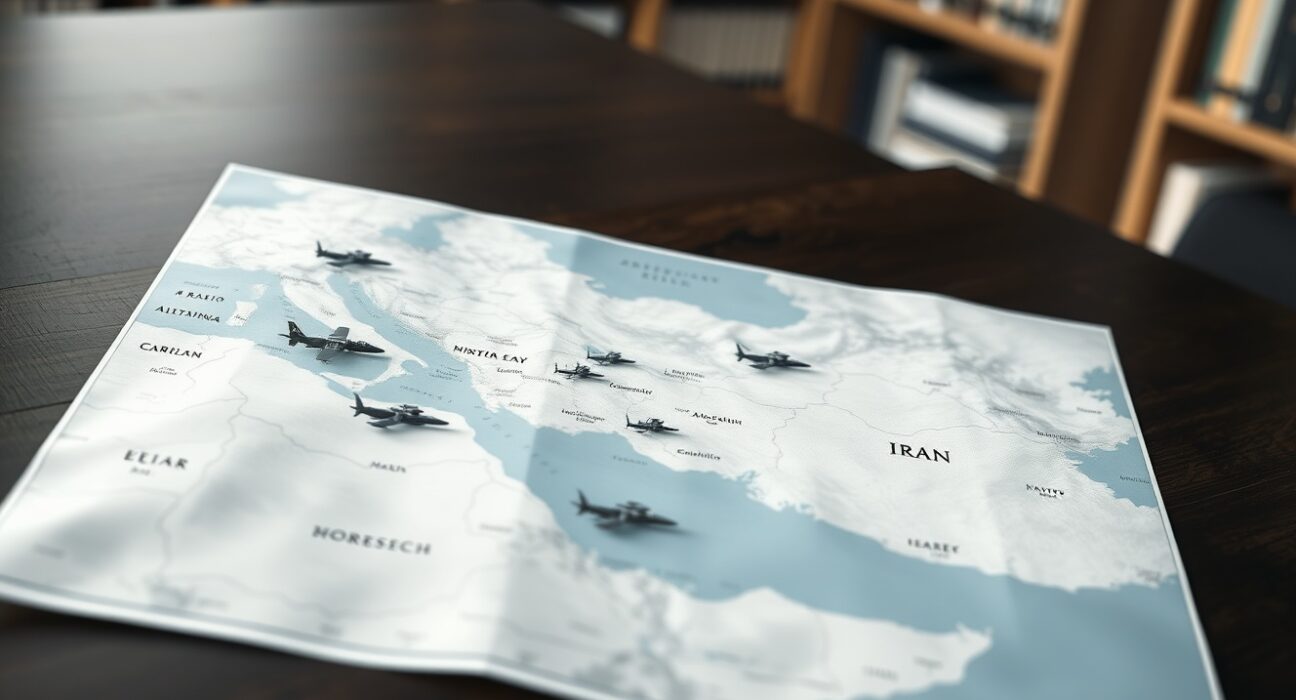
WASHINGTON, D.C., March 15, 2025 – The Trump administration has significantly intensified pressure on Tehran through a substantial new military deployment to the Middle East, marking a decisive escalation in the longstanding geopolitical confrontation between the United States and Iran. This strategic move represents the most substantial reinforcement of American military assets in the region since the height of tensions in 2020, fundamentally altering the security calculus across the Persian Gulf.
Trump’s Military Deployment Against Iran: A Strategic Breakdown
The Pentagon has confirmed the deployment of additional naval and aerial assets to the United States Central Command (CENTCOM) area of operations. Consequently, this reinforcement includes an aircraft carrier strike group, advanced fighter squadrons, and enhanced missile defense systems. Specifically, the USS Gerald R. Ford carrier strike group has received orders to extend its presence in the Eastern Mediterranean, while B-52 Stratofortress bombers have forward-deployed to Al Udeid Air Base in Qatar.
Military analysts immediately recognized the deployment’s dual nature. Primarily, it serves as a powerful deterrent against potential Iranian aggression toward regional allies. Simultaneously, it provides the operational flexibility to respond rapidly to emerging threats. The Department of Defense released an official statement emphasizing the deployment’s defensive posture, stating it aims to “ensure freedom of navigation and reassure partners.”
Historical Context of US-Iran Military Posturing
This latest deployment continues a pattern of cyclical escalation between Washington and Tehran. Previously, the Trump administration’s “maximum pressure” campaign, initiated after the 2018 withdrawal from the Joint Comprehensive Plan of Action (JCPOA), established a precedent for using military positioning as diplomatic leverage. Subsequently, the Biden administration pursued renewed negotiations while maintaining a substantial regional presence. Now, the current administration appears to be returning to a more overtly confrontational stance.
The regional military balance presents a complex picture, as illustrated below:
| Military Asset Category | US/Allied Presence (Pre-Deployment) | Iranian Counter-Capabilities |
|---|---|---|
| Naval Surface Combatants | 15-20 vessels | Fast attack craft, anti-ship missiles |
| Land-Based Aircraft | ~200 combat aircraft | Air defense networks, drones |
| Missile Defense | Patriot, THAAD batteries | Ballistic & cruise missile arsenal |
| Regional Bases | 6 major installations | Domestic infrastructure only |
Geopolitical Implications Across the Middle East
The reinforcement carries immediate consequences for regional stability. Neighboring Gulf Cooperation Council (GCC) states, particularly Saudi Arabia and the United Arab Emirates, have historically welcomed visible American security guarantees. However, this deployment arrives amid their own diplomatic outreach to Tehran, creating potential policy contradictions. Meanwhile, Israel has consistently advocated for a firm stance against Iran’s nuclear ambitions and regional proxy networks.
Conversely, the Iranian government has condemned the move as “provocative adventurism.” Foreign Ministry spokesman Nasser Kanaani stated the deployment “will not enhance security but will instead increase regional instability.” Iranian military officials have correspondingly announced readiness exercises for their own forces, including naval drills in the Strait of Hormuz, through which approximately 20% of the world’s oil passes.
Expert Analysis on Strategic Calculus
Dr. Anahita Sharma, Senior Fellow at the Center for Strategic and International Studies, provides critical context. “This isn’t merely about adding ships to a map,” she explains. “It’s a calibrated signal. The specific assets chosen—enhanced air defense and long-range strike capabilities—directly counter Iran’s primary asymmetric advantages: its missile arsenal and drone swarms. The administration is communicating that it can negate Iran’s preferred tools of escalation.”
Furthermore, the timing intersects with stalled nuclear negotiations. The International Atomic Energy Agency (IAEA) recently reported that Iran’s stockpile of highly enriched uranium continues to grow, reducing the theoretical “breakout” time needed to produce a nuclear weapon. The military deployment, therefore, may serve as coercive diplomacy, aiming to strengthen the US bargaining position should talks resume.
Economic and Security Impacts on Global Energy Markets
The Persian Gulf remains the world’s most critical energy corridor. Consequently, any sustained military buildup inherently affects global oil prices and shipping insurance premiums. Market analysts observed an immediate 3% increase in Brent crude futures following the deployment announcement. Major shipping firms are now reassessing risk premiums for vessels transiting the Strait of Hormuz.
Key security concerns for commercial shipping include:
- Asymmetric Threats: Iran’s use of fast boats and naval mines against tankers.
- Missile Risk: The potential for longer-range strikes on offshore infrastructure.
- Cyber Operations: Disruption of port logistics and shipping databases.
The US Navy’s Fifth Fleet, headquartered in Bahrain, has consequently increased combined patrols with regional partners. This coordinated presence aims to deter harassment and ensure the uninterrupted flow of commerce.
Domestic and International Political Reactions
Domestically, the deployment has received mixed reactions. Congressional leaders from the President’s party have largely endorsed the move as necessary for national security. Conversely, opposition lawmakers have raised concerns about mission creep and the absence of a new congressional authorization for the use of military force. Several have called for a detailed briefing on the deployment’s objectives and exit strategy.
Internationally, European allies have expressed cautious concern. While supporting the principle of freedom of navigation, French and German officials have privately urged de-escalation, fearing the deployment could undermine diplomatic efforts. Meanwhile, Russia and China have jointly criticized the action at the United Nations Security Council, framing it as destabilizing unilateralism.
The Human Dimension: Regional Perspectives
Beyond high-level politics, the deployment affects populations across the region. In Gulf capitals, many citizens express relief at reinforced security guarantees. However, peace activists and civil society groups warn of the psychological impact of perpetual militarization. “Our children grow up seeing warships on the horizon,” notes Kuwaiti academic Dr. Faris Al-Jasim. “This normalization of a siege mentality has profound social costs.” In Iran, state media uses the deployment to bolster nationalist sentiment and justify military spending, despite severe economic challenges from ongoing sanctions.
Conclusion
The Trump administration’s escalated military deployment against Iran represents a pivotal moment in Middle Eastern security dynamics. This strategic decision reinforces deterrence, recalibrates diplomatic leverage, and directly responds to Iran’s advancing military capabilities. While intended to prevent conflict through demonstrated strength, the buildup inherently carries the risk of miscalculation or accidental escalation. The coming months will test whether this show of force can coerce diplomatic progress or merely solidify a dangerous new status quo of militarized confrontation. Ultimately, the long-term trajectory of US-Iran relations will depend not just on deployed assets, but on the political will for sustainable de-escalation and dialogue.
FAQs
Q1: What specific military units are involved in this new deployment?
The deployment includes the USS Gerald R. Ford Carrier Strike Group (CSG), a squadron of F-35A Lightning II fighters, additional Patriot and THAAD missile defense batteries, and enhanced intelligence, surveillance, and reconnaissance (ISR) assets operating from bases in Qatar, the UAE, and Jordan.
Q2: How does this deployment differ from previous US military buildups in the region?
This deployment is notable for its focus on integrated air and missile defense, specifically tailored to counter Iran’s large arsenal of drones and precision missiles. It also represents a larger permanent increase in rotational forces, rather than a temporary crisis response.
Q3: What is Iran’s most likely military response to this deployment?
Most analysts expect Iran to avoid direct confrontation with US forces. Instead, Tehran will likely increase support to regional proxies, conduct calibrated naval exercises near US ships to test responses, and potentially accelerate missile and drone tests to demonstrate its own deterrent capabilities.
Q4: How does this affect ongoing nuclear negotiations with Iran?
The deployment complicates diplomacy by introducing new military variables. It may be intended to strengthen the US negotiating position by showing resolve, but it could also harden Iranian opposition and provide hardliners in Tehran with arguments against making concessions.
Q5: What are the legal authorities for this deployment?
The administration cites the 2001 Authorization for Use of Military Force (AUMF) and the president’s constitutional authority as commander-in-chief to protect US forces and interests. However, some legal scholars argue that a sustained offensive deployment against a specific state may require new congressional authorization.
Disclaimer: The information provided is not trading advice, Bitcoinworld.co.in holds no liability for any investments made based on the information provided on this page. We strongly recommend independent research and/or consultation with a qualified professional before making any investment decisions.
