

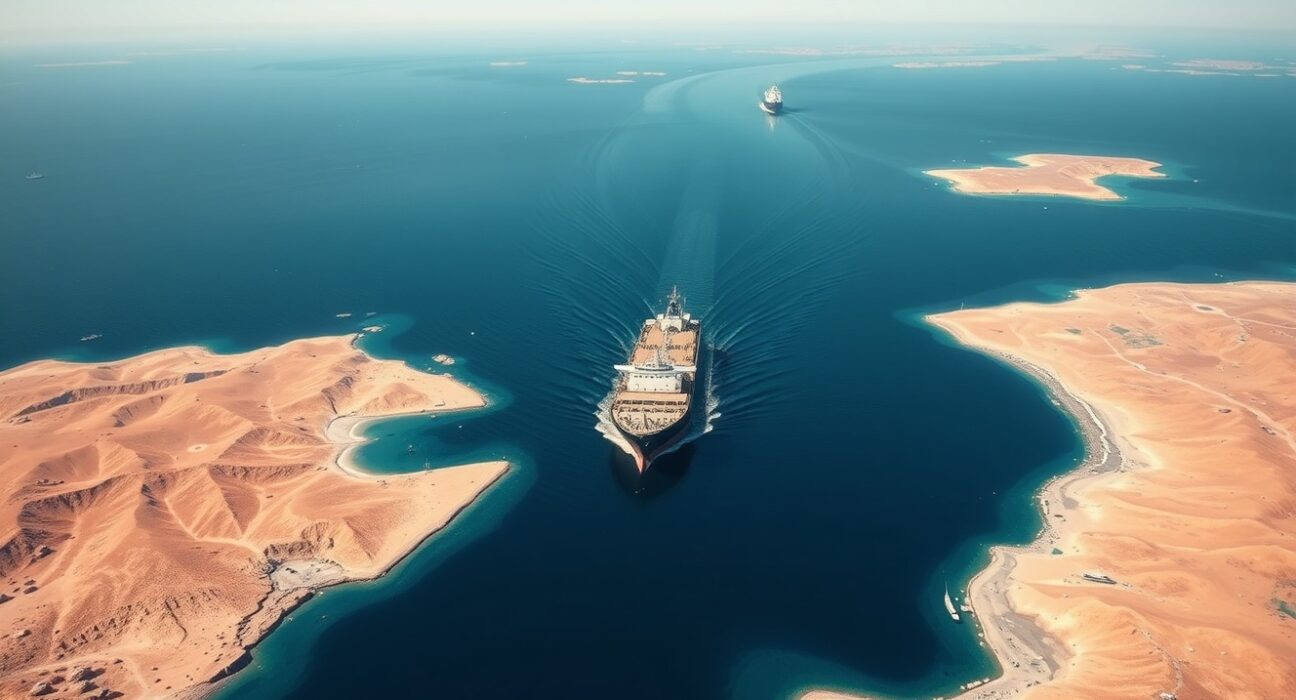
TEHRAN, Iran – April 16, 2025 – A senior Iranian official issued a stark warning today, stating that any U.S. military blockade of the Strait of Hormuz could immediately terminate the delicate ceasefire agreement between Tehran and Washington. This statement, reported by Russian state news agency RIA Novosti, injects significant tension into an already volatile geopolitical landscape and raises immediate concerns for global energy security.
Strait of Hormuz Blockade: A Direct Threat to Truce
Iranian Foreign Ministry spokesperson, Nasser Baghaei, characterized a potential U.S.-led blockade as a “provocative act” with severe consequences. Furthermore, he explicitly stated that such an action would nullify the current truce. Baghaei emphasized Iran’s military readiness, declaring that Iranian forces stand prepared to take “all necessary action” to protect national interests and secure the vital waterway. This rhetoric marks a significant escalation in diplomatic language.
The Strait of Hormuz represents the world’s most important oil transit chokepoint. Consequently, approximately 21 million barrels of oil, or one-fifth of global petroleum consumption, pass through it daily. A disruption here would trigger immediate and severe shocks to the global economy. The table below illustrates the strategic importance of this maritime corridor:
| Metric | Data | Global Share |
|---|---|---|
| Oil Flow (Daily) | ~21 million barrels | ~21% |
| Liquefied Natural Gas (LNG) | ~20% of global trade | Critical for Asia & Europe |
| Width at Narrowest Point | 21 nautical miles | Easily monitored |
| Bordering Nations | Iran, Oman, UAE | Complex jurisdiction |
Historical Context of Regional Tensions
This latest warning does not exist in a vacuum. Instead, it follows a long history of threats and counter-threats regarding the strait. Iran has repeatedly signaled its capacity to disrupt shipping in response to extreme economic pressure. For instance, during the “Tanker Wars” of the 1980s, the region witnessed attacks on commercial vessels. More recently, incidents like the seizure of tankers and attacks on ships have underscored the persistent risk.
The current ceasefire, a fragile diplomatic achievement reached after months of indirect negotiations, primarily addresses nuclear enrichment limits and sanctions relief. However, it lacks robust mechanisms for handling military confrontations in adjacent theaters. Analysts note that the agreement’s survival depends heavily on avoiding direct military provocations in geographically sensitive areas like the Persian Gulf.
Expert Analysis on Military and Economic Impacts
Military strategists point to Iran’s asymmetric naval capabilities. While its conventional navy may not match the U.S. Fifth Fleet, Iran possesses significant deterrent tools. These include:
- Swarm Tactics: Hundreds of fast-attack craft and speedboats.
- Anti-Ship Missiles: Extensive coastal defense batteries along the strait.
- Naval Mines: Capability to lay mines quickly to disrupt shipping lanes.
- Submarine Warfare: A fleet of midget and coastal submarines.
Economists simultaneously warn of catastrophic market reactions. A blockade or even a perceived high risk of closure would cause oil prices to spike dramatically. Global supply chains, already strained, would face new inflationary pressures. Insurance premiums for ships transiting the area would become prohibitively expensive, effectively creating a de facto blockade through economic means.
Global Reactions and Diplomatic Pathways
International responses have been cautious but concerned. The European Union, a major consumer of Gulf energy, called for maximum restraint and the preservation of navigational freedoms under international law. China, Iran’s largest oil customer, emphasized dialogue and stability. Regional powers like Saudi Arabia and the United Arab Emirates have not issued public statements, likely conducting urgent behind-the-scenes assessments.
The legal framework governing the strait adds another layer of complexity. The United Nations Convention on the Law of the Sea (UNCLOS) guarantees transit passage through such straits used for international navigation. However, the U.S. is not a party to UNCLOS, and Iran’s interpretation of its territorial waters remains contested. This legal ambiguity creates a dangerous space for miscalculation.
The Role of External Reporting and Verification
The warning was disseminated by RIA Novosti, a Russian state-owned news agency. This channel choice is itself analytically significant. It suggests Iran may be using Russian media to send a calibrated message to Western audiences while maintaining formal diplomatic channels. Verification of the specific military readiness claims is challenging for open-source analysts, though satellite imagery often tracks naval deployments in the region.
Previous cycles of tension have shown that rhetoric often precedes a period of calibrated action. The key question for observers is whether this statement represents a genuine red line or a negotiating tactic aimed at gaining leverage in ongoing talks regarding sanctions implementation. The next 48 to 72 hours will be critical for gauging military movements and diplomatic backchannel activity.
Conclusion
The Iranian warning regarding a Strait of Hormuz blockade represents a serious escalation that directly threatens the fragile Iran-US ceasefire. The strategic importance of this waterway for global energy supplies means any conflict there would have immediate worldwide repercussions. The situation demands careful diplomacy, clear communication, and adherence to international maritime law to prevent a local incident from spiraling into a broader regional and economic crisis. The stability of the ceasefire now appears inextricably linked to the security of this narrow but vital sea lane.
FAQs
Q1: What is the Strait of Hormuz and why is it so important?
The Strait of Hormuz is a narrow channel between the Persian Gulf and the Gulf of Oman. It is the world’s most critical oil transit chokepoint, with about 21 million barrels of oil passing through daily, supplying markets in Asia, Europe, and beyond.
Q2: What did the Iranian official specifically say?
Iranian Foreign Ministry spokesperson Nasser Baghaei stated a U.S. blockade would be a “provocative act” that could nullify the ceasefire. He added Iran’s military is prepared to take necessary action to secure the strait.
Q3: Has Iran threatened to close the strait before?
Yes. Iran has a long history of threatening to disrupt shipping in the Strait of Hormuz, particularly in response to severe economic sanctions or military threats. It has previously conducted military exercises simulating its closure.
Q4: How would a blockade affect global oil prices?
A blockade or serious threat of closure would cause oil prices to spike dramatically, potentially exceeding previous records. This would trigger global inflation, supply chain disruptions, and economic instability.
Q5: What are the main diplomatic tools to prevent this crisis?
Key tools include direct communication channels to avoid miscalculation, reaffirmation of freedom of navigation principles, third-party mediation, and addressing the underlying grievances that led to the threat, possibly through sanctions relief or security guarantees.
Disclaimer: The information provided is not trading advice, Bitcoinworld.co.in holds no liability for any investments made based on the information provided on this page. We strongly recommend independent research and/or consultation with a qualified professional before making any investment decisions.
