

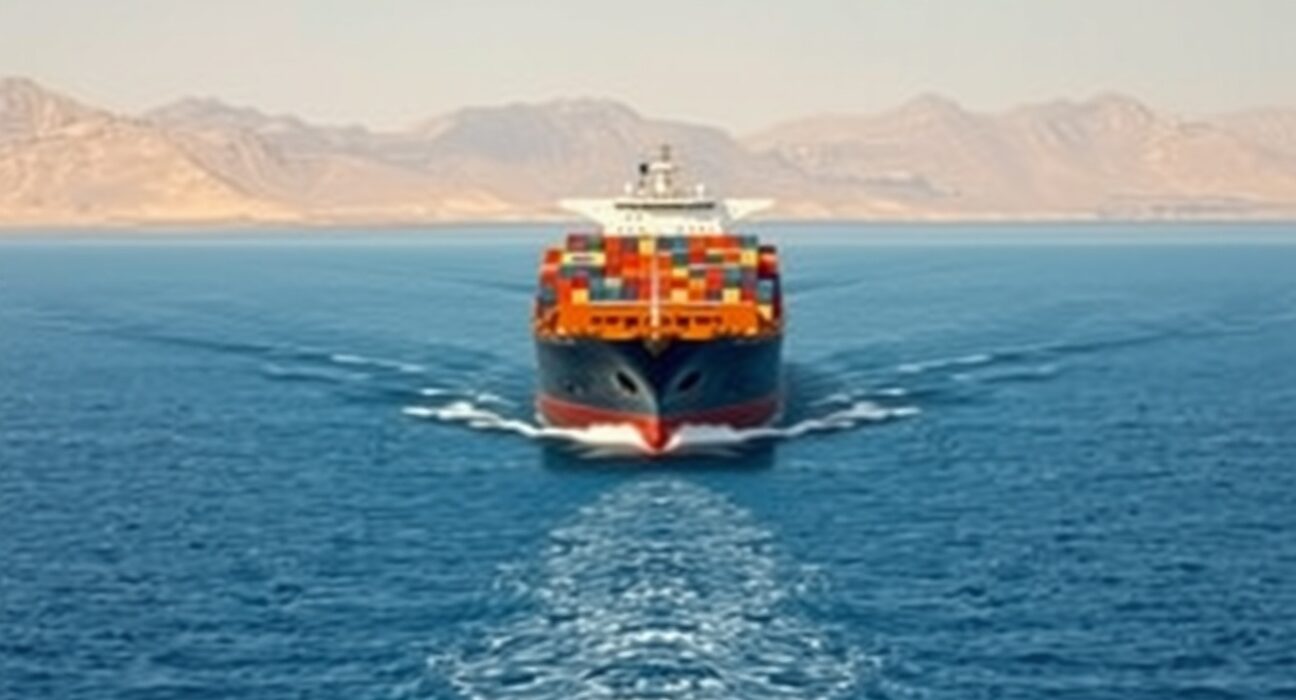
TEHRAN, Iran – In a significant statement addressing global energy and trade concerns, Iran’s Foreign Minister has unequivocally declared that passage for all commercial vessels through the strategic Strait of Hormuz remains completely open. This announcement, made against a backdrop of regional geopolitical tensions, serves as a crucial reassurance for the international shipping community and energy markets. The Strait of Hormuz, often described as the world’s most important oil transit chokepoint, facilitates the movement of approximately one-fifth of global oil consumption. Consequently, this declaration carries immediate weight for global economic stability and maritime security protocols.
Strait of Hormuz: A Conduit for Global Commerce
The Foreign Minister’s statement directly addresses long-standing international apprehensions regarding the security of this narrow sea lane. Furthermore, it reinforces Iran’s position as a key stakeholder in regional maritime affairs. The Strait of Hormuz connects the Persian Gulf with the Gulf of Oman and the Arabian Sea. It is a mere 21 nautical miles wide at its narrowest point, with shipping lanes just two miles wide in either direction. This geographical reality necessitates precise navigation and unwavering security guarantees. Every day, an average of 20.5 million barrels of oil pass through this corridor. This volume represents about 21% of global petroleum liquids consumption. Additionally, a significant portion of the world’s liquefied natural gas (LNG) trade transits the same waters.
- Daily Oil Transit: ~20.5 million barrels
- Global Share: ~21% of petroleum consumption
- Key Exporters: Saudi Arabia, Iraq, UAE, Kuwait, Iran
- Primary Destinations: Asian markets (China, India, Japan, South Korea)
Maritime analysts consistently monitor this channel because any disruption triggers immediate volatility in global oil prices. Insurance premiums for vessels also spike dramatically during periods of perceived threat. Therefore, Iran’s clear commitment to open passage provides market certainty. The statement implicitly counters narratives of potential blockade or harassment, which have periodically surfaced during diplomatic crises.
Historical Context and Geopolitical Significance
Understanding the weight of this announcement requires examining the strait’s turbulent history. The waterway has been a flashpoint in international conflicts for decades. For instance, during the 1980-1988 Iran-Iraq War, both nations attacked oil tankers in the “Tanker War.” This campaign severely threatened international shipping. More recently, tensions have involved seizures of commercial vessels and attacks on ships attributed to regional actors. These incidents have repeatedly raised the specter of a major supply disruption. Consequently, global naval forces, including the U.S. Fifth Fleet based in Bahrain, maintain a persistent presence nearby. Their mission explicitly focuses on ensuring freedom of navigation.
| Year | Key Incident | Impact on Shipping |
|---|---|---|
| 1984-1988 | Tanker War (Iran-Iraq Conflict) | ~450 commercial vessels attacked |
| 2019 | Attacks on oil tankers near Fujairah | Temporary spike in insurance rates |
| 2021 | Seizure of the MV Asphalt Princess | Brief halt to some maritime traffic |
| 2023 | Increased U.S.-Iran naval patrols | Enhanced security but higher operational costs |
Iran’s latest assurance, therefore, is not made in a vacuum. It is a deliberate diplomatic signal aimed at multiple audiences. Domestically, it projects strength and control over Iran’s territorial waters. Regionally, it communicates to Gulf Arab states that Iran holds a key to their economic lifelines. Internationally, it tells energy importers in Asia and Europe that Iran is currently a responsible actor. This multifaceted messaging is central to Tehran’s foreign policy strategy.
Expert Analysis on Maritime Law and Security
International maritime law experts highlight the legal framework governing the strait. The United Nations Convention on the Law of the Sea (UNCLOS) provides for “transit passage” through straits used for international navigation. This legal regime prohibits states bordering the strait from impeding transit. However, Iran is not a party to UNCLOS. Instead, it relies on customary international law and its own interpretations. Tehran has historically asserted that the security of the strait is a collective regional responsibility. It has opposed extensive foreign military presence as a source of instability. The Foreign Minister’s statement can thus be seen as an affirmation of Iran’s commitment to these legal and customary obligations. It also subtly reinforces Iran’s sovereignty over the northern parts of the waterway.
Security analysts note that the declaration likely serves a practical purpose beyond diplomacy. Clear, public guarantees help de-escalate tensions and reduce the risk of miscalculation at sea. Naval commanders on all sides require predictable rules of engagement. Ambiguity increases the chance of accidental conflict. By stating the strait is “completely open,” Iran provides a baseline expectation for commercial shippers and naval patrols alike. This clarity is essential for preventing incidents that could spiral into broader conflict. Moreover, it supports Iran’s own economic interests. Iran itself exports oil through the strait and requires unimpeded access for its imports of goods and commodities.
Economic Impacts and Global Market Reactions
The immediate economic impact of such a declaration is stability in energy futures markets. When geopolitical risk premiums diminish, oil prices often experience downward pressure. This benefits oil-importing nations grappling with inflation. Shipping companies also breathe a sigh of relief. The cost of war risk insurance for vessels passing through the Persian Gulf can be substantial. For example, during peak tensions, premiums have risen by hundreds of thousands of dollars per voyage. A sustained period of calm allows these costs to normalize. This reduction ultimately lowers the final price of transported goods for consumers worldwide.
Major global corporations, particularly in the energy and logistics sectors, closely monitor such statements. Their supply chain and risk management teams incorporate this data into operational planning. A guaranteed open strait enables longer-term contracts and more efficient routing. It also reduces the need for costly contingency plans, like rerouting vessels around the Arabian Peninsula. Such rerouting adds approximately 10-14 days to a voyage and significantly increases fuel costs. Therefore, Iran’s assurance has a direct, positive effect on global trade efficiency and cost. National economies dependent on hydrocarbon exports from the Gulf, like Saudi Arabia and the UAE, also benefit indirectly. Their credibility as reliable suppliers is bolstered when their primary export route is deemed secure.
Conclusion
Iran’s Foreign Minister has delivered a clear and strategically vital message: the Strait of Hormuz is completely open for business. This declaration reinforces the stability of a maritime corridor indispensable to the global economy. It provides much-needed certainty for energy markets, shipping conglomerates, and national governments. While regional geopolitical tensions persist, this commitment to open passage acts as a crucial stabilizing mechanism. The international community will undoubtedly watch for actions matching these words. Continued safe transit for all commercial vessels remains the ultimate metric for success. For now, the assurance stands as a key pillar supporting the secure and free flow of world trade through one of its most critical arteries.
FAQs
Q1: Why is the Strait of Hormuz so important to the global economy?
The Strait of Hormuz is the world’s most critical oil transit chokepoint. It handles about 21% of global petroleum consumption, with over 20 million barrels of oil passing through daily from major producers like Saudi Arabia, Iraq, and the UAE to markets in Asia and beyond.
Q2: What does Iran’s declaration that the strait is “completely open” actually mean for shippers?
It is a public, high-level assurance from the Iranian government that it will not impede or harass commercial vessels transiting the waterway. This reduces perceived geopolitical risk, which can lower war risk insurance premiums and provide greater certainty for shipping schedules and supply chains.
Q3: Has the Strait of Hormuz been closed or threatened with closure before?
While never fully closed, transit has been severely threatened during conflicts, most notably the “Tanker War” of the 1980s. Iran has periodically made statements about its ability to block the strait, but it has also consistently emphasized its commitment to keeping it open for navigation, as international law requires.
Q4: How does international law protect passage through the Strait of Hormuz?
The United Nations Convention on the Law of the Sea (UNCLOS) establishes the legal regime of “transit passage” for straits used for international navigation. This means ships and aircraft enjoy the right of continuous and expeditious transit that cannot be impeded by bordering states, though Iran is not a formal party to UNCLOS.
Q5: What role do foreign navies play in securing the Strait of Hormuz?
Navies from the United States, the United Kingdom, France, and other nations patrol the area to ensure freedom of navigation and deter attacks on commercial shipping. These forces often operate in coordination, but Iran views a large foreign military presence as a source of tension rather than stability.
Disclaimer: The information provided is not trading advice, Bitcoinworld.co.in holds no liability for any investments made based on the information provided on this page. We strongly recommend independent research and/or consultation with a qualified professional before making any investment decisions.
