

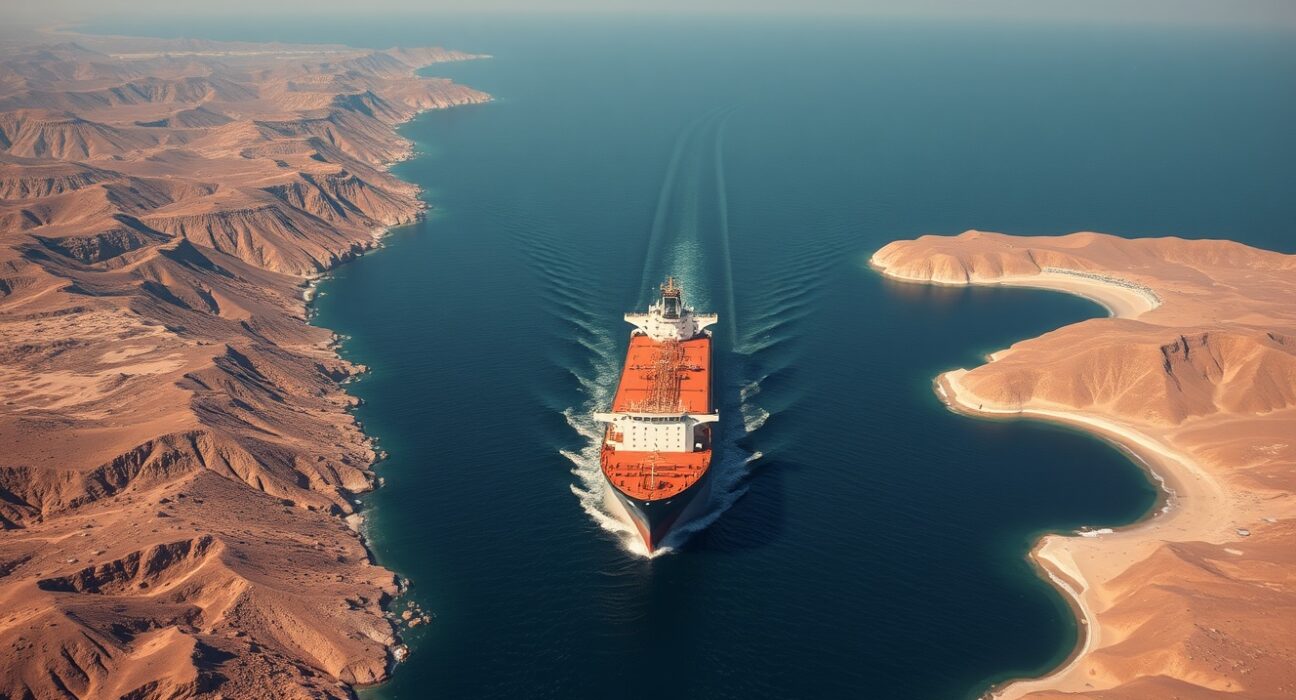
TEHRAN, Iran – March 2025: Iranian First Vice President Mohammad Mokhber delivered a stark geopolitical warning this week, declaring that security in the vital Strait of Hormuz “is not free” while international sanctions continue restricting Iran’s oil exports. This statement represents a significant escalation in regional tensions with profound implications for global energy markets and maritime security.
Strait of Hormuz Security and Iran’s Strategic Position
Vice President Mokhber’s declaration directly links maritime security to economic pressure. He emphasized that other nations cannot expect to benefit from secure passage through the world’s most important oil transit chokepoint while simultaneously limiting Iran’s primary revenue source. The Strait of Hormuz represents a critical artery for global energy supplies, with approximately 21 million barrels of oil passing through daily. This volume constitutes nearly one-third of the world’s seaborne traded oil and one-fifth of total global petroleum liquids consumption.
Furthermore, the waterway’s geography gives Iran substantial strategic leverage. At its narrowest point, the strait measures just 21 miles wide, with the shipping lanes reducing to only 2 miles in each direction separated by a 2-mile buffer zone. Iran controls the northern shoreline while Oman controls the southern coast. This geographical reality enables Iran to potentially disrupt traffic through various means, including:
- Naval exercises and temporary closures
- Increased inspections of commercial vessels
- Anti-ship missile deployments along the coastline
- Mining operations in strategic areas
Historical Context of Strait of Hormuz Tensions
Iran’s latest statement follows a long pattern of using the strait as geopolitical leverage during periods of international pressure. Historical precedents demonstrate this strategy’s effectiveness. During the 1980s Tanker War phase of the Iran-Iraq conflict, both nations attacked commercial shipping, leading to significant insurance premium increases and temporary market disruptions. More recently, in 2019, Iran seized a British-flagged tanker in retaliation for Gibraltar’s detention of an Iranian tanker.
The current situation differs significantly from previous incidents because it explicitly connects maritime security to oil export restrictions. According to shipping industry analysts, this represents a more sophisticated approach than previous threats of outright closure. Instead, Iran appears to be establishing a clear quid pro quo: secure oil transit requires secure Iranian oil exports.
Global Energy Market Implications
Energy economists immediately recognized the statement’s market implications. Global benchmark Brent crude prices typically react sharply to Strait of Hormuz disruptions. A 2024 International Energy Agency report calculated that a 15-day closure could spike oil prices by 50-100%, potentially triggering a global recession. The table below illustrates the strait’s importance to specific nations:
| Country | Percentage of Oil Exports Through Strait | Alternative Routes Available |
|---|---|---|
| Saudi Arabia | 90% | Limited pipeline capacity to Red Sea |
| United Arab Emirates | 99% | Fujairah pipeline bypass (limited capacity) |
| Qatar | 100% (LNG) | None for liquefied natural gas |
| Kuwait | 95% | None currently operational |
International Response and Diplomatic Calculations
Western governments have responded cautiously to Iran’s statement. The United States Fifth Fleet, based in Bahrain, maintains a significant presence in the region with approximately 20-30 vessels at any given time. However, military analysts note that completely securing the strait against asymmetric threats remains challenging. Iranian forces have developed sophisticated capabilities including:
- Swarm tactics using fast attack craft
- Coastal defense cruise missiles
- Submarine and mine warfare capabilities
- Unmanned aerial and surface vehicles
Diplomatically, the statement creates complex calculations for ongoing nuclear negotiations. European nations particularly dependent on Middle Eastern oil must balance non-proliferation objectives with energy security concerns. Meanwhile, Asian economies including China, India, Japan, and South Korea—which collectively import over 65% of Strait of Hormuz oil—face difficult choices between supporting sanctions and ensuring energy flow stability.
Economic Pressure and Regional Stability
Iran’s economy has suffered significantly from oil export restrictions. According to World Bank data, Iranian oil exports have fluctuated between 400,000 and 1.5 million barrels per day in recent years, compared to pre-sanction levels exceeding 2.5 million barrels daily. This reduction represents billions in lost monthly revenue, contributing to high inflation and economic contraction.
Regional experts note that economic pressure creates incentives for escalation. Historically, Iran has responded to severe economic constraints by increasing regional proxy activities and leveraging strategic geographical advantages. The Strait of Hormuz represents Tehran’s most powerful card in this regard, affecting not just Western economies but also those of regional rivals and neutral trading partners.
Legal and Maritime Security Framework
International law provides complex context for Iran’s position. The United Nations Convention on the Law of the Sea (UNCLOS) establishes transit passage rights through straits used for international navigation. However, Iran has not ratified UNCLOS and maintains that the regime of innocent passage rather than transit passage applies. This legal ambiguity creates potential for disputes over what constitutes permissible interference with shipping.
Additionally, customary international law recognizes that coastal states have legitimate security interests in adjacent waters. Iran argues that economic warfare through sanctions justifies proportionate responses to protect national interests. Legal scholars remain divided on whether linking maritime security to oil export access constitutes permissible state behavior or economic coercion violating international norms.
Conclusion
Iran’s declaration regarding Strait of Hormuz security represents a significant escalation in the geopolitical struggle over Middle Eastern energy resources. By explicitly connecting maritime security to oil export restrictions, Tehran has created a clear either-or proposition for the international community. Global energy market stability now faces direct pressure from this linkage, with potential consequences for oil prices, shipping security, and regional stability. The situation demands careful diplomatic navigation to avoid escalation while addressing legitimate non-proliferation concerns. Ultimately, the Strait of Hormuz security question highlights the interconnected nature of global energy markets and geopolitical stability in an increasingly multipolar world.
FAQs
Q1: Why is the Strait of Hormuz so important to global oil markets?
The Strait of Hormuz is the world’s most important oil transit chokepoint, with approximately 21 million barrels per day passing through—about one-third of global seaborne traded oil and one-fifth of total petroleum consumption. Its narrow geography makes it vulnerable to disruption.
Q2: What specific actions could Iran take to disrupt shipping in the strait?
Iran possesses multiple asymmetric capabilities including naval exercises that temporarily close lanes, increased vessel inspections, coastal missile deployments, mining operations, swarm attacks using fast boats, and harassment of commercial shipping—all short of outright closure.
Q3: How have oil markets historically reacted to Strait of Hormuz tensions?
Historical precedents show Brent crude typically spikes 10-25% during serious tensions, with insurance premiums for tankers increasing 5-10 fold. A 2019 incident saw prices jump 15% in two weeks before stabilizing as immediate threat diminished.
Q4: What alternative routes exist if the strait becomes impassable?
Limited alternatives include Saudi Arabia’s East-West Pipeline to the Red Sea (5 million barrel capacity), the UAE’s Abu Dhabi Crude Oil Pipeline to Fujairah (1.5 million barrels), and Iraq’s pipeline to Turkey (currently non-operational for exports). Combined capacity remains insufficient.
Q5: How does international law address transit through strategic straits?
The UN Convention on the Law of the Sea establishes transit passage rights through international straits, but Iran hasn’t ratified it and claims innocent passage rules apply instead. This legal ambiguity creates potential for disputes over permissible interference.
Q6: What percentage of Iran’s oil exports currently transit the Strait of Hormuz?
Virtually 100% of Iran’s seaborne oil exports must pass through the Strait of Hormuz, as the country lacks operational pipeline alternatives to international markets. This creates mutual vulnerability with other regional exporters.
Disclaimer: The information provided is not trading advice, Bitcoinworld.co.in holds no liability for any investments made based on the information provided on this page. We strongly recommend independent research and/or consultation with a qualified professional before making any investment decisions.
