

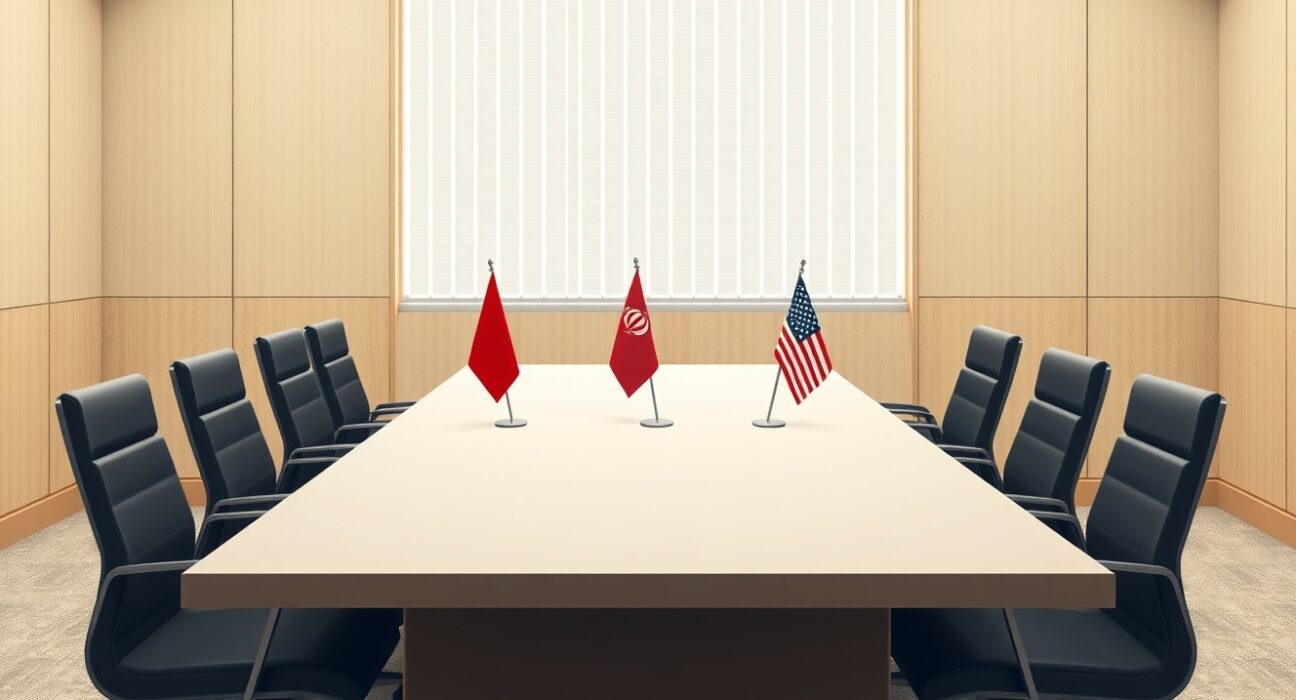
TEHRAN, Iran – April 24, 2025 – A critical diplomatic window has closed without action, as Iran confirms it has no plans for talks with the United States. The Tasnim News Agency, closely affiliated with Iran’s Islamic Revolutionary Guard Corps, delivered this definitive statement, casting further uncertainty over the future of regional security and the dormant nuclear agreement. This development represents a significant setback for international efforts to de-escalate tensions through dialogue.
Iran US Talks Face Another Diplomatic Impasse
The announcement from Tasnim News Agency explicitly rules out negotiations for April 24. Consequently, this date passes without the anticipated diplomatic engagement. This decision follows months of indirect communications and signals through European intermediaries. Furthermore, it underscores the deep-seated mistrust characterizing the bilateral relationship. The statement provides no alternative date or conditions for future discussions, leaving a diplomatic vacuum.
Analysts immediately contextualized this move within the broader stalemate over the Joint Comprehensive Plan of Action (JCPOA). The 2015 nuclear deal has remained in a state of effective collapse since the U.S. withdrawal in 2018. Subsequent attempts to revive the agreement have repeatedly faltered. Key sticking points persist, including the scope of sanctions relief and the extent of Iran’s nuclear rollback. This latest refusal to engage suggests Tehran sees little immediate benefit from direct dialogue under current circumstances.
Regional Tensions and the Strategic Calculus
Iran’s decision occurs against a backdrop of heightened regional instability. Proxy conflicts and security incidents have created a complex landscape for diplomacy. Several factors likely influence Tehran’s current posture:
- Domestic Politics: Internal pressures and upcoming political cycles may harden Iran’s negotiating position.
- Regional Alliances: Shifting dynamics with China and Russia provide Iran with alternative diplomatic and economic pathways.
- Nuclear Advancements: Iran’s continued uranium enrichment reduces its perceived urgency to return to the JCPOA’s limits.
- Sanctions Resilience: The economy has adapted to years of pressure, potentially diminishing the perceived value of sanctions relief.
Simultaneously, the U.S. administration faces its own domestic constraints and a foreign policy agenda focused on multiple global hotspots. The absence of talks complicates efforts to manage escalation risks, particularly in maritime channels like the Strait of Hormuz. Military officials from both sides have recently warned of the potential for miscalculation.
Expert Analysis on the Diplomatic Freeze
Dr. Anahita Nassiri, a senior fellow at the Middle East Institute, notes the tactical nature of Iran’s announcement. “This is not necessarily a permanent closure,” Nassiri explains. “It is a calibrated signal of dissatisfaction with the current framework of proposals. Tehran often uses public statements to shape the negotiating environment and reset expectations.” She emphasizes that backchannel communications likely continue despite the public stance.
Historical precedent supports this analysis. The following table compares recent diplomatic overtures and outcomes:
| Date | Proposed Venue | Outcome | Key Issue |
|---|---|---|---|
| April 2025 | Not Disclosed | Talks Declined | Preconditions & Sequencing |
| November 2024 | Oman | Indirect Talks Held | Prisoner Exchange |
| June 2024 | Qatar | No Agreement Reached | Sanctions Guarantees |
Conversely, former State Department advisor Mark Thomsen highlights the risks of prolonged silence. “Each missed opportunity for dialogue increases the likelihood of an unintended incident spiraling into conflict,” Thomsen states. “The absence of a direct communication channel during a crisis is a profound vulnerability for both nations and the region.” He points to the established military hotline between the U.S. and Russia as a model for risk reduction, even amidst profound disagreement.
The Economic and Global Security Impact
The diplomatic stall immediately affects global energy markets and non-proliferation efforts. Oil prices often react to tensions in the Persian Gulf. Moreover, the International Atomic Energy Agency (IAEA) faces continued challenges in monitoring Iran’s nuclear program. The agency’s reports consistently detail gaps in cooperation and advancing enrichment capabilities. Without a diplomatic process, the tools for addressing these concerns remain limited to further pressure or containment, strategies with mixed historical records of success.
European allies, who have invested significant diplomatic capital in mediating between Washington and Tehran, express frustration. A European Union spokesperson recently called for “pragmatism and flexibility from all sides.” However, the EU’s leverage has diminished following the collapse of the original JCPOA framework. Meanwhile, regional actors like Israel and Saudi Arabia monitor the situation closely, adjusting their own security postures in response to the perceived threat level from Iran.
Conclusion
The confirmation that Iran US talks are not planned for April 24 solidifies a worrying diplomatic paralysis. This impasse has direct consequences for nuclear non-proliferation, regional stability, and global energy security. While the door is not permanently closed, the path forward requires a substantive shift in political will from both capitals. The immediate future likely holds continued regional friction and diplomatic maneuvering through indirect channels, as the high-stakes standoff over Iran’s nuclear program and regional role persists without a clear resolution in sight.
FAQs
Q1: What did Iran officially say about talks with the U.S. on April 24?
Iran’s Tasnim News Agency stated the country currently has no plans to hold negotiations with the United States on that specific date. The report did not propose an alternative date or set conditions for future dialogue.
Q2: Why is April 24 a significant date in this context?
While not publicly detailed, diplomatic sources suggest April 24 was a potential target date discussed through intermediaries for a possible meeting. Its passing without talks signifies a missed opportunity to break the long-standing deadlock.
Q3: Does this mean all communication between Iran and the U.S. has stopped?
Not necessarily. While direct, high-level talks are not scheduled, communication often occurs through backchannels, intermediaries like European or Omani officials, or via statements intended for international audiences.
Q4: What is the main obstacle to reviving the Iran nuclear deal (JCPOA)?
Core obstacles include disagreements over the sequence of steps (sanctions relief versus nuclear rollback), the scope of sanctions to be lifted, guarantees against future U.S. withdrawal, and investigations into Iran’s past nuclear activities.
Q5: How does this affect global oil prices and regional security?
Diplomatic stalemate increases the perceived risk of conflict or disruption in the Persian Gulf, a critical oil transit route. This can lead to volatility in energy markets. For regional security, it raises the chance of miscalculation or escalation between Iran and its adversaries, including Israel and the U.S.
Disclaimer: The information provided is not trading advice, Bitcoinworld.co.in holds no liability for any investments made based on the information provided on this page. We strongly recommend independent research and/or consultation with a qualified professional before making any investment decisions.
