

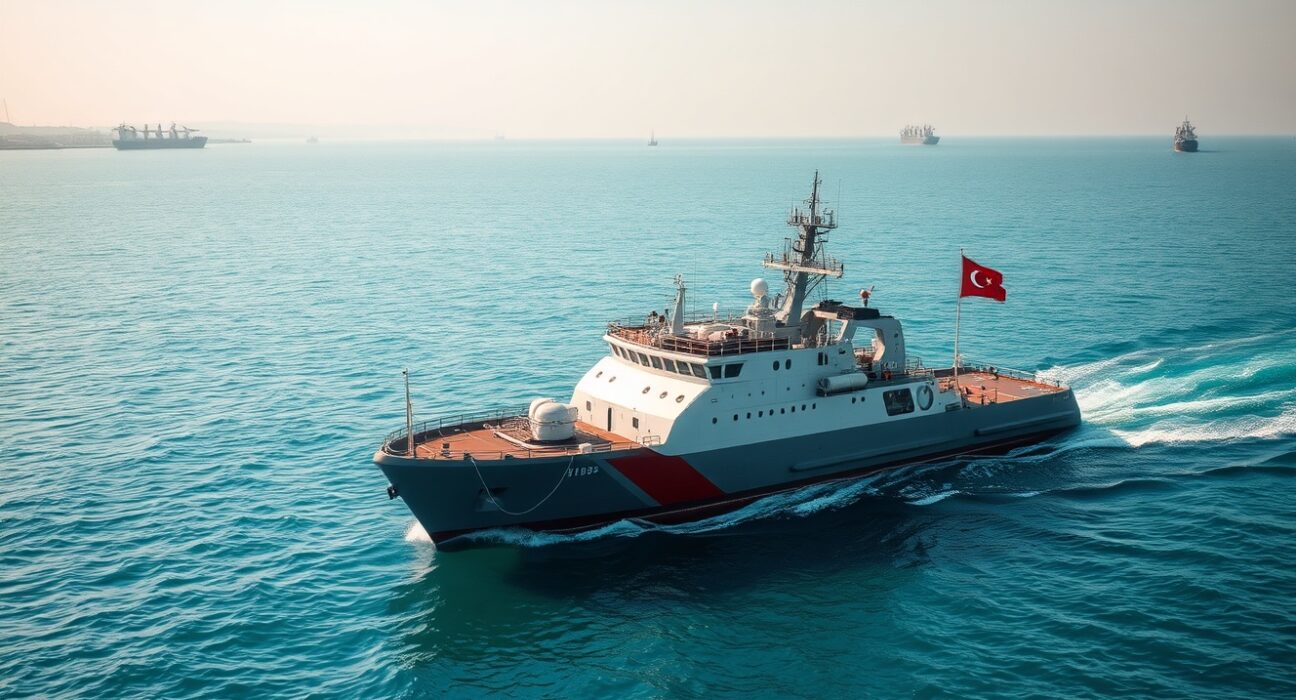
Turkey may join a Hormuz mine clearing operation if the United States and Iran reach a peace agreement, Turkish Foreign Minister Hakan Fidan announced on April 25. Speaking to reporters in Ankara, Fidan emphasized that technical teams would carry out the work after a deal is finalized. He framed the potential mission as a humanitarian responsibility, maintaining a positive stance in principle.
Turkey’s Conditional Support for the Hormuz Mine Clearing Operation
Fidan clarified that Turkey would reconsider its position if the multinational technical coalition becomes a party to a new conflict. This condition underscores Ankara’s cautious approach to regional tensions. The Strait of Hormuz remains a critical chokepoint for global oil shipments. Mines in the strait could disrupt energy supplies and threaten maritime security.
Turkey’s potential involvement reflects its strategic balancing act. Ankara maintains close ties with both Washington and Tehran. Participating in a mine-clearing mission would demonstrate its commitment to regional stability. However, Turkey avoids actions that could entangle it in broader hostilities.
Background of the Strait of Hormuz Tensions
The Strait of Hormuz connects the Persian Gulf to the Gulf of Oman. About 20% of the world’s oil passes through this narrow waterway. Iran has threatened to close the strait in response to sanctions or military pressure. Mines represent a low-cost, high-impact tool for disrupting shipping.
Previous mine-clearing operations in the region occurred during the Iran-Iraq War in the 1980s. That conflict saw extensive mining of the strait, requiring international naval efforts to clear them. The current proposal echoes those historical precedents.
U.S.-Iran Nuclear Talks and Regional Security
Fidan also expressed optimism about resolving issues related to Iran’s nuclear program. He stated that the next round of talks in Pakistan could yield progress. These negotiations are central to any broader U.S.-Iran agreement. A successful deal would reduce the risk of military confrontation and enable cooperative security measures like mine clearing.
Iran’s nuclear ambitions have long fueled tensions with the West. The United States and its allies seek to prevent Iran from developing nuclear weapons. Diplomatic solutions remain the preferred approach for all parties involved.
Turkey’s Strategic Position in the Region
Turkey shares a border with Iran and maintains strong economic ties. Ankara also hosts NATO bases and cooperates with Western allies. This dual role positions Turkey as a potential mediator. Its participation in a mine-clearing operation would signal trust from both sides.
Turkey’s navy possesses mine countermeasure vessels and expertise. The Turkish Armed Forces have experience in maritime security operations. These capabilities make Turkey a credible contributor to any multinational effort.
Humanitarian and Economic Implications
Mines in the Strait of Hormuz pose immediate dangers to civilian shipping. Clearing them protects lives and prevents environmental disasters. Oil spills from damaged tankers could devastate marine ecosystems. The economic cost of disrupted shipping would affect global markets.
Turkey’s offer highlights the humanitarian dimension of mine removal. Fidan framed the operation as a moral obligation rather than a political gesture. This framing aligns with international norms on maritime safety.
Potential Coalition Dynamics
Any mine-clearing operation would likely involve multiple nations. The United States, United Kingdom, and regional powers could participate. Turkey’s inclusion would add legitimacy and local knowledge. However, coalition composition must avoid provoking Iran or other actors.
Fidan’s warning about becoming a party to conflict reflects this sensitivity. Turkey will monitor the coalition’s mandate and actions closely. If the mission expands beyond mine clearing, Ankara may withdraw its support.
Timeline and Next Steps
No timeline exists for a U.S.-Iran agreement. Talks in Pakistan represent the next opportunity for progress. If an agreement materializes, technical planning for mine clearing could begin quickly. Turkey stands ready to contribute assets and personnel.
The international community watches these developments closely. Successful mine clearing would improve security and confidence in the region. Failure to reach a deal could leave the strait vulnerable to future threats.
Conclusion
Turkey may join a Hormuz mine clearing operation pending a U.S.-Iran peace agreement. Foreign Minister Hakan Fidan outlined clear conditions for participation. The mission would address humanitarian and security concerns in a critical waterway. Turkey’s conditional support balances its relationships with Washington and Tehran. The outcome depends on diplomatic progress in nuclear talks and coalition design. This development underscores the interconnected nature of regional security and global energy flows.
FAQs
Q1: Why is Turkey considering joining the Hormuz mine clearing operation?
Turkey views mine clearing as a humanitarian responsibility. Foreign Minister Hakan Fidan stated that Turkey maintains a positive stance in principle, provided a U.S.-Iran peace agreement is reached.
Q2: What conditions did Turkey set for participation?
Turkey will participate only if the multinational technical coalition does not become a party to a new conflict. Ankara will reconsider its position if the mission expands beyond mine clearing.
Q3: How does the Strait of Hormuz mine clearing operation relate to Iran’s nuclear program?
Fidan expressed optimism that issues related to Iran’s nuclear program could be resolved at the next round of talks in Pakistan. A nuclear deal is a prerequisite for broader U.S.-Iran agreement enabling mine clearing.
Q4: What capabilities does Turkey bring to a mine clearing operation?
Turkey’s navy operates mine countermeasure vessels and has experience in maritime security. These capabilities make Turkey a credible contributor to any multinational effort.
Q5: What are the risks if mines remain in the Strait of Hormuz?
Mines threaten civilian shipping, risk environmental disasters from oil spills, and disrupt global energy supplies. Clearing them protects lives, ecosystems, and economic stability.
Disclaimer: The information provided is not trading advice, Bitcoinworld.co.in holds no liability for any investments made based on the information provided on this page. We strongly recommend independent research and/or consultation with a qualified professional before making any investment decisions.
