

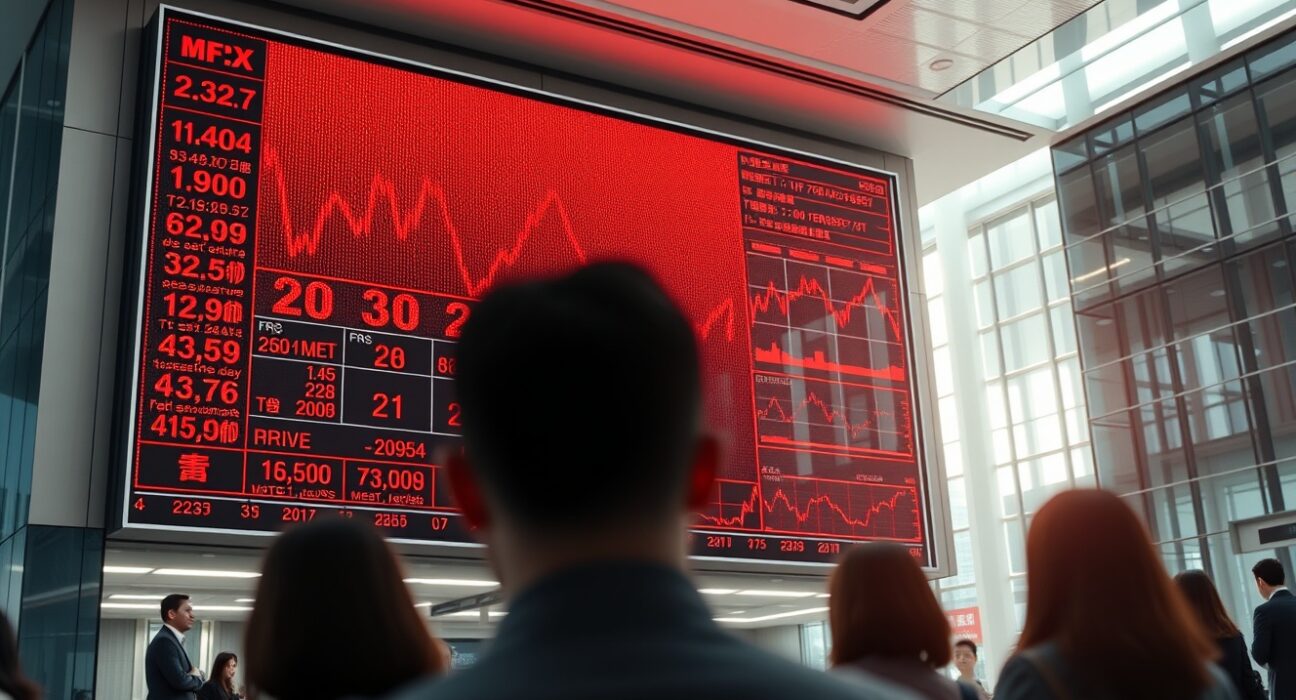
Asian stock markets opened sharply lower on Monday, extending a global sell-off as escalating geopolitical tensions in the Middle East fueled investor anxiety. Benchmarks across Japan, South Korea, China, and Hong Kong posted significant declines in early trading, reflecting a broad risk-off sentiment.
Geopolitical jitters drive market sell-off
The renewed uncertainty stems from the latest developments in the Middle East, where diplomatic efforts have stalled and military activity has intensified over the weekend. The lack of a clear resolution has prompted investors to reassess risk exposure, particularly in equities and currencies sensitive to energy price volatility.
Japan’s Nikkei 225 fell more than 2% in morning trade, while South Korea’s KOSPI dropped 1.8%. Hong Kong’s Hang Seng Index also slipped, losing 1.5% as tech and energy shares led the decline. China’s Shanghai Composite edged lower by 1.2%, weighed down by concerns over global supply chain disruptions.
Oil prices surge on supply fears
Crude oil prices jumped more than 3% in early Asian trading, adding to last week’s gains. Brent crude climbed above $78 per barrel, while West Texas Intermediate (WTI) rose to $74. The spike reflects fears that the conflict could disrupt shipments through key chokepoints in the region, including the Strait of Hormuz, through which about 20% of the world’s oil passes.
Higher oil prices are a double-edged sword for Asian economies. While energy exporters like Malaysia and Indonesia may benefit from increased revenue, import-dependent nations such as India, Japan, and South Korea face rising costs that could squeeze corporate margins and slow economic growth.
What this means for investors
The current environment underscores the fragility of global markets when geopolitical risks escalate. For Asian investors, the immediate concern is whether the conflict will broaden or de-escalate in the coming weeks. Analysts suggest that a prolonged standoff could lead to sustained volatility, particularly in sectors tied to energy, shipping, and defense.
Safe-haven assets, including gold and the US dollar, have gained traction. Gold prices rose 0.8% to $2,050 per ounce, while the dollar index strengthened against Asian currencies, adding pressure on emerging market equities.
Conclusion
The slump in Asian stock markets reflects a market recalibrating to heightened geopolitical risk. While the immediate sell-off may present buying opportunities for long-term investors, the path ahead remains uncertain. Market participants will closely monitor diplomatic developments and any signs of escalation that could further disrupt global trade and energy markets.
FAQs
Q1: Why are Asian markets falling?
Asian markets are declining due to renewed uncertainty over Middle East conflicts, which has triggered a broad risk-off sentiment among investors worried about energy supply disruptions and economic instability.
Q2: How does the Middle East conflict affect oil prices?
The conflict raises fears of supply disruptions through key shipping routes like the Strait of Hormuz, causing crude oil prices to spike. Higher oil costs impact import-dependent Asian economies and can slow growth.
Q3: What should investors do during geopolitical uncertainty?
Investors should focus on diversification, consider safe-haven assets like gold or bonds, and avoid panic selling. Staying informed on diplomatic developments and maintaining a long-term perspective is key.
Disclaimer: The information provided is not trading advice, Bitcoinworld.co.in holds no liability for any investments made based on the information provided on this page. We strongly recommend independent research and/or consultation with a qualified professional before making any investment decisions.
