

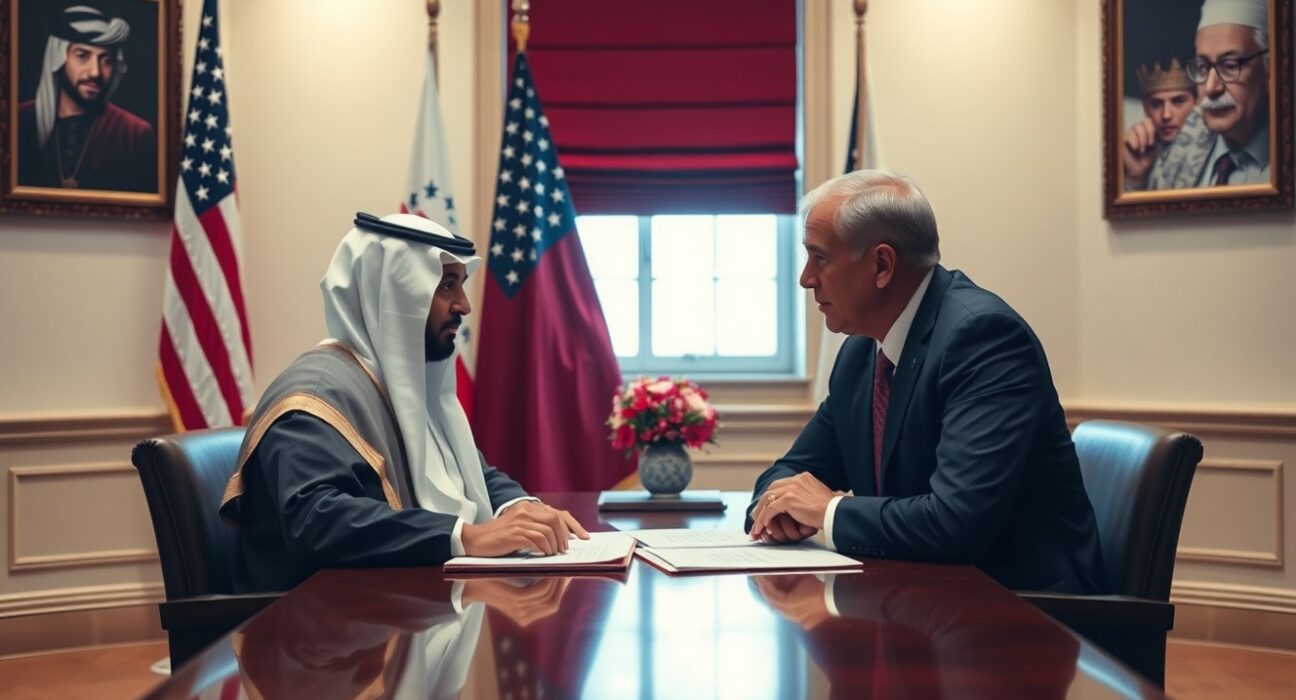
Qatar’s Prime Minister and Minister of Foreign Affairs, Sheikh Mohammed bin Abdulrahman Al Thani, stated on Sunday that there is a “high possibility” the United States and Iran will reach a diplomatic agreement. The remarks, reported by CBS News, come just ahead of a scheduled meeting with U.S. Vice President JD Vance, signaling a renewed push for negotiations between Washington and Tehran.
Context of the Statement
Sheikh Mohammed’s comments were made during an interview with CBS News’ “Face the Nation,” where he described the current window for diplomacy as “critical.” He emphasized that both sides have shown willingness to engage, though significant gaps remain on key issues such as Iran’s nuclear enrichment program, sanctions relief, and regional security arrangements. The Qatari leader’s assessment reflects Doha’s ongoing role as a mediator between the U.S. and Iran, a position it has held since 2022, when it facilitated prisoner swaps and informal talks.
The timing of the statement is notable. It precedes a face-to-face meeting between Sheikh Mohammed and Vice President Vance, expected to take place later this week in Washington. The meeting is part of broader consultations between the Gulf state and the Trump administration, which has signaled a preference for direct negotiations with Tehran, despite earlier threats of a “maximum pressure” campaign.
Why This Matters
A potential U.S.-Iran agreement carries profound implications for global energy markets, Middle Eastern stability, and the broader geopolitical landscape. Iran’s oil exports, currently constrained by sanctions, could increase significantly under a deal, potentially lowering global crude prices. For the Gulf region, an agreement could reduce the risk of proxy conflicts in Yemen, Syria, and Iraq, easing tensions between Iran and Saudi Arabia, which normalized relations in 2023 with Chinese mediation.
For the U.S., reaching a diplomatic solution would allow the administration to refocus resources on other strategic priorities, including competition with China and the conflict in Ukraine. However, skeptics within the U.S. Congress and among Israel’s leadership remain wary, arguing that Iran cannot be trusted to honor its commitments.
Qatar’s Mediation Role
Qatar has emerged as a key intermediary in several high-stakes diplomatic channels, including talks between the U.S. and the Taliban, and between Hamas and Israel. Its ability to maintain working relationships with both Washington and Tehran gives it unique leverage. Sheikh Mohammed’s public optimism may be intended to build momentum for the talks, while also reassuring markets and regional allies that a breakthrough is possible.
Iran’s response has been cautious. Official statements from Tehran have reiterated its demand for the full lifting of sanctions and guarantees that any future U.S. administration will not unilaterally withdraw from a deal, as happened in 2018 when the Trump administration left the Joint Comprehensive Plan of Action (JCPOA).
Conclusion
Sheikh Mohammed’s assessment of a “high possibility” for a U.S.-Iran agreement is the most optimistic signal from a mediator in months. While obstacles remain, the convergence of diplomatic activity—including the upcoming Vance meeting—suggests that both sides are exploring a potential framework. The coming weeks will be critical in determining whether this window for diplomacy closes or leads to a tangible accord.
FAQs
Q1: What is the basis for Qatar’s optimism about a US-Iran deal?
Qatar’s Prime Minister cited recent direct and indirect communications between the U.S. and Iran, as well as a shared interest in avoiding military escalation. He described the current diplomatic window as “critical” and noted that both sides have shown willingness to engage.
Q2: How does this relate to the 2015 Iran nuclear deal (JCPOA)?
The current talks are not a direct revival of the JCPOA, but they address similar core issues: Iran’s nuclear program, sanctions relief, and regional security. The U.S. withdrew from the JCPOA in 2018, and subsequent attempts to restore it under the Biden administration failed.
Q3: What role does Qatar play in US-Iran mediation?
Qatar has acted as a neutral intermediary, hosting talks and facilitating communication channels. Its diplomatic ties with both the U.S. and Iran, along with its financial resources, allow it to mediate effectively. Qatar also played a key role in the 2023 U.S.-Iran prisoner swap.
Disclaimer: The information provided is not trading advice, Bitcoinworld.co.in holds no liability for any investments made based on the information provided on this page. We strongly recommend independent research and/or consultation with a qualified professional before making any investment decisions.
