

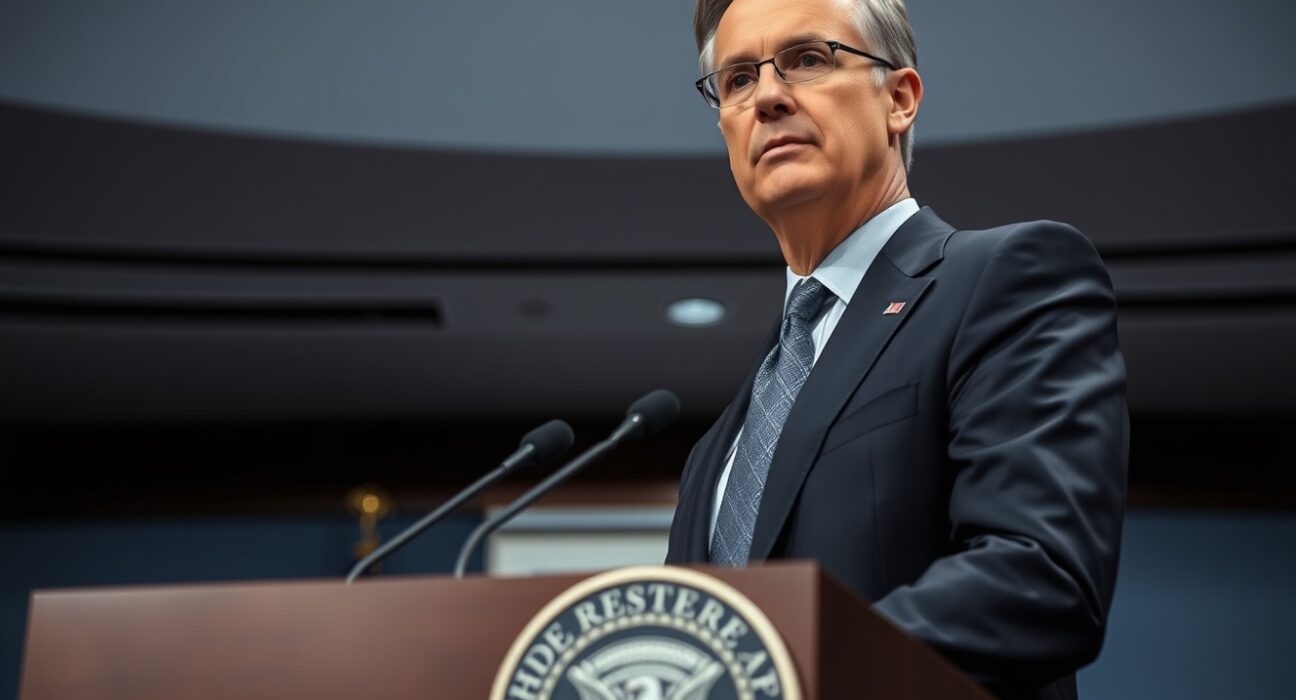
As speculation mounts over who will succeed Jerome Powell as chair of the Federal Reserve, the name Kevin Warsh has resurfaced with growing intensity. A former Fed governor who served during the 2008 financial crisis, Warsh is now a prominent figure in conservative economic circles and a regular commentator on monetary policy. But markets, accustomed to the gradualist approach of the Powell era, may be misreading what a Warsh-led Fed would actually mean.
Warsh’s record: hawkish reputation, nuanced reality
Warsh served on the Federal Reserve Board of Governors from 2006 to 2011, a period that included the worst financial crisis since the Great Depression. He was initially seen as a hawk, voting in favor of interest rate hikes in 2006 and early 2007. However, his actions during the crisis tell a more complex story. Warsh was a key architect of the Fed’s emergency lending programs, including the Term Auction Facility and the Commercial Paper Funding Facility, which were designed to stabilize markets. He also supported the first round of quantitative easing in 2008. This record suggests a pragmatist willing to use aggressive tools when conditions warrant, not a rigid inflation hawk.
Why markets may be misreading the signals
Current market pricing reflects an expectation that a Warsh chair would mean a faster pace of rate hikes and a more aggressive unwinding of the Fed’s balance sheet. This assumption is largely based on Warsh’s recent public statements criticizing the Fed’s slow response to inflation in 2021 and 2022. But critics argue that markets are extrapolating from a narrow set of post-crisis commentary rather than his full record. Warsh has also emphasized the importance of forward guidance and communication, suggesting he would not surprise markets with abrupt policy shifts. The gap between market expectations and Warsh’s actual policy history creates a potential for significant repricing if he is nominated and confirmed.
Implications for interest rates and bond markets
If markets are overestimating Warsh’s hawkishness, a Warsh appointment could initially trigger a sell-off in bonds and a rise in yields, followed by a correction as investors reassess. Conversely, if Warsh proves more aggressive than anticipated, the yield curve could steepen sharply, with implications for mortgage rates, corporate borrowing costs, and equity valuations. The uncertainty itself is a risk factor that traders are pricing in with a volatility premium.
Conclusion
The debate over Kevin Warsh’s potential Fed chairmanship highlights a recurring pattern in financial markets: the tendency to reduce complex individuals to simple labels. Warsh’s record as a crisis-era policymaker suggests a pragmatic approach that defies easy categorization. Investors would be wise to look beyond recent commentary and examine his full history before betting on a particular policy direction. The outcome matters not just for the Fed’s independence, but for the stability of global markets.
FAQs
Q1: Who is Kevin Warsh?
Kevin Warsh served as a Federal Reserve governor from 2006 to 2011 and was a key figure in designing the Fed’s response to the 2008 financial crisis. He is currently a visiting fellow at Stanford University and a regular commentator on monetary policy.
Q2: Why do markets think Warsh is hawkish?
Markets base this view on Warsh’s recent criticism of the Fed for keeping rates too low for too long in 2021-2022, and his support for a faster normalization of policy. However, his crisis-era actions show a willingness to use unconventional tools when needed.
Q3: What would a Warsh Fed mean for interest rates?
It depends on economic conditions. Warsh has indicated he would prioritize clear communication and avoid surprising markets. His actual policy path would likely be data-dependent rather than ideologically driven, but the initial market reaction could be volatile due to mispricing.
Disclaimer: The information provided is not trading advice, Bitcoinworld.co.in holds no liability for any investments made based on the information provided on this page. We strongly recommend independent research and/or consultation with a qualified professional before making any investment decisions.
