

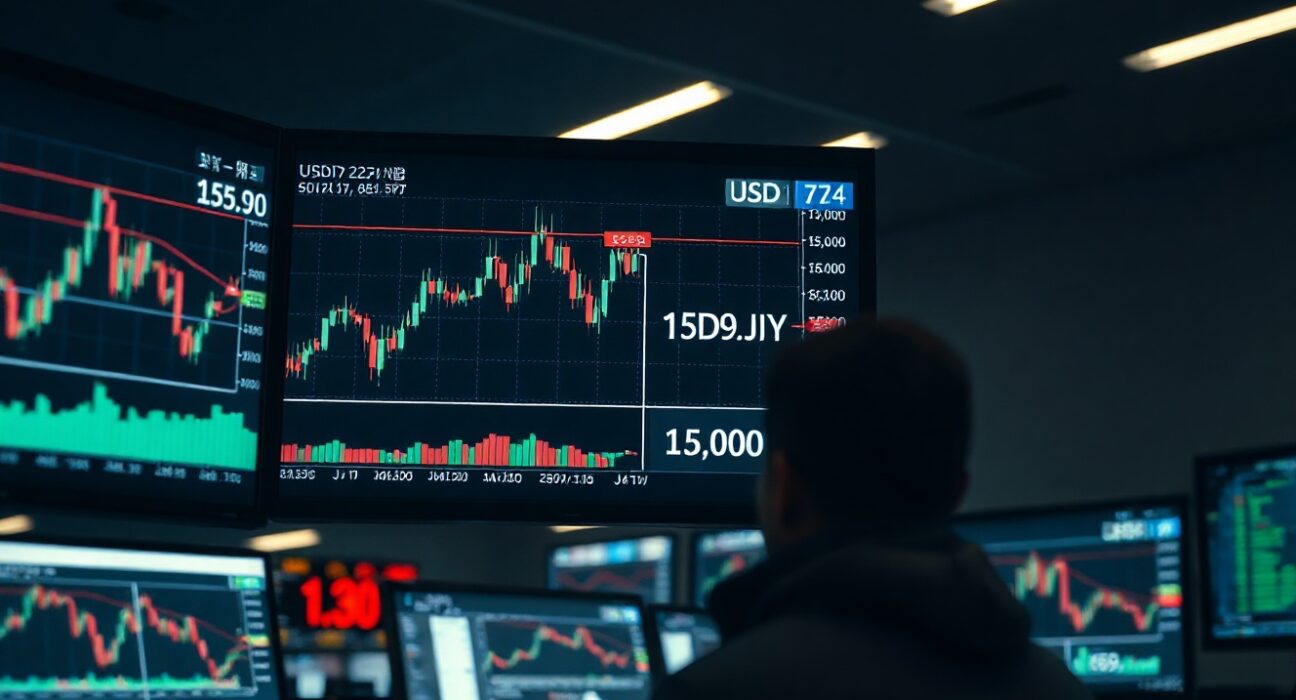
The USD/JPY currency pair is testing key resistance near the 159.00 level, but further upside appears limited as market participants remain wary of potential intervention by Japanese authorities. The pair has been on an upward trajectory in recent weeks, driven by divergent monetary policy expectations between the Federal Reserve and the Bank of Japan, yet the specter of official action to stem yen weakness is creating a cautious tone among traders.
Technical Hurdles at 159.00
The 159.00 mark represents a significant technical barrier for USD/JPY. This level coincides with prior intervention zones where Japanese officials have historically stepped in to support the yen. In late 2022 and again in 2023, the Ministry of Finance intervened when the pair approached or breached similar thresholds, selling U.S. dollars and buying yen to curb what they described as disorderly and speculative currency moves.
Chart analysis shows the pair has been forming a series of higher lows since early this year, with momentum indicators such as the Relative Strength Index (RSI) hovering in neutral territory. A sustained break above 159.00 would open the door to the 160.00 psychological level, but traders are pricing in a high probability of intervention before that point is reached.
Intervention Risk and Market Sentiment
The threat of intervention is not merely speculative. Japanese officials, including Finance Minister Shunichi Suzuki and Vice Finance Minister for International Affairs Masato Kanda, have repeatedly issued verbal warnings in recent weeks, stating they are watching currency movements with a high sense of urgency and will take appropriate action against excessive volatility. These statements have historically been precursors to actual market intervention.
Market participants are now factoring in a risk premium for yen positions. Options markets show elevated implied volatility around key levels, and traders report reduced appetite for pushing the pair aggressively higher without clear catalysts. The Bank of Japan’s policy stance remains accommodative compared to the Fed, but any shift in tone at upcoming meetings could alter the calculus.
What This Means for Traders
For forex traders, the current environment demands caution. The 159.00 area presents a high-risk, high-reward zone. Aggressive longs near this level face the prospect of sudden, sharp reversals if intervention materializes. Conversely, shorts are betting against a strong trend. The most prudent approach may be to wait for a clear breakout or a definitive intervention event before committing to directional positions.
The broader implications extend beyond intraday trading. A sustained yen weakening trend affects Japanese import costs, corporate earnings, and consumer prices. For international investors, the yen’s trajectory influences returns on Japanese assets and carry trade dynamics. The intervention risk acts as a governor on the pair’s upside, but unless the BOJ signals a genuine policy pivot, the underlying pressure on the yen remains.
Conclusion
USD/JPY is at a pivotal juncture near 159.00, with technical resistance aligning with heightened intervention risk. While the fundamental backdrop favors further yen weakness, the threat of official action is capping gains and creating a tense standoff between market forces and policy makers. Traders should monitor Japanese official commentary and BOJ policy signals closely, as any escalation in rhetoric or actual intervention could trigger sharp, short-term moves. The path of least resistance remains upward, but the journey may be interrupted by policy-driven volatility.
FAQs
Q1: What is currency intervention and how does it affect USD/JPY?
Currency intervention occurs when a central bank or finance ministry buys or sells its own currency to influence its exchange rate. For USD/JPY, Japanese authorities sell dollars and buy yen to strengthen the yen, typically causing a sharp drop in the pair. Intervention is usually reserved for situations of excessive or disorderly volatility.
Q2: Why is 159.00 an important level for USD/JPY?
The 159.00 level is significant because it is near previous intervention thresholds set by Japanese authorities. It also represents a technical resistance zone where the pair has stalled in the past. A break above this level could trigger further gains, but the risk of intervention increases as the pair approaches it.
Q3: How can traders protect themselves from intervention risk?
Traders can manage intervention risk by using tighter stop-losses near key levels, reducing position sizes, or avoiding trades during Asian trading hours when intervention is most likely. Monitoring real-time news and official statements from Japanese officials is also essential for anticipating potential action.
Disclaimer: The information provided is not trading advice, Bitcoinworld.co.in holds no liability for any investments made based on the information provided on this page. We strongly recommend independent research and/or consultation with a qualified professional before making any investment decisions.
