

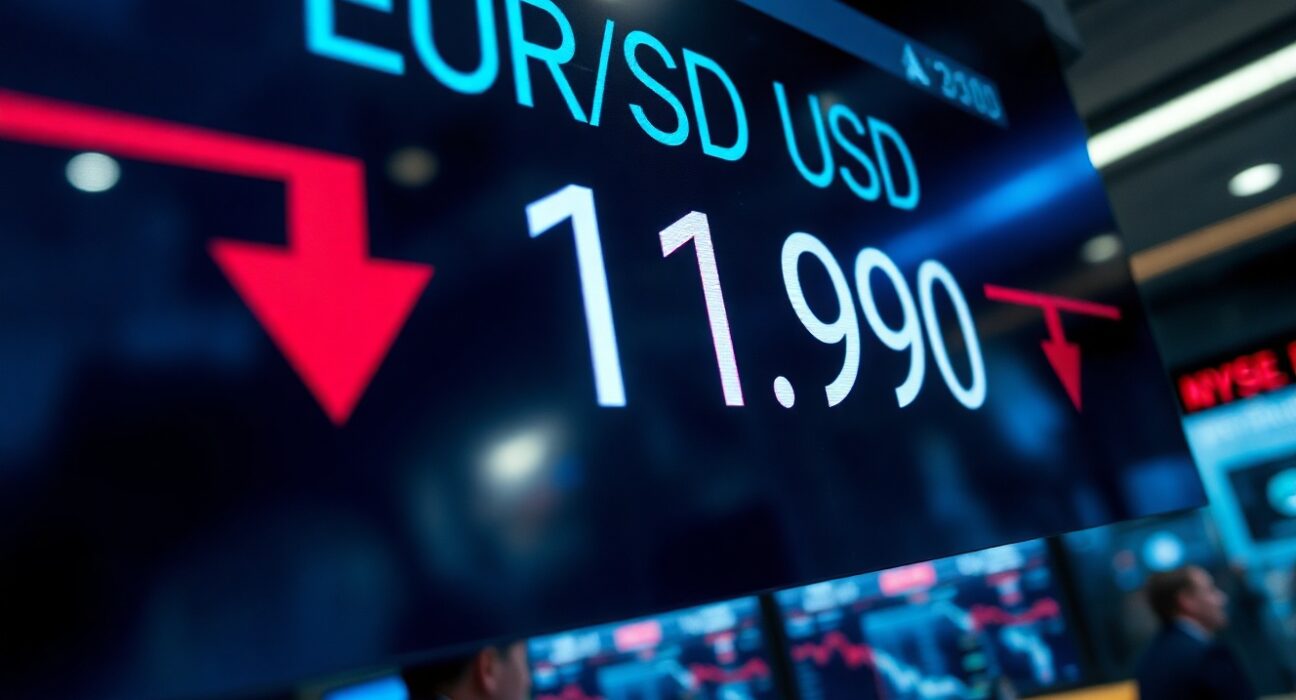
The euro weakened sharply against the US dollar on Monday, falling below the 1.1600 threshold for the first time in several weeks, as escalating fears of a renewed military confrontation between the United States and Iran drove investors toward safe-haven assets. The single currency touched an intraday low of 1.1585 before staging a modest recovery, as market participants priced in heightened geopolitical risk premiums.
Geopolitical Fears Fuel Dollar Demand
The latest leg of euro weakness comes amid reports of increased US military posture in the Middle East and diplomatic rhetoric that has raised the specter of a direct conflict. Historically, the US dollar benefits from safe-haven flows during periods of geopolitical uncertainty, while the euro—as a proxy for risk appetite—tends to suffer. The dollar index (DXY) climbed to a fresh multi-week high, reflecting broad-based demand for the greenback.
Currency traders are also weighing the potential impact on energy markets. Any disruption to oil supplies from the Persian Gulf region could push crude prices higher, adding to inflationary pressures in Europe and complicating the European Central Bank’s policy path. This dual risk—geopolitical instability and higher energy costs—has weighed heavily on the euro in recent sessions.
Technical Breakdown and Key Levels
The breach of the 1.1600 level is significant from a technical perspective. This zone had acted as support since late September, and its breakdown opens the door for a test of the 1.1500 handle, a level last seen in early August. Analysts note that the next major support lies around 1.1450, while resistance now forms at 1.1620–1.1640.
Options markets are also signaling increased hedging activity, with one-month risk reversals for EUR/USD shifting in favor of dollar calls, indicating that traders are positioning for further downside in the euro. The move is consistent with a broader risk-off mood that has also weighed on equity markets and emerging market currencies.
Market Implications for Traders and Investors
For forex traders, the immediate focus is on whether the 1.1600 level can be reclaimed. A sustained break below this psychological barrier could accelerate selling pressure, particularly if headlines out of the Middle East continue to deteriorate. Investors holding euro-denominated assets may face currency headwinds, while those with dollar exposure stand to benefit from the flight to quality.
Beyond the currency pair, the development has implications for importers and exporters on both sides of the Atlantic. European firms that rely on US dollar-denominated raw materials may see costs rise, while US exporters could gain a competitive edge in European markets. The broader macroeconomic backdrop—including diverging monetary policies between the Federal Reserve and the ECB—remains a structural driver, but geopolitical events are now the primary catalyst.
Conclusion
The euro’s slide below 1.1600 against the dollar underscores the market’s heightened sensitivity to geopolitical risk, particularly around US-Iran relations. While the move is partly driven by safe-haven flows, it also reflects deeper concerns about energy prices, inflation, and the resilience of the European economy. Traders will closely monitor diplomatic developments and any official statements from Washington or Tehran in the coming days. As always in such environments, volatility is likely to remain elevated, and risk management is paramount.
FAQs
Q1: Why does the euro fall when US-Iran tensions rise?
Investors tend to sell risk-sensitive assets like the euro and buy safe-haven currencies such as the US dollar during geopolitical crises. The dollar benefits from its status as the world’s primary reserve currency and its deep, liquid markets.
Q2: What is the next key support level for EUR/USD?
After breaking below 1.1600, the next major support is around 1.1500, followed by 1.1450. A move below these levels could signal a deeper downtrend.
Q3: How might higher oil prices affect the euro?
Higher oil prices increase import costs for Europe, which is a net energy importer. This can widen the trade deficit, fuel inflation, and reduce consumer spending—all of which are negative for the euro.
Disclaimer: The information provided is not trading advice, Bitcoinworld.co.in holds no liability for any investments made based on the information provided on this page. We strongly recommend independent research and/or consultation with a qualified professional before making any investment decisions.
