

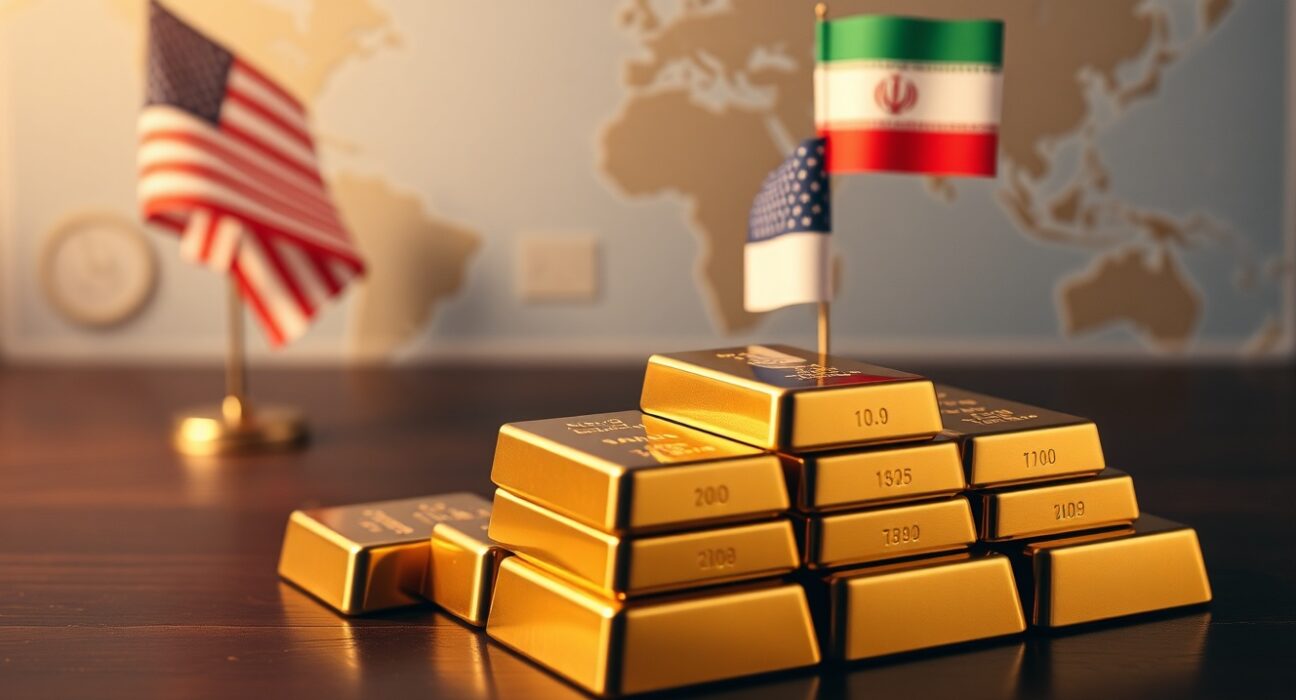
Gold prices continued their upward trajectory on Wednesday, approaching the historic $4,600 per ounce mark, as renewed hopes for a diplomatic breakthrough between the United States and Iran triggered a broad shift in global commodity and currency markets. The potential easing of geopolitical tensions has pressured crude oil prices lower while simultaneously weakening the US dollar, creating a favorable environment for the precious metal.
Geopolitical Shift Drives Safe-Haven Demand
The rally in gold is being fueled by a combination of factors stemming from reports that Washington and Tehran are making progress toward a preliminary agreement that could ease sanctions and de-escalate military posturing in the Middle East. Traders are interpreting the development as a reduction in geopolitical risk, which historically diminishes the safe-haven appeal of the US dollar and encourages capital rotation into alternative stores of value like gold.
Gold, which has already gained over 18% this year, is benefiting from a dual tailwind: a weaker dollar makes the metal cheaper for international buyers, while lower real interest rates further support its appeal. The dollar index (DXY) fell to a three-month low on the news, extending its decline for a fourth consecutive session.
Oil Prices Under Pressure as Supply Risk Premium Fades
Crude oil benchmarks, including Brent and West Texas Intermediate (WTI), fell sharply on the prospect of increased Iranian supply returning to global markets. Iran, which holds some of the world’s largest proven oil reserves, has been under strict US sanctions that have limited its exports. A deal could potentially bring an additional 1 to 1.5 million barrels per day into an already well-supplied market.
Brent crude futures dropped nearly 3% in early trading, slipping below $72 per barrel, while WTI traded near $68. The decline represents a significant reversal from earlier this year when supply concerns and geopolitical tensions had pushed prices higher.
What This Means for Investors and Consumers
For investors, the current environment presents a complex landscape. Gold’s ascent suggests continued uncertainty about global economic stability and inflationary pressures, even as oil prices decline. Lower oil prices, if sustained, could provide relief to consumers at the pump and help ease inflation readings in the coming months. However, the speed and scope of any US-Iran agreement remain uncertain, and negotiations could still collapse, reintroducing volatility across asset classes.
Central banks, particularly in emerging markets, have been increasing their gold reserves in recent quarters, a trend that analysts expect to continue regardless of the geopolitical backdrop. The People’s Bank of China and the Reserve Bank of India have been among the most active buyers, diversifying away from dollar-denominated assets.
Conclusion
Gold’s approach toward $4,600 underscores the market’s evolving risk calculus, where the prospect of reduced Middle East tensions is simultaneously boosting demand for safe-haven metals and deflating the risk premium in oil. While a US-Iran deal could reshape energy markets and currency dynamics, the outcome remains fluid. Traders and policymakers alike will be watching closely for concrete signals from both capitals in the days ahead.
FAQs
Q1: Why is gold rising if geopolitical tensions are easing?
Gold is rising partly because the US dollar is weakening on the prospect of reduced tensions, making gold cheaper for foreign buyers. Additionally, gold continues to serve as a hedge against lingering inflation and fiscal uncertainty, even as specific risks decline.
Q2: How would a US-Iran deal affect oil prices?
A deal could lift sanctions on Iranian oil exports, potentially adding 1 to 1.5 million barrels per day to global supply. This increase would likely push oil prices lower, as seen in the recent market reaction, though the actual impact depends on the speed of implementation and global demand trends.
Q3: Is $4,600 gold sustainable?
While gold has strong momentum, sustainability depends on continued dollar weakness, central bank buying, and the trajectory of interest rates. A sudden reversal in geopolitical developments or a hawkish shift by the Federal Reserve could trigger a pullback.
Disclaimer: The information provided is not trading advice, Bitcoinworld.co.in holds no liability for any investments made based on the information provided on this page. We strongly recommend independent research and/or consultation with a qualified professional before making any investment decisions.
