

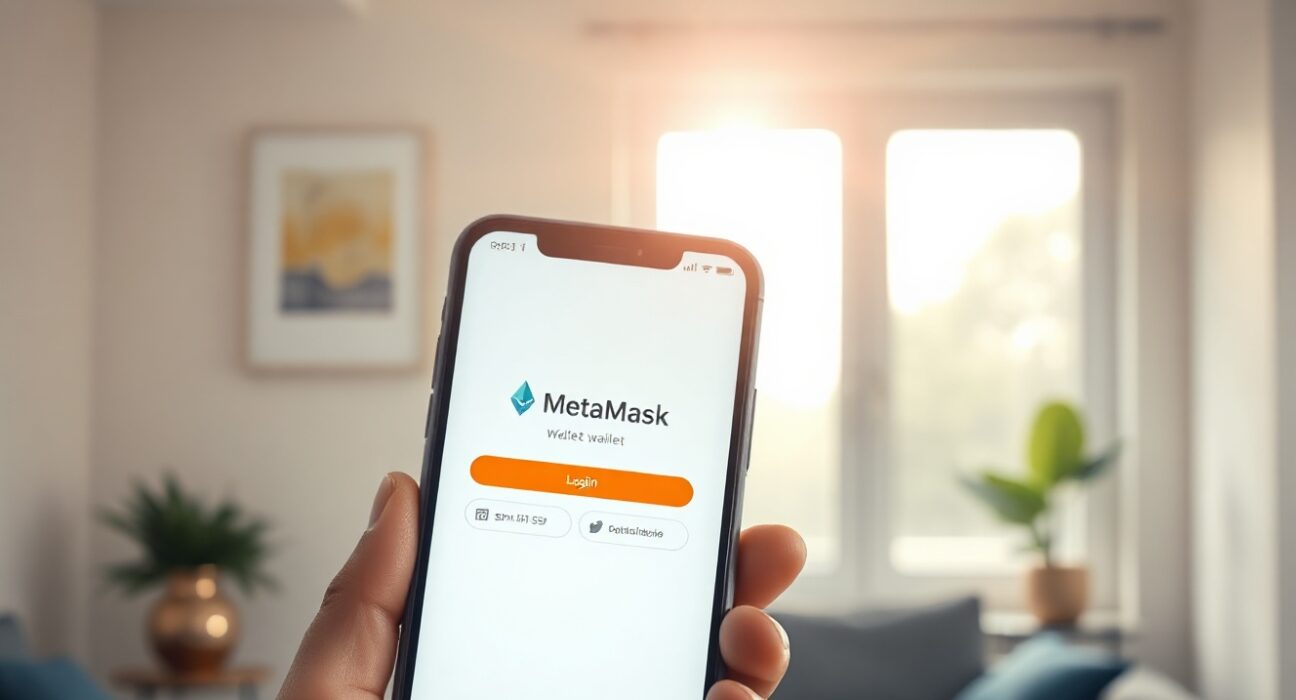
MetaMask, one of the most widely used cryptocurrency wallets in the world, has launched an embedded wallet that allows users to log in using their email address, social media accounts, or SMS. The new offering is a self-custodial wallet designed to operate without a seed phrase or a browser extension, marking a significant shift in how non-custodial wallets are accessed.
A New Onboarding Path for Self-Custodial Wallets
For years, the primary barrier to entry for self-custodial crypto wallets has been the management of seed phrases — a string of 12 or 24 words that must be stored securely to retain access to funds. Losing the seed phrase has historically meant losing access permanently. MetaMask’s new embedded wallet removes this requirement entirely, replacing it with familiar authentication methods such as email verification and SMS one-time codes.
According to the company, the wallet is designed to be embedded directly into decentralized applications (dApps) and websites, allowing users to interact with Web3 services without leaving the host platform. This approach mirrors the convenience of traditional Web2 login flows while retaining the core principle of self-custody, meaning users retain full control over their private keys and funds.
How It Works and Why It Matters
The embedded wallet leverages multi-party computation (MPC) technology to split the private key into multiple shards. These shards are distributed between the user’s device and MetaMask’s infrastructure, enabling recovery through email or SMS without exposing the full key to any single party. This is a notable departure from the single-key model used by MetaMask’s flagship browser extension wallet.
Industry analysts view this development as a response to the growing demand for user-friendly onboarding in decentralized finance (DeFi) and non-fungible token (NFT) marketplaces. Many potential users have been deterred by the complexity of installing browser extensions, recording seed phrases, and understanding gas fees. By lowering the technical barrier, MetaMask aims to expand the addressable market for Web3 applications.
Implications for Security and User Trust
While the removal of seed phrases improves convenience, it also introduces a different security model. Users who lose access to their email account or phone number may still be able to recover their wallet through MetaMask’s social recovery mechanisms, but this shifts some trust to the service provider. MetaMask has stated that the wallet remains self-custodial because the user’s private key shards are never fully assembled on the company’s servers, and the user retains the ability to export their full key at any time.
Security researchers have noted that MPC-based wallets are generally considered robust, but they also caution that the security of the wallet ultimately depends on the security of the user’s email account and phone line. Users are advised to enable two-factor authentication on their email accounts and to use strong, unique passwords.
Market Context and Competitive Landscape
The launch places MetaMask in direct competition with other embedded wallet solutions such as WalletConnect’s Web3Modal and Coinbase’s Smart Wallet, both of which also aim to simplify onboarding. However, MetaMask’s existing brand recognition and its massive user base — estimated at over 30 million monthly active users — give it a significant distribution advantage.
The timing of the launch is also notable. As the cryptocurrency market matures and regulatory frameworks become clearer in jurisdictions like the European Union and the United States, the demand for compliant yet user-friendly self-custodial solutions is rising. Embedded wallets that support email and SMS login could become the default entry point for mainstream users exploring Web3 for the first time.
Conclusion
MetaMask’s embedded wallet with email and SMS login represents a meaningful evolution in self-custodial wallet design. By removing the seed phrase requirement and leveraging MPC technology, the company is attempting to bridge the gap between Web2 convenience and Web3 sovereignty. Whether this approach gains widespread adoption will depend on how well it balances ease of use with the security expectations of experienced crypto users. For now, it stands as one of the most significant product updates from MetaMask in recent years.
FAQs
Q1: Is the new MetaMask embedded wallet truly self-custodial?
Yes. MetaMask states that the wallet remains self-custodial because private keys are split into shards using MPC technology, and the full key is never assembled on MetaMask’s servers. Users can also export their full private key at any time.
Q2: Do I need a browser extension to use the embedded wallet?
No. The embedded wallet is designed to work without a browser extension. It can be integrated directly into websites and dApps, allowing users to log in using email, SMS, or social media accounts.
Q3: What happens if I lose access to my email or phone number?
MetaMask’s social recovery mechanisms allow users to regain access through their email or phone number. However, the security of the wallet depends on the security of those accounts. Enabling two-factor authentication on your email is strongly recommended.
Disclaimer: The information provided is not trading advice, Bitcoinworld.co.in holds no liability for any investments made based on the information provided on this page. We strongly recommend independent research and/or consultation with a qualified professional before making any investment decisions.
