

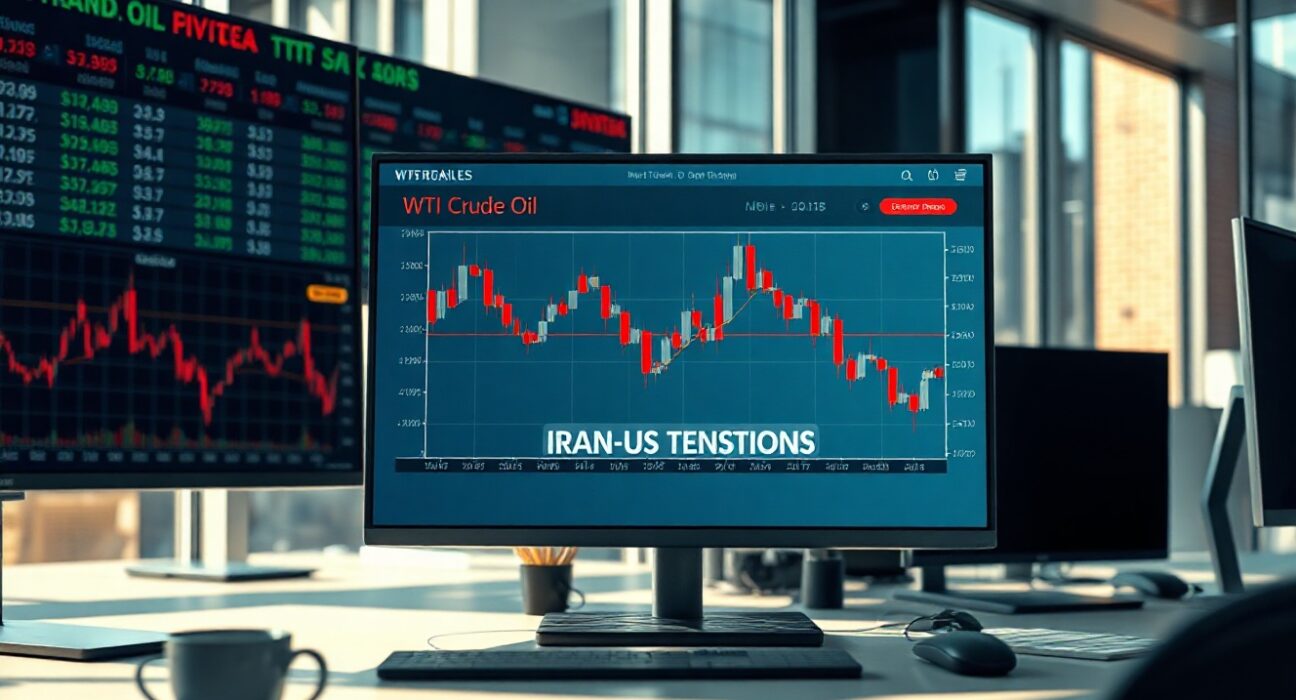
West Texas Intermediate (WTI) crude oil futures edged lower during early Asian trading on Wednesday, as a slight de-escalation in rhetoric between Iran and the United States reduced the immediate geopolitical risk premium. Traders are now turning their attention to the American Petroleum Institute’s (API) weekly crude inventory report, due later today, for near-term demand cues.
Geopolitical backdrop and market reaction
Oil prices had rallied earlier this week after reports of heightened military posturing between Washington and Tehran, raising concerns about potential supply disruptions in the Strait of Hormuz. However, diplomatic signals from both sides over the past 24 hours have tempered those fears, prompting profit-taking and a modest pullback in WTI prices.
As of press time, WTI crude for May delivery was trading near $72.80 per barrel, down approximately 0.5% from the previous session’s close. Brent crude, the international benchmark, also slipped, reflecting a broader cautious tone in energy markets.
API inventory report in focus
The API’s weekly report, scheduled for release at 4:30 p.m. ET, is expected to show a draw in U.S. crude stockpiles for the week ending April 4. Analysts surveyed by industry sources project a decline of roughly 2.1 million barrels, following a surprise build of 1.4 million barrels in the prior week.
A larger-than-expected draw could provide near-term support for WTI prices, reinforcing the narrative of tightening supply. Conversely, a build or a smaller draw may amplify bearish sentiment, especially if geopolitical tensions continue to ease.
Why this matters for traders
The combination of shifting geopolitical risk and weekly inventory data creates a volatile short-term trading environment. For energy traders, the API report offers the first official snapshot of U.S. crude balances before the more closely watched Energy Information Administration (EIA) release on Thursday. Any divergence between API and EIA figures can trigger sharp intraday moves.
Beyond the weekly data, broader market fundamentals remain mixed. OPEC+ production cuts have kept a floor under prices, but concerns about global demand—particularly from China and Europe—continue to cap upside momentum. The International Energy Agency (IEA) recently flagged that non-OPEC supply growth, led by the United States, could outpace demand growth in the second half of 2025.
Conclusion
WTI crude oil prices are caught between a modest geopolitical risk premium and fundamental supply-demand uncertainty. The API inventory report will provide the next catalyst, but traders should remain cautious about over-interpreting a single data point in a market that remains highly sensitive to headlines. A sustained move above $74 or below $70 would likely require a clearer directional signal from either geopolitics or global demand data.
FAQs
Q1: Why do Iran-US tensions affect oil prices?
Iran is a major oil producer and sits near the Strait of Hormuz, a critical chokepoint for global crude shipments. Any escalation raises fears of supply disruptions, which typically pushes prices higher.
Q2: What is the API crude inventory report?
The American Petroleum Institute (API) releases a weekly estimate of U.S. crude oil inventories, based on voluntary reporting from its members. It is widely watched as a precursor to the official government data from the Energy Information Administration (EIA).
Q3: How reliable is the API report compared to the EIA report?
The API report is considered less comprehensive than the EIA’s mandatory survey, but it often moves markets because it is released earlier. The two reports can occasionally diverge, so traders use the API data as an early signal rather than a definitive number.
Disclaimer: The information provided is not trading advice, Bitcoinworld.co.in holds no liability for any investments made based on the information provided on this page. We strongly recommend independent research and/or consultation with a qualified professional before making any investment decisions.
