

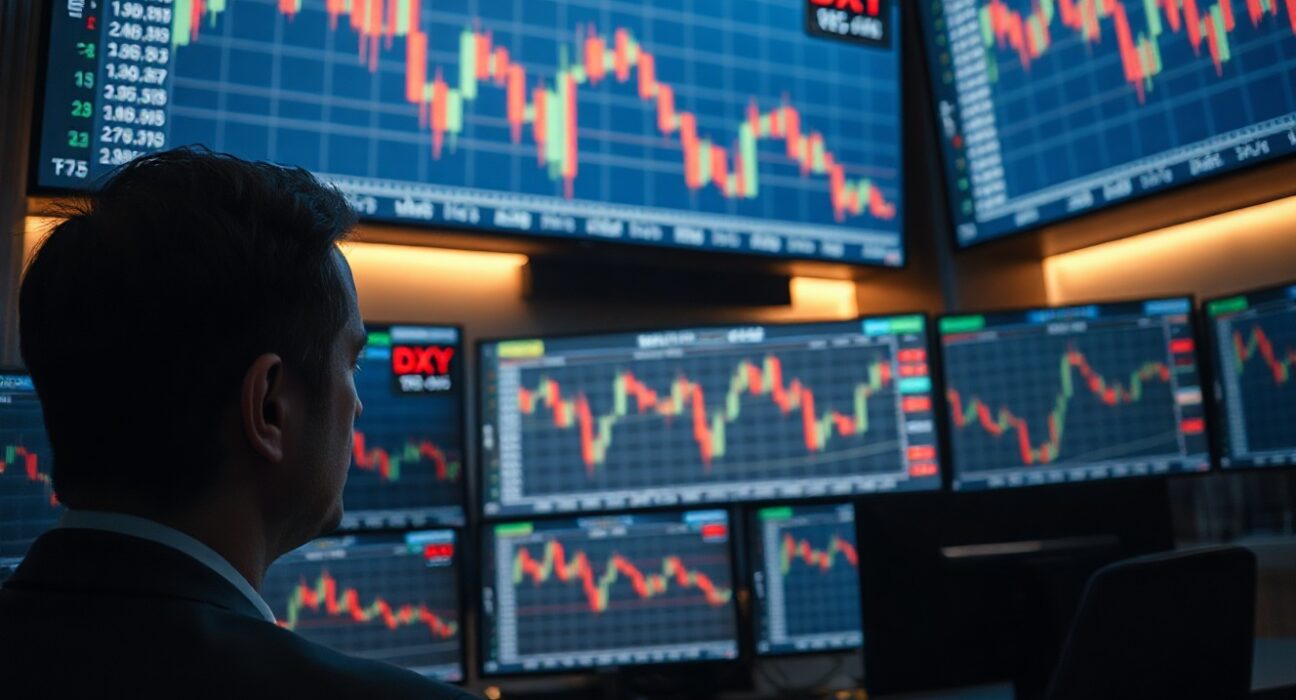
The US Dollar Index (DXY) edged lower during Tuesday’s trading session, extending its recent weakness after a ceasefire agreement between Israel and Lebanon was formally announced. The development, which reduces immediate geopolitical risk in the Middle East, prompted a rotation out of safe-haven assets, including the US dollar, which had rallied in prior weeks on heightened tensions.
Market Reaction and Immediate Impact
The DXY, which measures the greenback against a basket of six major currencies, fell by approximately 0.3% in afternoon trading, touching a session low near 105.80. The move was broad-based, with the euro, British pound, and Japanese yen all gaining ground against the dollar. The ceasefire, brokered through international mediation, is seen as a de-escalation of a conflict that had periodically rattled energy markets and fueled risk aversion since late 2023.
Currency traders interpreted the deal as a reduction in the geopolitical risk premium that had been embedded in the dollar’s valuation. The US currency had strengthened earlier this year amid global uncertainty, but the latest development signals a potential shift in sentiment. Treasury yields also dipped slightly, reflecting reduced demand for US government debt as a haven.
Broader Context: Dollar’s Trajectory and Fed Policy
The dollar’s decline following the ceasefire comes against a backdrop of evolving expectations for Federal Reserve monetary policy. Markets are currently pricing in a high probability of a rate cut at the Fed’s September meeting, which has already been weighing on the greenback. The ceasefire adds a new variable, potentially accelerating the dollar’s retreat if risk appetite continues to improve.
Analysts at several major banks have noted that the dollar’s safe-haven status has been a key driver of its strength in 2024. With geopolitical tensions easing, the focus may return to domestic economic data and the Fed’s path. The next major test for the DXY will be the release of US inflation data later this week, which could influence rate expectations.
Impact on Emerging Markets and Commodities
The weaker dollar has provided some relief for emerging market currencies and commodities priced in USD. Oil prices, which had been volatile due to supply concerns tied to the conflict, stabilized after the ceasefire announcement. Gold, which often moves inversely to the dollar, edged higher, though gains were capped by a broader improvement in risk sentiment. The development is particularly significant for import-dependent economies in Asia and Africa, where a softer dollar eases inflationary pressures.
Conclusion
The Israel-Lebanon ceasefire represents a meaningful de-escalation that has directly impacted currency markets by reducing safe-haven demand for the US dollar. While the DXY’s decline is modest, it reflects a broader recalibration of geopolitical risk. The dollar’s near-term direction will now depend on a combination of Fed policy signals, upcoming economic data, and whether the ceasefire holds. For traders and investors, the event underscores how quickly geopolitical developments can alter currency market dynamics.
FAQs
Q1: Why did the US Dollar Index fall after the ceasefire?
The dollar had strengthened as a safe-haven asset during the Israel-Lebanon conflict. The ceasefire reduced geopolitical risk, prompting investors to rotate out of the dollar and into currencies that benefit from improved risk appetite, such as the euro and yen.
Q2: What is the US Dollar Index (DXY)?
The DXY measures the value of the US dollar relative to a basket of six major foreign currencies: the euro, Japanese yen, British pound, Canadian dollar, Swedish krona, and Swiss franc. It is a widely used benchmark for the dollar’s overall strength.
Q3: How might the ceasefire affect Federal Reserve policy?
The ceasefire itself is unlikely to directly change Fed policy, but by reducing uncertainty and potentially improving global growth prospects, it could influence the economic outlook. The Fed remains focused on inflation and employment data, which will be the primary drivers of rate decisions.
Disclaimer: The information provided is not trading advice, Bitcoinworld.co.in holds no liability for any investments made based on the information provided on this page. We strongly recommend independent research and/or consultation with a qualified professional before making any investment decisions.
