

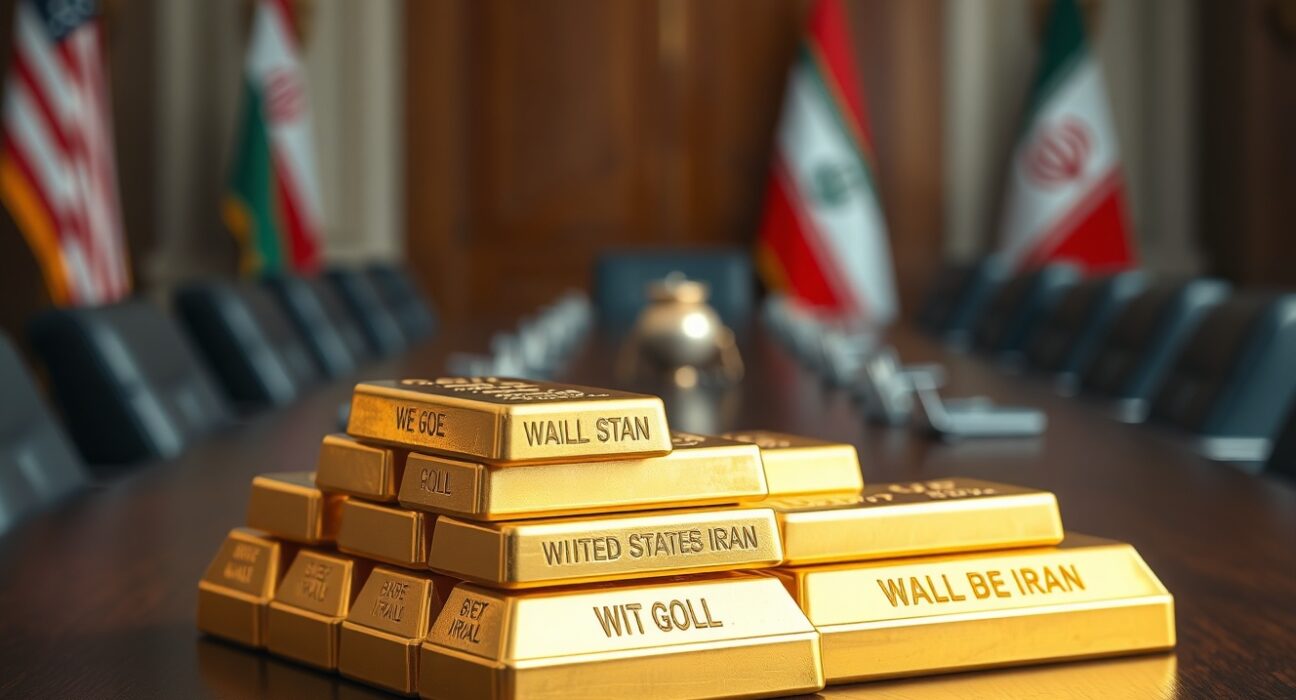
Gold prices edged higher on Tuesday as growing expectations of a potential US-Iran nuclear deal, combined with a recently announced ceasefire between Israel and Lebanon, shifted market sentiment toward safe-haven assets. The precious metal gained approximately 0.5% in early trading, reaching $2,045 per ounce, as traders weighed the implications of reduced Middle Eastern tensions against renewed diplomatic efforts between Washington and Tehran.
Ceasefire and Deal Hopes Drive Market Moves
The ceasefire between Israel and Lebanon, brokered by international mediators and taking effect late Monday, marked a significant de-escalation after weeks of cross-border hostilities. While the truce reduces immediate geopolitical risk in the region, analysts say the underlying driver for gold’s advance is the revived prospect of a US-Iran agreement on nuclear limitations and sanctions relief. Reports from diplomatic sources suggest that indirect talks in Oman have made “measurable progress,” with both sides signaling willingness to resume negotiations that stalled earlier this year.
“Gold is reacting to a complex interplay of factors,” said Maria Chen, senior commodities strategist at Global Markets Advisory. “The ceasefire lowers the floor for safe-haven demand, but the potential US-Iran deal introduces a new variable—one that could either cap or boost gold depending on how it unfolds.”
Market Context and Investor Implications
Gold’s rise comes amid a broader reassessment of risk assets. Equities in Asia and Europe were mixed, while the US dollar index slipped 0.2%, making dollar-denominated commodities more attractive to foreign buyers. The yield on 10-year US Treasury notes remained stable at 4.12%, offering little competition to gold as a non-yielding asset.
Investors are closely watching for concrete steps from Washington and Tehran. A breakthrough deal could lead to increased oil supply from Iran, potentially lowering energy prices and reducing inflation pressures—factors that historically weigh on gold. However, any breakdown in talks could reignite safe-haven buying. The current market pricing suggests cautious optimism, with gold options data showing elevated demand for upside protection.
What This Means for Gold Investors
For retail and institutional investors, the key takeaway is that gold remains sensitive to geopolitical shifts, but the direction is not one-sided. A successful US-Iran agreement could reduce long-term demand for hedges, while a failure could push prices higher. The ceasefire provides a temporary floor, but the medium-term trajectory depends on diplomatic outcomes. Analysts recommend maintaining diversified exposure to precious metals as a portfolio hedge, rather than making directional bets based on headline risk alone.
Conclusion
Gold’s advance reflects a market navigating between de-escalation in the Levant and renewed diplomatic momentum on the Iran nuclear file. While the ceasefire removes an immediate risk premium, the potential US-Iran deal introduces both upside and downside scenarios for the precious metal. Investors should monitor diplomatic developments closely, as the next few weeks could determine whether gold sustains its gains or faces headwinds from a broader geopolitical thaw.
FAQs
Q1: Why did gold prices rise after a ceasefire was announced?
Gold rose because the ceasefire, while reducing immediate tensions, also raised expectations of a broader diplomatic shift—specifically a US-Iran deal. Markets interpreted this as a sign that geopolitical risks are being managed, but also that uncertainty remains, prompting some safe-haven buying.
Q2: How does a US-Iran deal affect gold prices?
A US-Iran deal could lead to increased oil supply, lower energy costs, and reduced inflation expectations—all factors that typically weigh on gold. However, the process of negotiation creates uncertainty, which can support gold prices in the short term. The net effect depends on the deal’s scope and implementation timeline.
Q3: Should I buy gold now based on this news?
This news alone does not constitute a buy signal. Gold remains a useful portfolio diversifier, but short-term moves driven by geopolitical headlines can reverse quickly. Investors should consider their overall asset allocation, risk tolerance, and investment horizon before making decisions based on current events.
Disclaimer: The information provided is not trading advice, Bitcoinworld.co.in holds no liability for any investments made based on the information provided on this page. We strongly recommend independent research and/or consultation with a qualified professional before making any investment decisions.
