

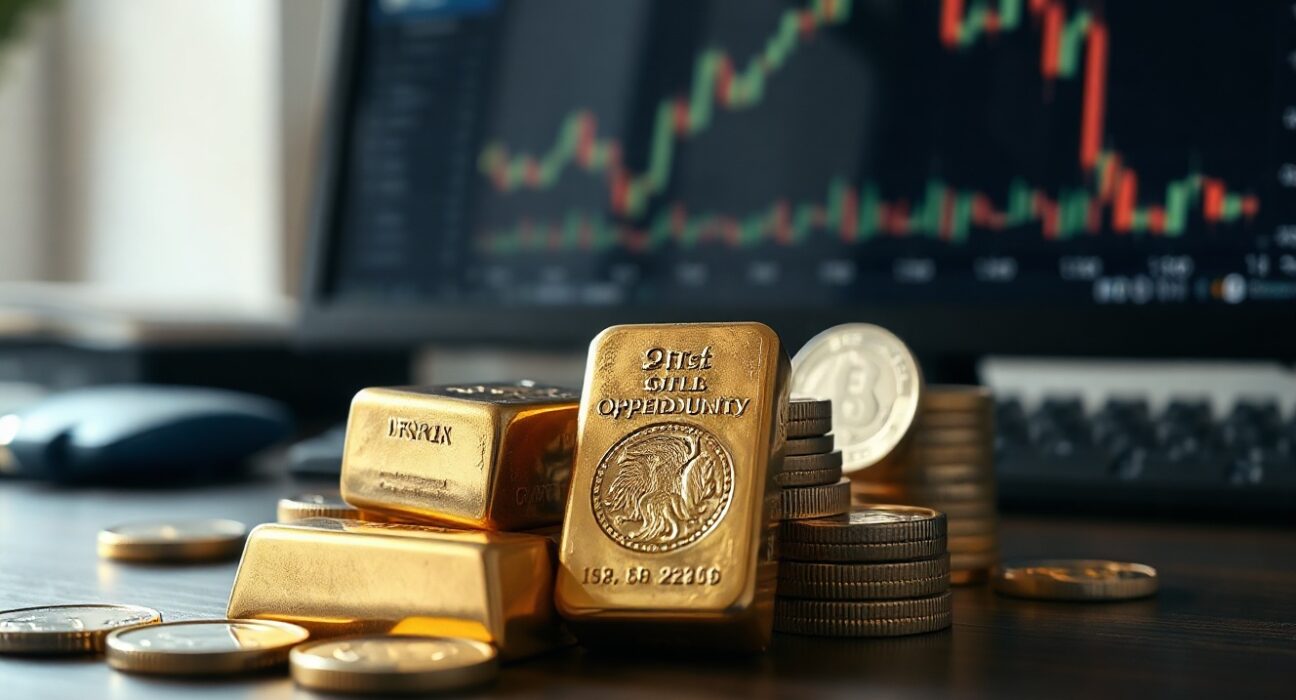
Gold and silver prices are showing signs of a potential buying opportunity in August, a pattern that some analysts say hasn’t been seen since 2020. The precious metals complex is currently navigating a complex landscape of Federal Reserve policy expectations, inflation data, and global economic uncertainty, creating a setup that could offer favorable entry points for investors.
What’s Driving the Potential Opportunity?
The core of the argument for a buying opportunity centers on the expectation that the Federal Reserve may begin cutting interest rates as early as September. Historically, lower interest rates reduce the opportunity cost of holding non-yielding assets like gold and silver, making them more attractive to investors. As of late July, market futures are pricing in a significant probability of a rate cut, which has already started to support precious metals prices.
Additionally, central bank buying remains a strong underlying demand driver. According to the World Gold Council, central banks have been net purchasers of gold for over a decade, and this trend shows no sign of reversing. This institutional demand provides a solid floor under prices, even during periods of market volatility.
Technical and Seasonal Factors
August has historically been a mixed month for precious metals, but certain technical indicators are flashing bullish signals. Gold has recently broken above key moving averages, while silver is testing resistance levels that, if cleared, could trigger a short-covering rally. The seasonal pattern, while not a guarantee, also suggests that late summer often marks a period of consolidation before a stronger move in the fall.
However, it’s important to note that the market is not without risks. A stronger-than-expected U.S. dollar or a surprise uptick in inflation could derail the current narrative. Investors should be prepared for volatility and consider dollar-cost averaging rather than trying to time a single entry point.
Why This Matters to Investors
For individual investors, the potential buying opportunity in gold and silver is not just about price speculation. It’s about portfolio diversification and protection against uncertainty. Precious metals have historically served as a hedge against inflation and geopolitical risk, and with ongoing conflicts and trade tensions, that role remains relevant.
Moreover, the relative performance of gold versus silver offers different risk profiles. Gold is often seen as a store of value, while silver has more industrial applications, making it more sensitive to economic cycles. Understanding these nuances can help investors align their precious metals allocation with their broader financial goals.
Conclusion
While no one can predict market movements with certainty, the confluence of Fed policy expectations, technical setups, and institutional demand creates a compelling case for watching gold and silver closely in August. As with any investment, due diligence and a clear understanding of one’s risk tolerance are essential. The window of opportunity may be opening, but it requires careful observation and strategic planning to capitalize on.
FAQs
Q1: Why is August considered a potential buying opportunity for gold and silver?
Analysts point to the likelihood of a Federal Reserve rate cut in September, which historically boosts precious metals by reducing the opportunity cost of holding them. Additionally, technical indicators and seasonal patterns suggest a possible favorable entry point.
Q2: What are the risks to this buying opportunity?
The main risks include a stronger U.S. dollar, unexpected inflation data, or a shift in Fed policy. These factors could lead to continued volatility or price declines, so investors should consider a phased approach.
Q3: How do gold and silver differ as investments?
Gold is primarily a store of value and a hedge against inflation and geopolitical risk. Silver, while also a precious metal, has significant industrial uses, making its price more sensitive to economic cycles and industrial demand.
Disclaimer: The information provided is not trading advice, Bitcoinworld.co.in holds no liability for any investments made based on the information provided on this page. We strongly recommend independent research and/or consultation with a qualified professional before making any investment decisions.
