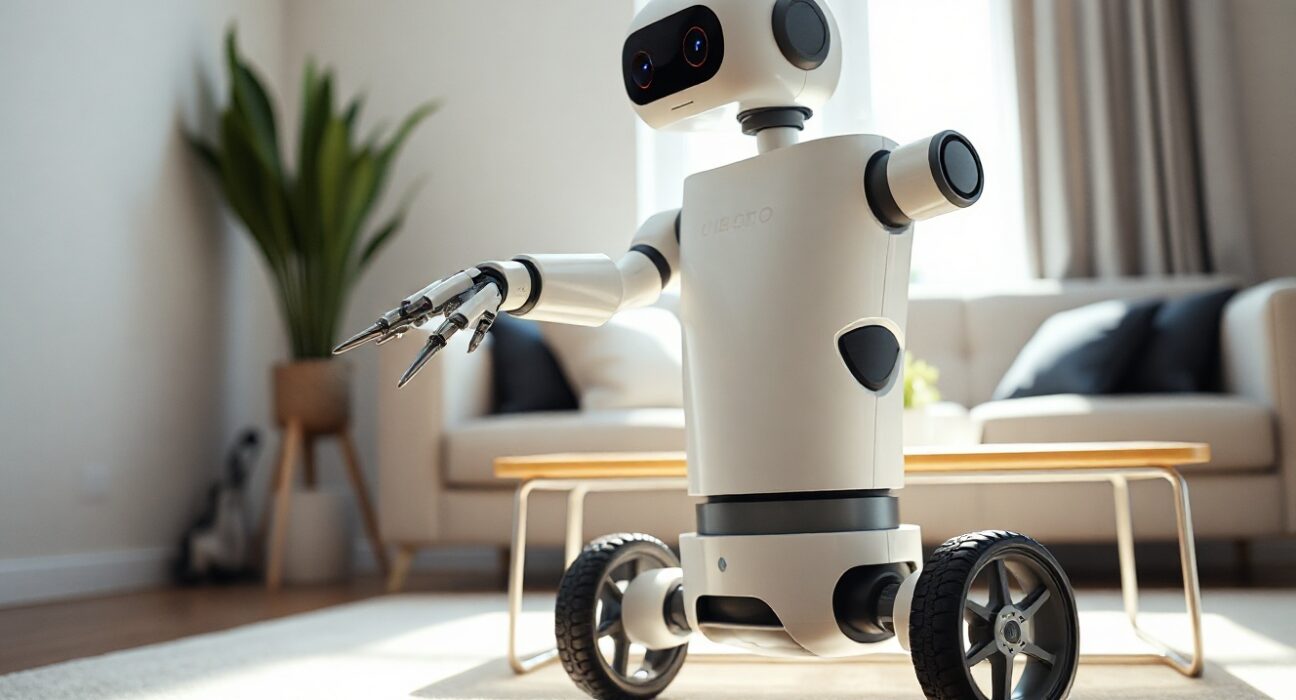
In Martinez, California, a small robotics startup is taking a different approach to the promise of robots in the home. Hello Robot, founded by former Google robotics director Aaron Edsinger and Georgia Tech professor Charlie Kemp, has released the fourth generation of its home assistance robot, Stretch. Unlike the humanoid robots that dominate headlines, Stretch is a wheeled, single-armed machine designed to work alongside people in real homes — not just in laboratories.
A Practical Alternative to Humanoid Hype
Stretch 4 features a telescoping arm with pinchers, a sensor-studded head, and a heavy omnidirectional wheeled base. It is not designed to replace humans or perform every possible task. Instead, Hello Robot focuses on safety, accessibility, and real-world deployment. The robot is shipped in a cardboard box via standard courier services, avoiding the need for expensive wooden crates and installation teams. This design philosophy keeps costs down and makes the robot accessible to researchers, hackers, and people with disabilities.
Real-World Use Cases and Human Impact
Keith Platt, a quadriplegic investor who sits on Hello Robot’s board, uses Stretch to regain independence. He controls the robot via a voice-operated iPhone app, tasking it to autonomously move through his home and manipulate objects. One early project involved teaching Stretch to serve him a protein shake for breakfast — a task that initially took two hours but now takes just a few minutes. Platt describes the ability to perform such tasks as life-changing, reducing his dependence on caregivers and family members.
Hello Robot works with an occupational therapist to support users with mobility challenges. The company intentionally keeps a human in the loop, emphasizing that being in control is a desired feature. This approach contrasts with fully autonomous systems that can pose safety risks when they make errors.
Why Hardware Still Matters
Despite advances in AI software, robotic hardware remains a significant challenge. Heavy limbs require active balancing, and mistakes can cause damage. One startup, the Bot Company, is facing a lawsuit over property damage caused by its robot during testing. Mahi Shafiullah, a postdoc at UC Berkeley working on robotic hands, notes that the state of hardware today is abysmal from the perspective of deploying robots in homes. He used the third generation of Stretch for his PhD research and praises Hello Robot’s cautious, human-first design.
Pricing, Availability, and Future Plans
Stretch 4 costs $30,000, which is affordable compared to many research-grade robots. Hello Robot plans to manufacture between 200 and 300 units at its Martinez headquarters, with the first run already sold out. Customers include researchers testing AI brains, enterprise clients exploring data center applications, and developers working on assistive technology. Edsinger compares the company’s approach to Waymo’s focus on safety, noting that accumulating real-world operating hours creates a competitive moat that cannot be easily replicated.
Conclusion
Hello Robot’s Stretch 4 represents a pragmatic, safety-first approach to home robotics. While Silicon Valley chases humanoid dreams, this startup is quietly deploying robots that work with real people in real homes. The lessons from Stretch 4 will inform future iterations, potentially driving down costs and increasing capabilities. For now, the robot is already making a tangible difference for users like Keith Platt, who sees it as a path to greater independence.
FAQs
Q1: What makes Hello Robot’s Stretch different from humanoid robots?
Stretch is a wheeled robot with a single telescoping arm, designed for safety and accessibility rather than human-like form. It prioritizes real-world deployment and human control over full autonomy.
Q2: How much does Stretch 4 cost and who can buy it?
Stretch 4 costs $30,000 and is available to researchers, enterprise customers, and individuals. It ships in a standard cardboard box to reduce costs and complexity.
Q3: Is Stretch 4 fully autonomous?
No. Stretch comes with limited autonomy and is designed to keep a human in the loop. Users can control it via a voice-operated app, which is intentional for safety and user empowerment.
Disclaimer: The information provided is not trading advice, Bitcoinworld.co.in holds no liability for any investments made based on the information provided on this page. We strongly recommend independent research and/or consultation with a qualified professional before making any investment decisions.