

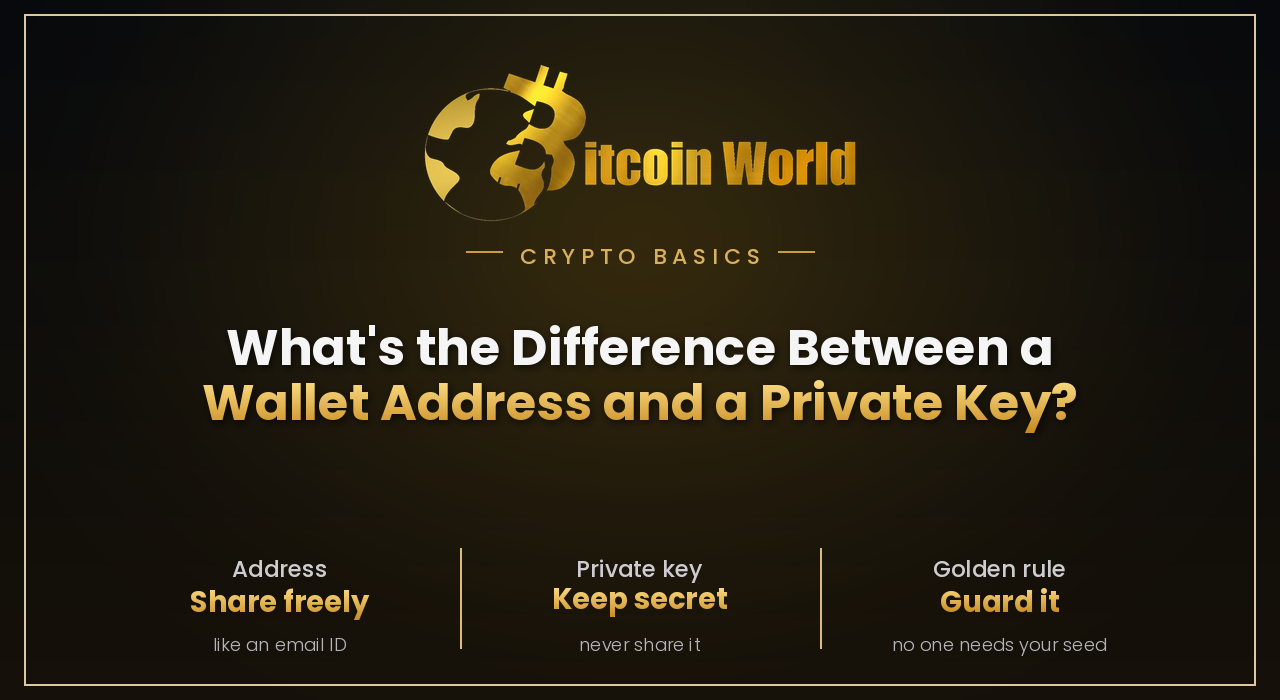
What’s the Difference Between a Wallet Address and a Private Key?
The difference between a wallet address and a private key is the single most important concept for keeping your crypto safe – one is meant to be shared with the world, and the other must never be revealed to anyone. Confusing the two is how countless beginners lose their funds to scams. This article explains what each one does, how they’re mathematically linked, the simple analogy that makes it click, and the rules Indian users must follow to stay protected.
What’s the Difference Between a Wallet Address and a Private Key?
The core difference between a wallet address and a private key is visibility: a wallet address is public and safe to share, while a private key is secret and controls your funds.
- Wallet address: A public identifier you give others so they can send you crypto.
- Private key: A secret code that proves ownership and authorizes spending.
- Share vs guard: You can post an address publicly; you must never reveal a private key.
- Control lies with the key: Whoever holds the private key controls the funds – full stop.
How Are a Wallet Address and Private Key Linked?
They’re connected by one-way cryptography, which is what makes the system both usable and secure.
- Key to address: Your private key generates a public key, which is then converted into your wallet address.
- One-way only: You can derive the address from the key, but you cannot reverse-engineer the private key from the address.
- Seed phrase backup: Your seed phrase is a readable backup that can regenerate your private keys.
- Safe exposure: This is why revealing your address can never expose your private key.
What’s a Simple Way to Understand the Two?
A familiar analogy makes the distinction instantly clear.
- Address = email address: Share it freely so anyone can send you something.
- Private key = email password: Keep it secret; anyone with it can take everything.
- Or a mailbox: The address is the public slot; the private key is the only key that opens it.
- Bottom line: Receiving needs only your address; spending needs your private key.
What Rules Should Indian Crypto Users Follow?
For users in India, scams often target exactly this confusion, so a few firm rules matter.
- Never share your private key or seed phrase: No legitimate support team, app, or “verification” ever needs it.
- Sharing your address is fine: Posting a wallet address to receive funds carries no risk to your balance.
- Beware fake support: Scammers on Telegram, WhatsApp, and fake apps ask for keys – always refuse.
- Back up offline: Store your seed phrase on paper or a hardware device, never in a screenshot or cloud note.
Frequently Asked Questions
Is it safe to share my crypto wallet address with others?
Yes – sharing your wallet address is completely safe, since it’s a public identifier meant for receiving funds. Understanding the difference between a wallet address and a private key matters here: the address can be posted anywhere, but the private key must always stay secret. No one can access your funds with your address alone.
Can someone steal my crypto if they know my wallet address?
No, knowing your address only lets someone send you funds or view your public transaction history – it cannot be used to spend your crypto. Theft requires your private key or seed phrase, which is why those must never be shared. Anyone asking for your private key or recovery phrase is attempting a scam.
What’s the difference between a private key and a seed phrase?
A private key is the secret that controls a specific address, while a seed phrase is a human-readable backup that can regenerate all your private keys at once. Both must be kept completely secret, since either one grants full control of your funds. Indian users should back up the seed phrase offline and never enter it into any website or app that requests it.
Conclusion: Why This One Distinction Protects Your Crypto
Grasping the difference between a wallet address and a private key is the foundation of crypto safety: the address is your public “send here” label, while the private key is the secret that must never leave your control. For Indian users facing a constant stream of key-phishing scams, the rule is simple and absolute – share the address freely, guard the private key and seed phrase with your life. Internalize this difference, and you’ve already avoided the most common way people lose their crypto.
Disclaimer: The information provided is not trading advice, Bitcoinworld.co.in holds no liability for any investments made based on the information provided on this page. We strongly recommend independent research and/or consultation with a qualified professional before making any investment decisions.
