

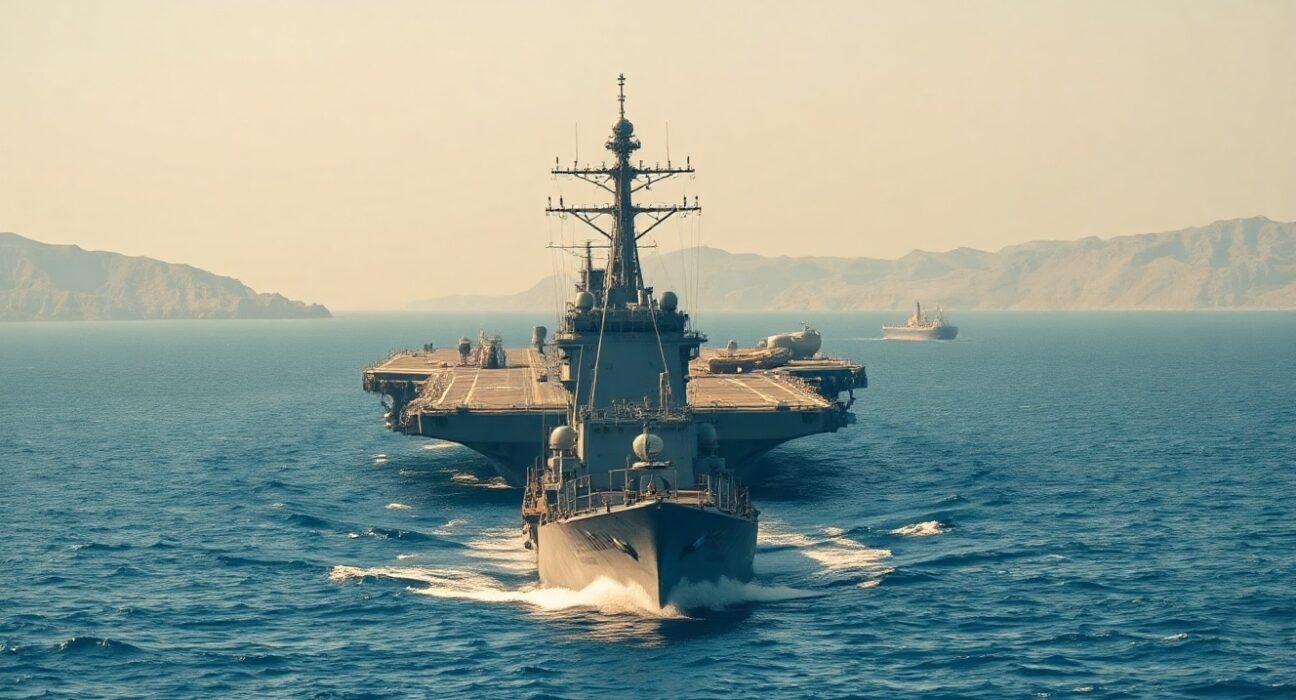
Former U.S. Secretary of Defense Lloyd Austin stated that while the U.S. Navy possesses the capability to reopen the Strait of Hormuz, sustained allied participation is essential to maintain the key oil and gas shipping route over the long term due to the significant costs involved.
Austin’s Assessment of Military and Diplomatic Realities
Speaking in his capacity as a former senior defense official, Austin affirmed the operational readiness of the U.S. Navy to clear the strait if it were blocked. However, he underscored that keeping the waterway open would require a collective international effort. “Freedom of navigation is not just important for the United States; it is crucial for the entire world,” Austin said. He stressed that allies and partners must contribute to the effort, sharing both the financial and operational burden of securing one of the world’s most strategically vital chokepoints.
The Geopolitical and Economic Stakes
The Strait of Hormuz, connecting the Persian Gulf to the Gulf of Oman, is a critical artery for global energy supplies. Approximately 20% of the world’s oil passes through its narrow waters, making its security a matter of international economic stability. Austin’s comments come amid heightened tensions in the region, including ongoing hostilities involving Israel and Hezbollah in Lebanon, which he identified as a major obstacle to broader diplomatic efforts. He expressed hope for de-escalation to allow negotiations to proceed, emphasizing that regional stability is interconnected with global energy security.
Why This Matters for Global Markets and Security
Any disruption to shipping through the Strait of Hormuz could trigger sharp spikes in oil prices and threaten global supply chains. Austin’s remarks serve as a reminder that unilateral military action, while possible, is not a sustainable solution. Long-term security depends on multilateral cooperation, burden-sharing, and diplomatic engagement. For readers, this underscores the fragility of global energy infrastructure and the importance of alliances in maintaining open trade routes.
Conclusion
Lloyd Austin’s assessment highlights a central challenge of modern geopolitics: military capability alone is insufficient without sustained allied cooperation. As regional conflicts persist, the international community faces the dual task of ensuring freedom of navigation while pursuing diplomatic solutions to broader instability.
FAQs
Q1: Why is the Strait of Hormuz so important?
The Strait of Hormuz is a narrow waterway through which about 20% of the world’s oil passes. It is a critical chokepoint for global energy supplies, and any disruption can significantly impact oil prices and economic stability worldwide.
Q2: What did Lloyd Austin say about U.S. military capability?
Austin stated that the U.S. Navy is fully capable of reopening the Strait of Hormuz if it were blocked, but he emphasized that keeping it open long-term would require significant financial and operational contributions from allies and partners.
Q3: How does the conflict in Lebanon relate to the Strait of Hormuz?
Austin noted that ongoing Israeli attacks on Hezbollah in Lebanon are a major obstacle to broader diplomatic efforts to end regional conflicts. De-escalation in Lebanon is seen as necessary to create space for negotiations that could also reduce tensions around the Strait of Hormuz.
Disclaimer: The information provided is not trading advice, Bitcoinworld.co.in holds no liability for any investments made based on the information provided on this page. We strongly recommend independent research and/or consultation with a qualified professional before making any investment decisions.
