

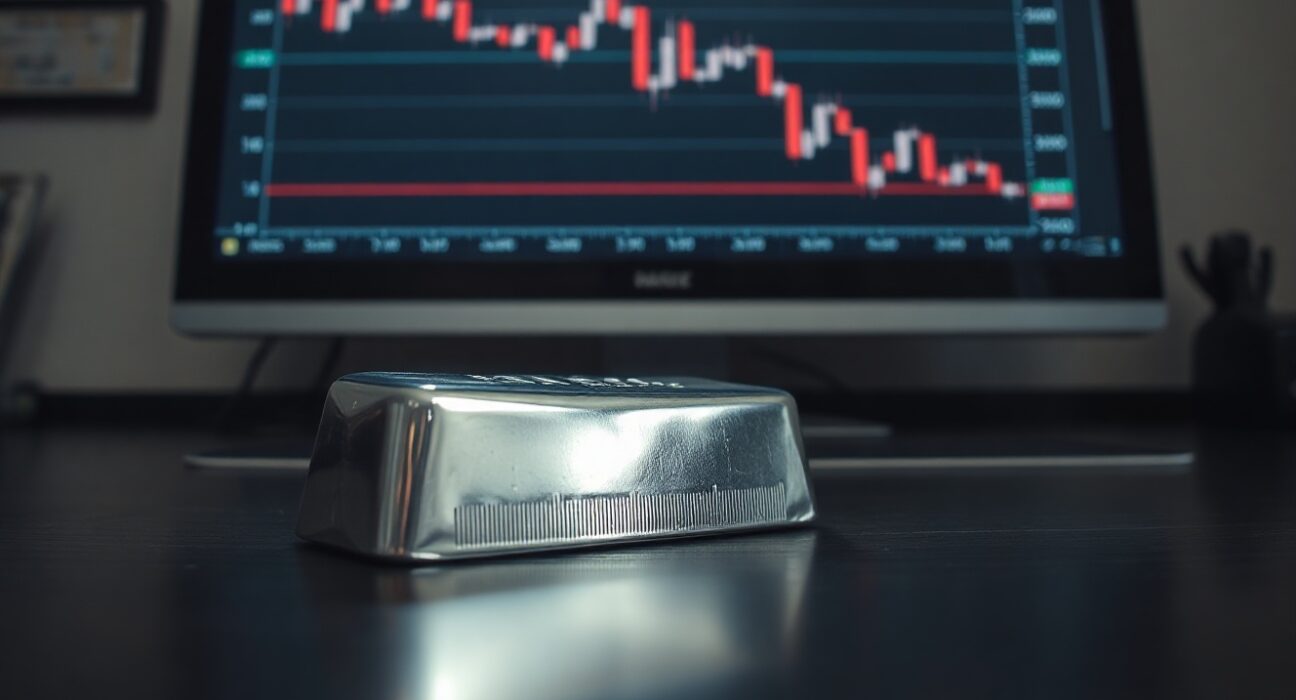
Silver prices (XAG/USD) have extended their recent decline, breaking decisively below the 200-day Simple Moving Average (SMA) for the first time in several months. This technical breakdown signals a shift in medium-term momentum and raises the possibility of a test of the year-to-date (YTD) low. The move comes amid a broader sell-off in precious metals, driven by a stronger US Dollar and rising Treasury yields, which have dampened demand for non-yielding assets.
Technical Breakdown: What the 200-Day SMA Break Means
The 200-day SMA is a widely watched indicator of long-term trend direction. Silver’s fall below this level, currently near $24.50, suggests that bearish forces are gaining control. The break occurred on above-average volume, confirming the move’s significance. Key support now lies at the YTD low of $22.50, reached in early October. A sustained move below this level could open the door to further losses toward the $21.00 psychological mark. Resistance is now established at the former support-turned-resistance zone of $24.50-$25.00. The Relative Strength Index (RSI) has dipped below 40, indicating bearish momentum but not yet oversold territory, leaving room for further downside.
Fundamental Drivers: Dollar Strength and Yield Pressure
The primary catalyst for silver’s weakness has been the resurgence of the US Dollar Index (DXY), which has climbed to multi-month highs on hawkish Federal Reserve rhetoric. Higher interest rates increase the opportunity cost of holding silver, which offers no yield. Additionally, the 10-year US Treasury yield has pushed above 4.5%, further pressuring precious metals. Silver’s dual role as both a monetary metal and an industrial commodity adds complexity. While industrial demand from solar panel manufacturing and electronics remains robust, the macro headwind from a strong dollar is currently overwhelming these supportive factors.
Implications for Traders and Investors
For short-term traders, the break below the 200-day SMA is a clear bearish signal. Swing traders may look to sell rallies into the $24.50-$25.00 resistance zone, targeting a retest of the YTD low. Stop-loss orders should be placed above $25.50 to manage risk. For long-term investors, the current price level may present a buying opportunity if they believe the sell-off is overdone. However, waiting for a confirmed reversal pattern, such as a bullish divergence on the RSI or a daily close above the 200-day SMA, would be prudent. The upcoming US CPI data release and Federal Reserve meeting minutes will be critical for near-term direction.
Conclusion
Silver’s breakdown below the 200-day SMA marks a significant bearish development, with the YTD low now within striking distance. While fundamental headwinds from a strong dollar and rising yields persist, the pace of the decline may attract bargain hunters. Traders should monitor key support and resistance levels closely, as the next major move could define silver’s trajectory for the remainder of the quarter. A decisive break below $22.50 would confirm a deeper correction, while a recovery above $25.00 would invalidate the bearish outlook.
FAQs
Q1: Why is the 200-day SMA important for silver prices?
The 200-day SMA is a key technical indicator used to assess the long-term trend. A break below it often signals a shift from bullish to bearish sentiment and can attract further selling from algorithmic and trend-following traders.
Q2: What is the next key support level for XAG/USD?
The next major support is the year-to-date low near $22.50. If that level breaks, the next significant support is around $21.00, a psychological round number and prior resistance zone.
Q3: Could this sell-off be a buying opportunity for long-term investors?
It could be, but caution is advised. Long-term investors should wait for confirmation of a bottom, such as a bullish candlestick pattern, a divergence on the RSI, or a daily close back above the 200-day SMA, before adding to positions.
Disclaimer: The information provided is not trading advice, Bitcoinworld.co.in holds no liability for any investments made based on the information provided on this page. We strongly recommend independent research and/or consultation with a qualified professional before making any investment decisions.
