

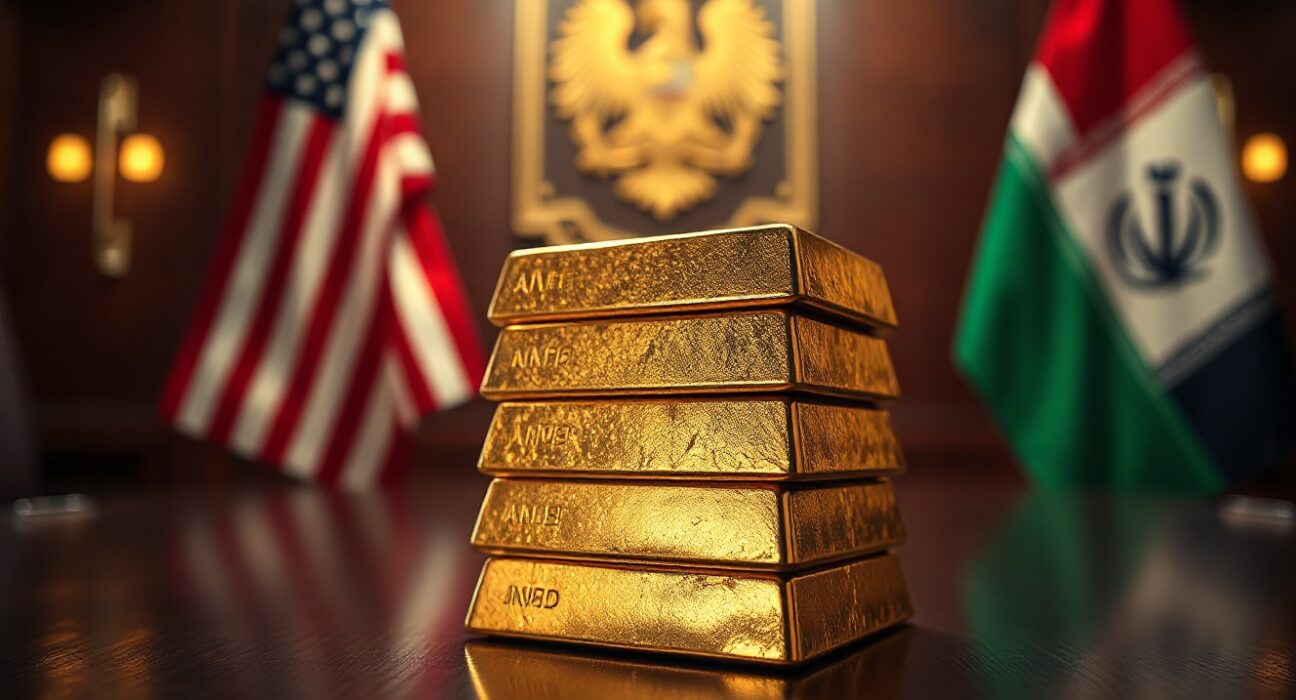
Gold prices have paused their recent recovery rally as traders and investors await clearer signals on the progress of a potential US-Iran peace deal. The precious metal, which had been gaining ground on safe-haven demand amid geopolitical tensions, now faces a period of consolidation as the market digests conflicting reports and diplomatic signals.
Market Uncertainty Weighs on Gold
The pause in gold’s upward movement reflects a broader sense of caution across financial markets. While earlier in the week, reports of progress in US-Iran negotiations had dampened safe-haven demand, the lack of concrete details has left traders in a wait-and-see mode. Gold, which is highly sensitive to shifts in geopolitical risk perception, has struggled to find a clear direction.
Analysts point out that the market is pricing in multiple scenarios. A successful peace deal could reduce geopolitical premiums, potentially weighing on gold prices. Conversely, a breakdown in talks could reignite safe-haven flows, pushing gold higher. Until the outcome is clearer, gold is likely to trade within a narrow range.
Key Levels and Technical Outlook
From a technical perspective, gold is currently testing a support zone near $2,320 per ounce. A decisive break below this level could open the door for a deeper correction toward $2,280. On the upside, resistance is seen around $2,360, with a move above that needed to signal a resumption of the recovery trend.
Traders are also monitoring the US dollar index and bond yields, which have shown mixed signals. A stronger dollar has added some pressure on gold, but falling real yields have provided a floor under prices. The interplay between these macro factors and geopolitical developments will likely determine gold’s next major move.
Why This Matters for Investors
For investors, the current pause in gold’s recovery is not necessarily a bearish signal. It reflects a natural period of price discovery as the market incorporates new information. The key takeaway is that gold remains highly reactive to geopolitical headlines, and any unexpected development in the US-Iran talks could trigger a sharp move.
Portfolio managers often view gold as a hedge against uncertainty. The current environment, characterized by both geopolitical risks and shifting monetary policy expectations, underscores the metal’s role as a diversifier. However, the lack of a clear catalyst has led to reduced volatility, which may persist until the peace deal narrative becomes more defined.
Conclusion
Gold’s recovery has stalled as traders await definitive news on the US-Iran peace deal. The metal is trading in a tight range, reflecting balanced risks. While the long-term outlook for gold remains supported by central bank buying and geopolitical instability, near-term direction hinges on diplomatic outcomes. Investors should brace for potential volatility once clarity emerges.
FAQs
Q1: Why has gold paused its recovery?
Gold has paused because traders are waiting for more clarity on the US-Iran peace deal. The market is uncertain whether geopolitical tensions will ease or escalate, leading to a wait-and-see approach.
Q2: What are the key price levels to watch for gold?
The key support level is around $2,320 per ounce. A break below could lead to a test of $2,280. Resistance is near $2,360, and a move above that could signal a renewed uptrend.
Q3: How could the US-Iran peace deal affect gold prices?
A successful peace deal could reduce safe-haven demand and weigh on gold prices. Conversely, a failure or delay in talks could increase geopolitical risk, potentially boosting gold as a safe-haven asset.
Disclaimer: The information provided is not trading advice, Bitcoinworld.co.in holds no liability for any investments made based on the information provided on this page. We strongly recommend independent research and/or consultation with a qualified professional before making any investment decisions.
