

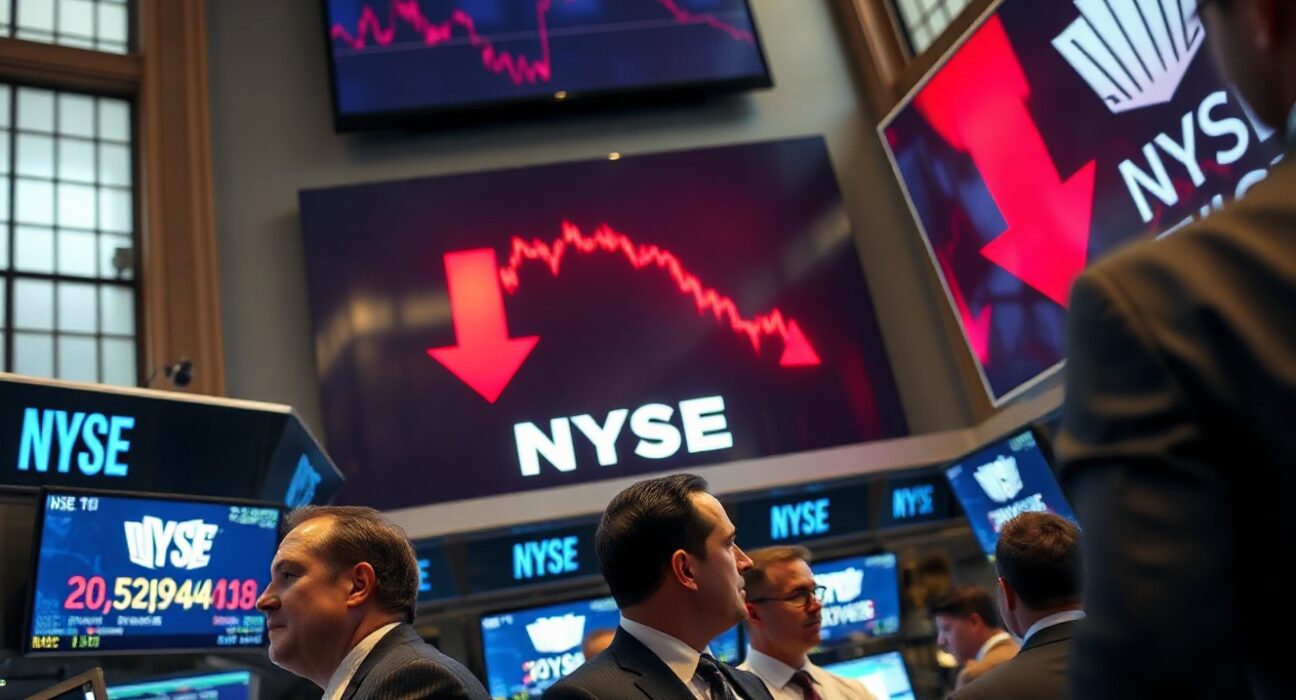
The Dow Jones Industrial Average experienced a notable decline on Tuesday, as market participants digested hawkish comments from Federal Reserve Governor Christopher Waller. The blue-chip index fell by over 400 points, extending losses from the previous session and prompting analysts to describe the move as a ‘Warsh hangover’—a term reflecting the market’s reaction to Waller’s signals that interest rate cuts may not be imminent.
What Triggered the Sell-Off?
In a speech delivered at the University of Chicago Booth School of Business, Governor Waller indicated that the Federal Reserve is in no rush to lower borrowing costs, citing persistent inflationary pressures and a resilient labor market. Waller stated that the central bank needs ‘greater confidence’ that inflation is moving sustainably toward its 2% target before easing policy. His remarks dampened expectations for a rate cut at the Fed’s next meeting in March, which had been priced in by a majority of traders just days earlier.
The Dow Jones Industrial Average, which had rallied sharply in January on hopes of a dovish pivot, gave back a significant portion of those gains. The S&P 500 and Nasdaq Composite also declined, though the Dow bore the brunt of the selling pressure due to its heavy weighting in interest-rate-sensitive sectors such as financials and industrials.
Market Implications and Broader Context
The ‘Warsh hangover’ is a reference to a pattern observed in previous tightening cycles, where markets initially celebrate a perceived dovish shift, only to reverse sharply when Fed officials push back against overly optimistic rate-cut expectations. This dynamic has played out multiple times over the past year, creating a volatile trading environment for investors.
Analysts at Goldman Sachs noted that the market’s reaction reflects a broader recalibration of expectations. ‘The Fed has consistently communicated that it will be data-dependent, and Waller’s comments reinforce that message,’ said a strategist. ‘Investors are now pricing in a higher-for-longer rate environment, which is weighing on equity valuations.’
The sell-off also comes amid a busy week for economic data, with the January Consumer Price Index (CPI) report due for release on Thursday. A stronger-than-expected inflation reading could further reduce the likelihood of near-term rate cuts, adding to downward pressure on stocks.
What This Means for Investors
For retail and institutional investors, the key takeaway is that the path to lower interest rates remains uncertain. While inflation has moderated from its peak, the Fed’s preferred measure—the core PCE price index—remains above target. Waller’s comments suggest that the central bank is willing to tolerate a period of above-target inflation if necessary to avoid premature easing.
Fixed-income markets have already adjusted, with the yield on the 10-year Treasury note rising to 4.35% on Tuesday, up from 4.20% a week ago. Higher yields make bonds more attractive relative to stocks, particularly for growth-oriented sectors that rely on cheap financing.
Long-term investors may view the pullback as a buying opportunity, but near-term volatility is likely to persist as markets continue to parse Fed communications and incoming economic data.
Conclusion
The Dow Jones Industrial Average’s decline following Governor Waller’s hawkish remarks underscores the market’s sensitivity to Fed policy signals. While the ‘Warsh hangover’ narrative captures the immediate sentiment, the broader story is one of ongoing adjustment to a higher-for-longer interest rate environment. Investors should remain cautious and focus on diversified, quality holdings until the inflation outlook becomes clearer.
FAQs
Q1: What is the ‘Warsh hangover’ in the context of the stock market?
The term refers to a market decline that follows hawkish comments from Federal Reserve Governor Christopher Waller, who is known for his cautious stance on interest rate cuts. It describes the pattern of markets initially pricing in rate cuts, then reversing sharply when the Fed pushes back.
Q2: How did the Dow Jones Industrial Average perform on Tuesday?
The Dow fell by over 400 points, or roughly 1.1%, with losses concentrated in interest-rate-sensitive sectors such as financials and industrials. The decline erased a portion of the index’s January gains.
Q3: Will the Federal Reserve cut interest rates in March 2025?
Based on Governor Waller’s recent remarks and market pricing, the probability of a March rate cut has declined significantly. The Fed has emphasized it needs more evidence that inflation is sustainably moving toward its 2% target before easing policy. The upcoming CPI report will be a key factor in shaping expectations.
Disclaimer: The information provided is not trading advice, Bitcoinworld.co.in holds no liability for any investments made based on the information provided on this page. We strongly recommend independent research and/or consultation with a qualified professional before making any investment decisions.
